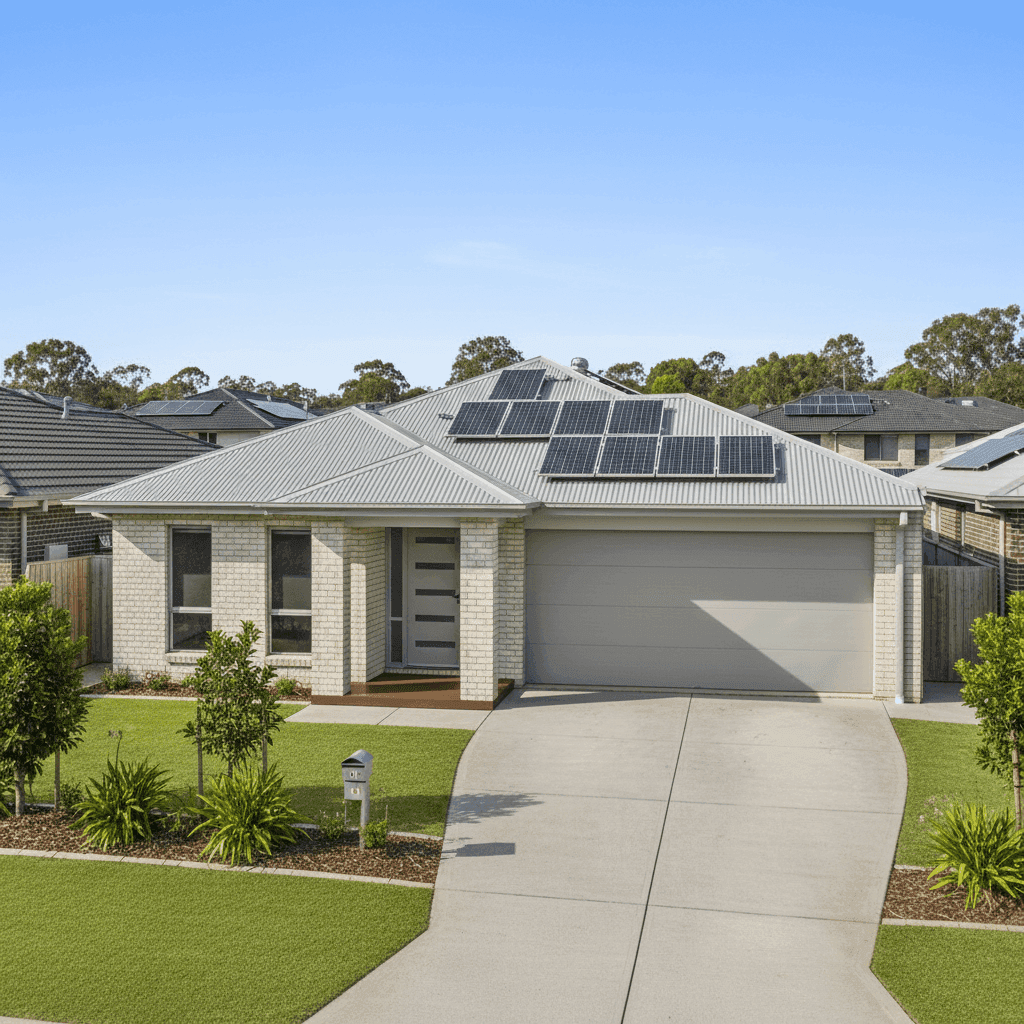
If you own a free standing home in Burpengary, QLD 4505, you've probably noticed that home insurance premiums can vary enormously — even between neighbours on the same street. This article breaks down a real home and contents insurance quote for a four-bedroom, two-bathroom brick veneer home in the suburb, compares it against local, state, and national benchmarks, and offers practical tips to help you get better value on your cover.
---
Is This Quote Fair?
The quote in question comes in at $2,921 per year (or $273/month) for combined home and contents insurance, with a building sum insured of $701,000 and contents valued at $19,000. Both the building and contents excess are set at $1,000.
Our price rating for this quote is Expensive (Above Average).
To put that in context, the average premium paid by homeowners in Burpengary is $1,899 per year, and the suburb median sits at $1,741 per year. This quote lands well above the suburb's 75th percentile of $2,332 — meaning it's higher than roughly three-quarters of comparable quotes in the area. That's a meaningful gap worth investigating before simply accepting the renewal.
That said, several property-specific factors can legitimately push a premium higher, and we'll unpack those below.
---
How Burpengary Compares
Understanding where Burpengary sits within the broader insurance landscape helps put individual quotes in perspective. Here's a snapshot:
| Benchmark | Average Premium | Median Premium |
|---|---|---|
| Burpengary (4505) | $1,899/yr | $1,741/yr |
| Moreton Bay LGA | $3,435/yr | — |
| Queensland | $9,129/yr | $3,903/yr |
| National | $5,347/yr | $2,764/yr |
A few things stand out here. First, Burpengary compares very favourably to both the Queensland state average and the national average — the suburb's median premium is less than half the national median, and a fraction of the Queensland average (which is heavily influenced by cyclone-prone Far North Queensland). This reflects Burpengary's relatively benign risk profile as an inland south-east Queensland suburb outside designated cyclone risk zones.
Interestingly, the quote sits above the Moreton Bay LGA average of $3,435 per year when you consider the contents component is relatively modest at $19,000. The high building sum insured of $701,000 is likely the primary driver pushing this particular quote upward.
You can explore the full Burpengary suburb insurance statistics to see how your own property stacks up.
---
Property Features That Affect Your Premium
Every insurer prices risk differently, but certain property characteristics consistently influence what you'll pay. Here's how the features of this Burpengary home factor in:
Brick Veneer Walls & Colorbond Roof
Brick veneer construction is generally viewed favourably by insurers — it's durable, fire-resistant, and widely understood. A steel Colorbond roof is similarly well-regarded: it's lightweight, low-maintenance, and performs well in storms. Together, these materials can help moderate your premium compared to less resilient construction types like weatherboard or fibre cement.
Slab Foundation & Tiled Flooring
A concrete slab foundation is standard for Queensland homes built in the 1990s and is considered a stable, low-risk base by most insurers. Tiled flooring throughout is also a positive signal — tiles are durable and resistant to water damage, which can reduce the likelihood of claims.
1993 Construction Year
Homes built in the early 1990s sit in a reasonable middle ground for insurers. They're old enough to potentially have ageing infrastructure (roofing, plumbing, electrical), but post-1980s construction in Queensland generally meets improved building codes introduced after Cyclone Tracy. At 30+ years old, it's worth ensuring your building sum insured accounts for current rebuild costs, including demolition and professional fees.
Above Average Fittings Quality
The property is noted as having above average fittings — think stone benchtops, quality appliances, premium tapware, and the like. Higher-spec fittings increase the cost to repair or rebuild, which is legitimately reflected in a higher building sum insured and, consequently, a higher premium.
Solar Panels & Ducted Climate Control
Solar panels add both value and complexity to a home insurance policy. They need to be covered for storm damage, hail, and fire, and their replacement cost should be factored into your sum insured. Ducted air conditioning is a significant fixed asset that also contributes to rebuild costs. Both features are consistent with the $701,000 building sum insured on this property.
No Pool, No Cyclone Risk Zone
The absence of a swimming pool removes a common liability and maintenance risk factor. And being outside a designated cyclone risk area is a significant premium advantage for Queensland homeowners — it's one of the main reasons Burpengary's local premiums are so much lower than the Queensland state average.
---
Tips for Homeowners in Burpengary
Whether you're renewing your existing policy or shopping around for the first time, these practical steps can help you manage your premium without sacrificing meaningful cover.
1. Review Your Building Sum Insured Carefully
At $701,000, the building sum insured is the dominant cost driver in this quote. Make sure this figure reflects the actual cost to rebuild your home from scratch — including demolition, architect fees, and current labour and material costs — not the market value of the property. Overinsuring adds unnecessary cost; underinsuring can leave you exposed at claim time. Tools like the Cordell Sum Sure calculator can help you estimate an appropriate figure.
2. Compare Multiple Quotes Before Renewing
The gap between this quote ($2,921) and the suburb average ($1,899) is over $1,000 per year. That's a compelling reason to shop around. Insurers price risk differently, and loyalty doesn't always pay. Get a fresh quote at CoverClub to see what competing insurers would offer for the same property.
3. Consider Your Excess Level
Both the building and contents excess on this policy are set at $1,000. Opting for a higher voluntary excess — say, $2,000 — can meaningfully reduce your annual premium. This is a sensible trade-off if you have sufficient savings to cover a larger out-of-pocket cost in the event of a claim.
4. Check That Your Solar Panels Are Properly Covered
Many homeowners assume solar panels are automatically included in their home insurance, but coverage varies significantly between policies. Confirm with your insurer that your panels are covered for storm, hail, and fire damage, and that the replacement value is factored into your sum insured. Given the cost of a quality solar system, this is worth verifying explicitly.
---
Find a Better Deal with CoverClub
A premium rated as expensive relative to your suburb is a clear signal to compare. CoverClub makes it straightforward to benchmark your current quote against the market and explore alternatives tailored to your property's specific features. Start comparing home insurance quotes today — it takes just a few minutes and could save you hundreds of dollars a year.