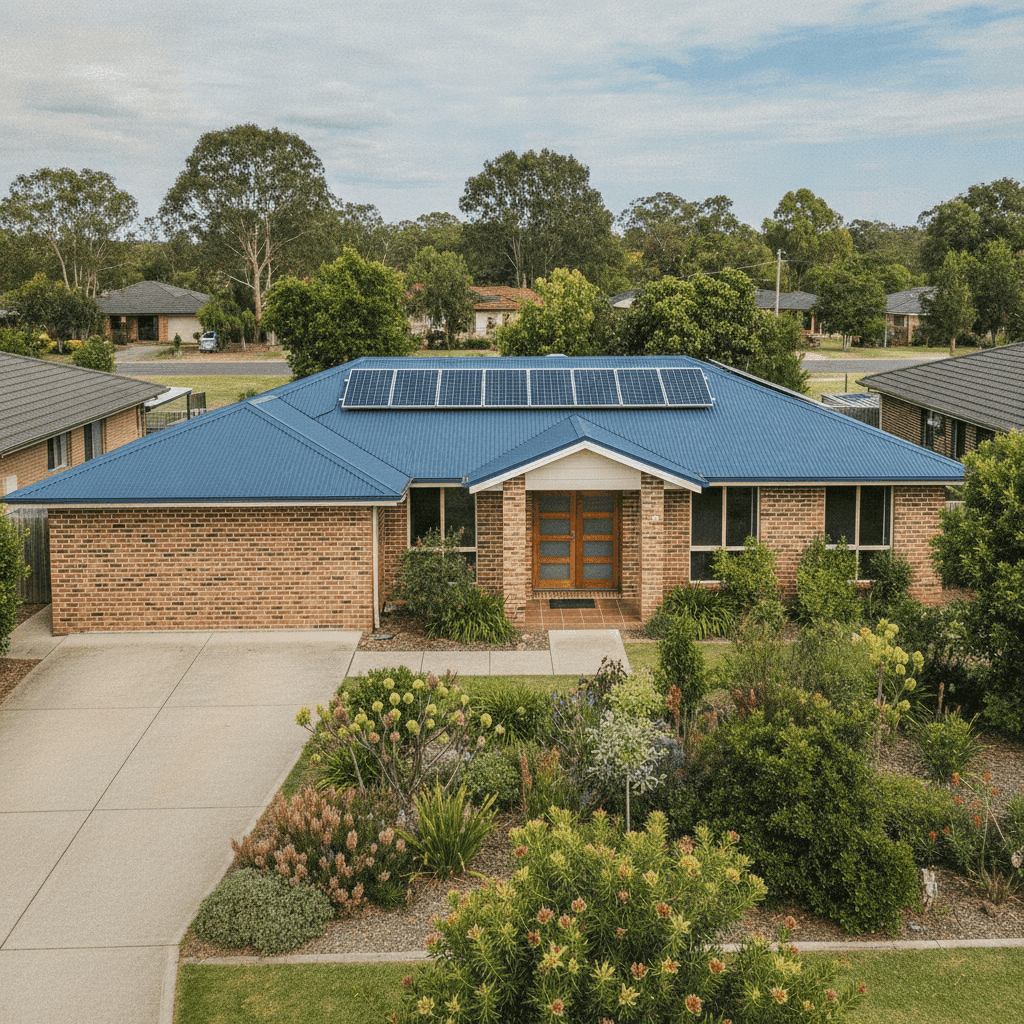
If you own a free standing home in Burpengary, QLD 4505, you're likely keeping a close eye on insurance costs — especially as premiums across Queensland and the rest of Australia have climbed sharply in recent years. This article breaks down a real building insurance quote for a four-bedroom brick veneer home in Burpengary, compares it against local, state, and national benchmarks, and offers practical tips to help you get the best value cover for your property.
---
Is This Quote Fair?
The quote in question comes in at $1,236 per year (or around $118 per month) for building-only cover on a 4-bedroom, 1-bathroom free standing home, with a sum insured of $500,000 and a building excess of $5,000.
Our price rating for this quote is CHEAP — below the suburb average — and the numbers back that up clearly.
The suburb average premium for Burpengary sits at $1,899 per year, with a median of $1,741. This quote undercuts the suburb median by more than $500 per year, and it sits well below the 25th percentile of $1,470 — meaning it's cheaper than at least 75% of quotes collected in the area. That's a strong result by any measure.
To put it plainly: if you've received a quote in this range for a comparable Burpengary property, you're looking at genuinely competitive pricing that's worth holding onto.
---
How Burpengary Compares to the Rest of Queensland and Australia
To fully appreciate how favourable this quote is, it helps to zoom out and look at the broader picture.
| Benchmark | Premium |
|---|---|
| This quote | $1,236/yr |
| Burpengary suburb average | $1,899/yr |
| Burpengary suburb median | $1,741/yr |
| Moreton Bay LGA average | $3,435/yr |
| QLD state average | $9,129/yr |
| QLD state median | $3,903/yr |
| National average | $5,347/yr |
| National median | $2,764/yr |
The contrast with Queensland's state-wide figures is striking. The QLD average of $9,129 is heavily skewed by high-risk coastal and cyclone-prone areas in Far North Queensland, where premiums can be eye-watering. The median of $3,903 is a more representative figure for typical Queensland homeowners — and even against that benchmark, this Burpengary quote looks very affordable.
Compared to national averages, the picture is similarly favourable. The national average of $5,347 reflects the enormous variation across flood plains, bushfire zones, and cyclone corridors around the country. At $1,236, this quote is less than a quarter of the national average — a reminder that location plays an enormous role in what you'll pay.
It's worth noting that the suburb sample size here is 12 quotes, which is a reasonable dataset for a suburb of Burpengary's size, though a larger sample would provide even greater confidence in these comparisons.
---
Property Features That Affect Your Premium
Several characteristics of this particular property work in the homeowner's favour when it comes to insurance pricing.
Brick veneer construction is generally well-regarded by insurers. It offers solid fire resistance and structural durability compared to lightweight cladding materials, which can translate to lower premiums. Combined with a steel/Colorbond roof, the property presents a relatively low-risk profile — Colorbond is durable, resistant to corrosion, and performs well in the kind of summer storm events that are common in South East Queensland.
The slab foundation is another tick in the right column. Slab homes tend to have fewer issues with subfloor moisture and pest access compared to raised or timber-framed stumped foundations, which can be a factor in claims and therefore pricing.
Tiled flooring throughout is practical and resilient, reducing the likelihood of costly water or storm damage claims compared to carpet or timber floors.
The property does have solar panels, which are worth flagging. Solar systems add replacement value to a building, and it's important to confirm that your sum insured of $500,000 adequately accounts for the cost of replacing the panels as part of the structure. Most building policies cover permanently fixed solar panels, but it pays to read the Product Disclosure Statement (PDS) carefully.
Ducted climate control is another feature to consider. These systems are typically covered under building insurance as a fixed installation, but again, verifying this with your insurer ensures there are no surprises at claim time.
Importantly, Burpengary is not classified as a cyclone risk area, which is a significant factor in keeping premiums lower than many other parts of Queensland.
---
Tips for Homeowners in Burpengary
1. Review your sum insured annually Building costs have risen considerably over the past few years. A sum insured of $500,000 may be appropriate today, but it's worth reassessing each year — ideally using a quantity surveyor's estimate or an online building calculator — to ensure you're not underinsured if you ever need to rebuild.
2. Understand your excess This policy carries a $5,000 building excess, which is on the higher end. A higher excess typically lowers your premium, but it means you'll need to cover the first $5,000 of any claim out of pocket. Make sure this aligns with your financial comfort level. If you'd prefer a lower excess, it's worth requesting an alternative quote with a $1,000 or $2,500 excess to compare the premium difference.
3. Check your solar and ducted systems are covered As noted above, solar panels and ducted air conditioning are fixed installations that should be covered under building insurance — but confirm the specifics with your insurer. Check whether storm damage, power surge, and accidental damage are included for these systems in particular.
4. Compare quotes at renewal Even if your current premium is already competitive, the insurance market shifts regularly. Insurers reprice based on claims data, reinsurance costs, and risk modelling. Running a fresh comparison at each renewal — which takes only a few minutes on CoverClub — ensures you're not gradually drifting into overpriced territory without realising it.
---
Ready to Compare Home Insurance in Burpengary?
Whether you're reviewing an existing policy or shopping for cover for the first time, comparing multiple quotes is the single most effective way to ensure you're not overpaying. CoverClub makes it easy to see real quotes side by side, tailored to your property's specific features and location.
Get a home insurance quote for your Burpengary property today — it takes just a few minutes and could save you hundreds of dollars a year.