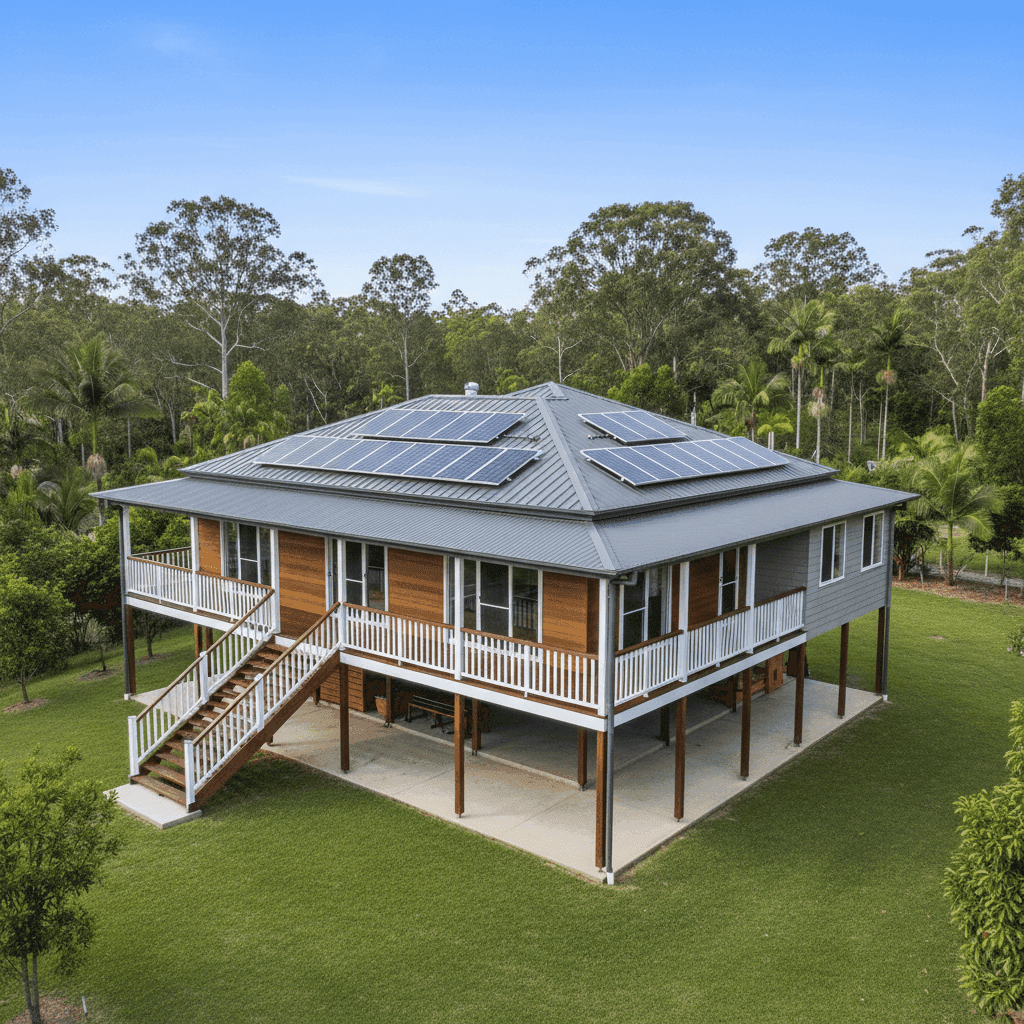
Finding the right home insurance in regional New South Wales can feel like navigating a maze — premiums vary wildly depending on where you live, what your home is made of, and how much cover you actually need. This article takes a close look at a real home and contents insurance quote for a four-bedroom, two-bathroom free standing home in Byangum, NSW 2484, breaking down whether the price stacks up, how it compares to broader benchmarks, and what property features are likely driving the cost.
---
Is This Quote Fair?
The annual premium for this property came in at $4,991 per year (or $471/month), covering both building and contents with a building sum insured of $1,445,000 and contents valued at $50,000. Both the building and contents excess are set at $5,000.
Our price rating for this quote? Cheap — below average. That's genuinely good news for the homeowner.
To put it in perspective: the average home insurance premium across New South Wales sits at $9,528 per year, meaning this quote is roughly 47% below the NSW state average. Even compared to the NSW median of $3,770, the quote is only modestly higher — which makes sense given the relatively high building sum insured of $1.445 million.
At the national level, the average premium is $5,347/year, and this quote comes in just under that figure. Given the size of the home (268 sqm), its elevated construction, and above-average fittings, landing below the national average is a solid outcome.
For broader context on what homeowners across New South Wales are paying, visit our NSW home insurance statistics page, or explore national home insurance benchmarks to see how this compares Australia-wide.
---
How Byangum Compares
Byangum is a small locality in the Kyogle Local Government Area, nestled in the Northern Rivers region of NSW. It's a beautiful part of the world — but insurance pricing in this region reflects some of the environmental and geographic realities that come with living in the hinterland.
Here's how the numbers line up:
| Benchmark | Annual Premium |
|---|---|
| This Quote | $4,991 |
| Kyogle LGA Average | $9,180 |
| NSW State Average | $9,528 |
| NSW State Median | $3,770 |
| National Average | $5,347 |
| National Median | $2,764 |
The Kyogle LGA average of $9,180/year is notably high — nearly double what this homeowner is paying. This reflects the fact that many properties in the LGA face elevated risk profiles, whether due to flooding, bushfire exposure, or storm activity. Against that local backdrop, a quote of $4,991 looks particularly competitive.
It's worth noting that no suburb-level data was available specifically for Byangum, which isn't unusual for smaller localities. You can check the Byangum suburb stats page as more data becomes available over time.
---
Property Features That Affect Your Premium
Every home tells a story through its features, and insurers read that story carefully when calculating your premium. Here's how the key characteristics of this property are likely influencing the cost:
🏠 Elevated Construction
This home is elevated by at least one metre — a feature that significantly reduces flood risk. In a region like the Northern Rivers, where flooding has historically caused widespread damage, this is one of the most impactful risk-reduction features a property can have. Elevated homes are far less likely to sustain inundation damage, and insurers typically reward this with lower premiums.
🏗️ Steel/Colorbond Roof
Colorbond roofing is a popular choice in regional Australia for good reason — it's durable, fire-resistant, and handles heavy rainfall well. Insurers generally view steel roofing favourably compared to older materials like terracotta tiles or fibrous cement, as it tends to have lower maintenance costs and better resilience in storms.
🪵 Timber/Laminate Flooring
Timber and laminate floors can be a double-edged sword for insurance purposes. On one hand, they're attractive and add value. On the other, they can be more costly to repair or replace after water damage compared to tiles. This may contribute slightly to the premium, though the elevated foundation largely offsets flood-related flooring risk.
⭐ Above-Average Fittings
The property is rated as having above-average fittings quality — think higher-end kitchen appliances, quality fixtures, and premium finishes. This naturally increases the cost to rebuild or repair, which is reflected in the $1,445,000 building sum insured. A higher sum insured means a higher premium, but it also means you're properly covered if the worst happens.
☀️ Solar Panels
Solar panels are increasingly common on Australian homes, and most insurers include them under building cover. Their presence adds to the overall replacement cost of the home, which is factored into the building sum insured. It's always worth confirming with your insurer that your panels are explicitly covered under your policy.
❄️ Ducted Climate Control
Ducted air conditioning systems are expensive to install and replace. Their inclusion in the property adds to the overall rebuild cost and is another reason the building sum insured is set at a premium level.
🧱 Slab Foundation
A concrete slab foundation is one of the more common and structurally sound options in modern Australian construction. Slabs are generally viewed positively by insurers as they're resistant to subsidence and pest damage compared to older stumped or timber-framed foundations.
---
Tips for Homeowners in Byangum
Whether you're reviewing your existing policy or shopping around for the first time, here are four practical tips tailored to homeowners in this part of NSW:
- Don't underinsure your building. With above-average fittings, solar panels, ducted climate control, and 268 sqm of living space, the cost to rebuild can escalate quickly. Make sure your sum insured reflects today's construction costs, not what you paid to build years ago. Use a building cost calculator or ask your insurer to review your coverage annually.
- Leverage your elevated construction. When comparing quotes, make sure insurers are aware your home is elevated by at least one metre. This detail can meaningfully reduce your flood risk rating and, in turn, your premium. Not all online quote tools capture this nuance — speak to a broker or insurer directly if needed.
- Review your contents cover carefully. At $50,000, the contents sum insured is on the modest side for a four-bedroom home with above-average fittings. Take the time to do a proper contents inventory — furniture, electronics, clothing, whitegoods, and valuables can add up faster than most people expect.
- Compare quotes before renewal. The fact that this quote came in well below the Kyogle LGA average shows that there's meaningful variation between insurers for the same property. Don't let your policy auto-renew without checking what else is on the market. A few minutes of comparison can save hundreds of dollars a year.
---
Ready to Compare Home Insurance in Byangum?
Whether you're a first-time buyer or a long-time homeowner, getting the right cover at the right price starts with comparing your options. At CoverClub, we make it easy to see what home and contents insurance actually costs for properties like yours — with real data, no fluff.
Get a home insurance quote for your Byangum property today and see how your premium stacks up against the market.