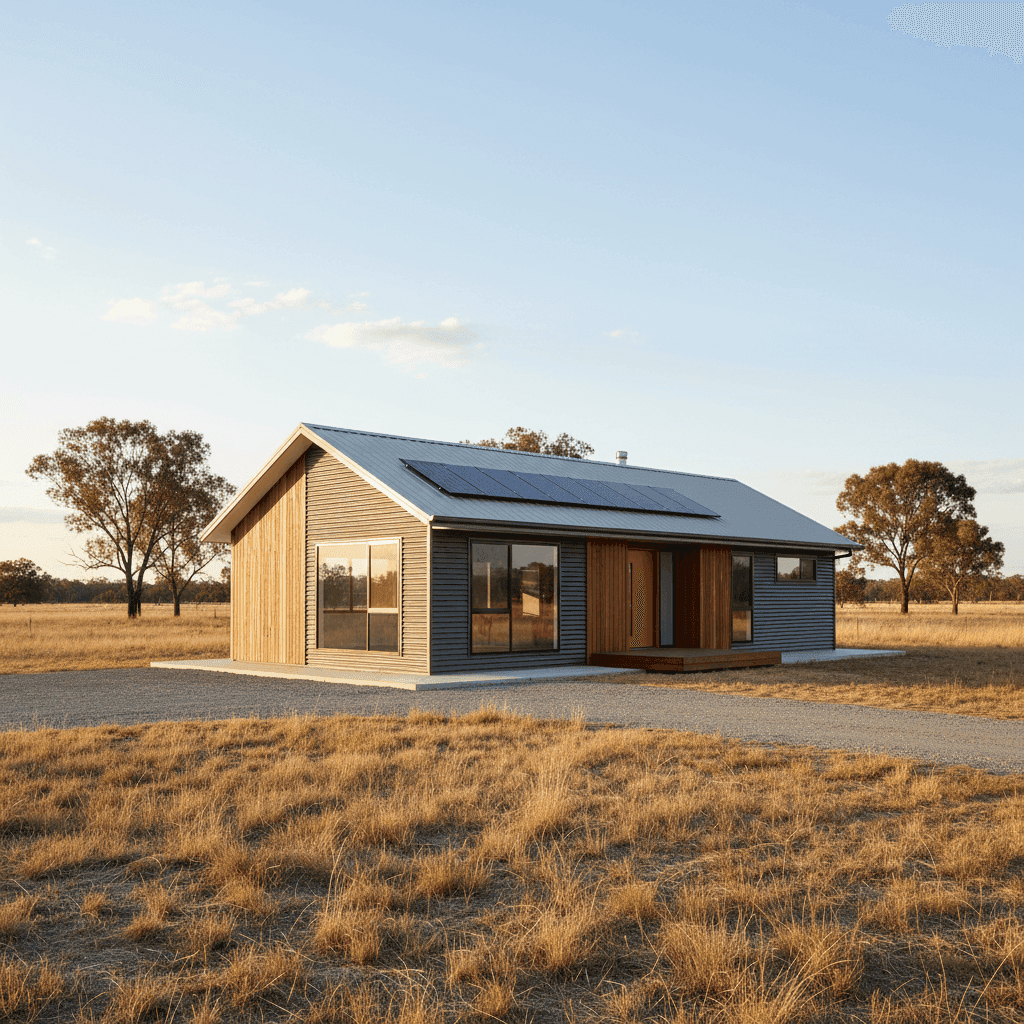
If you own a free standing home in Byrnestown, QLD 4625, you've probably noticed that home insurance premiums in regional Queensland can vary enormously. This article breaks down a recent home and contents insurance quote for a one-bedroom free standing home in Byrnestown — examining whether the price stacks up, how it sits against local and national benchmarks, and what property features are likely driving the cost.
---
Is This Quote Fair?
The quote in question comes in at $2,062 per year (or roughly $202 per month) for combined home and contents cover, with a building sum insured of $280,000 and contents valued at $40,000. Both the building and contents excess are set at $1,000.
Our pricing analysis rates this quote as Fair — Around Average. That's actually a reasonable outcome for a Byrnestown property. When you consider that the suburb average sits at $3,019 per year and the suburb median is $2,494 per year, this quote comes in noticeably below both benchmarks. It sits between the 25th percentile ($1,761/yr) and the median ($2,494/yr) for the local area — meaning it's cheaper than more than half the quotes recorded for this postcode.
That said, "fair" doesn't necessarily mean "the best available." There's still a meaningful gap between this quote and the cheapest end of the market locally, so it's worth understanding what's influencing the price before deciding whether to accept it or shop further.
---
How Byrnestown Compares
To put this quote in proper context, here's how Byrnestown stacks up against broader benchmarks:
| Benchmark | Annual Premium |
|---|---|
| This Quote | $2,062 |
| Byrnestown Suburb Average | $3,019 |
| Byrnestown Suburb Median | $2,494 |
| North Burnett LGA Average | $3,254 |
| QLD State Average | $4,547 |
| QLD State Median | $3,931 |
| National Average | $2,965 |
| National Median | $2,716 |
The numbers tell an interesting story. Byrnestown premiums are already elevated compared to the national average of $2,965, which reflects the broader challenge of insuring properties in regional and rural Queensland. However, this particular quote actually beats the national average — a solid result for a QLD property.
Queensland as a whole is one of the most expensive states for home insurance in Australia, with a state average of $4,547 per year — more than 50% above the national average. This is largely driven by extreme weather exposure across the state, including flooding, severe storms, and cyclone risk in northern regions. Byrnestown, situated in the North Burnett region, benefits from not being in a designated cyclone risk zone, which helps keep premiums more manageable than many other QLD postcodes.
The North Burnett LGA average of $3,254 per year further underscores that this quote represents genuine value for the area.
---
Property Features That Affect Your Premium
Several characteristics of this property are worth examining for their impact on insurance pricing:
New Build (2023) A construction year of 2023 is a significant advantage. Newer homes are built to modern Australian standards, meaning better structural integrity, updated electrical systems, and improved fire and weather resistance. Insurers generally view recently built homes as lower risk, which can translate to more competitive premiums.
Steel/Colorbond Roof Colorbond roofing is widely regarded as one of the better choices for insurance purposes in Australia. It's durable, fire-resistant, and performs well in high-wind conditions. Compared to older materials like terracotta tiles or corrugated iron, a steel roof signals lower maintenance risk and reduced likelihood of storm damage claims.
Slab Foundation A concrete slab foundation is generally considered stable and low-risk by insurers. It reduces exposure to issues like subsidence, termite damage through subfloor timbers, and moisture ingress — all of which can drive up premiums or complicate claims.
Solar Panels The property includes solar panels, which add value to the building sum insured. Solar systems can be costly to repair or replace after hail, storm, or fire damage, so it's important to confirm they're explicitly covered under the policy — not all standard building policies include solar panels automatically.
Ducted Climate Control Ducted air conditioning is a fixed building feature that contributes to the overall replacement cost of the home. It's appropriately factored into the building sum insured and is worth checking is covered under the building (not contents) section of the policy.
Timber/Laminate Flooring Timber and laminate floors can be expensive to replace after water damage events. This is worth noting given Queensland's storm season — ensuring the contents or building policy adequately covers floor replacement is a sensible precaution.
Small Footprint (1 Bed, 1 Bath) The compact size of this home naturally limits the replacement cost exposure, which is a contributing factor to the relatively modest building sum insured of $280,000 and the lower-than-average premium.
---
Tips for Homeowners in Byrnestown
1. Verify your solar panels are covered Not all home insurance policies automatically include solar panel systems under building cover. Check the Product Disclosure Statement (PDS) carefully to confirm your panels are listed as an insured item — and that the coverage extends to storm, hail, and accidental damage.
2. Review your building sum insured annually Construction costs in regional Queensland have risen significantly in recent years. A sum insured of $280,000 may be appropriate today, but it's worth reassessing each year using a building cost calculator to ensure you wouldn't be underinsured in the event of a total loss.
3. Consider your contents coverage carefully At $40,000, the contents sum insured is relatively modest. Walk through your home and estimate the replacement value of your furniture, appliances, clothing, and electronics. Many homeowners underestimate their contents value — and being underinsured at claim time can be a costly surprise.
4. Shop around at renewal Even though this quote is below the local suburb average, insurance markets shift every year. Insurers reprice based on claims data, reinsurance costs, and weather modelling. Make a habit of comparing quotes at renewal rather than simply auto-renewing — you may find a materially better deal without sacrificing cover quality.
---
Ready to Compare?
Whether you're reviewing an existing policy or getting cover for the first time, comparing quotes is the smartest way to make sure you're not overpaying. Get a home insurance quote at CoverClub and see how your premium stacks up against the Byrnestown market in seconds.