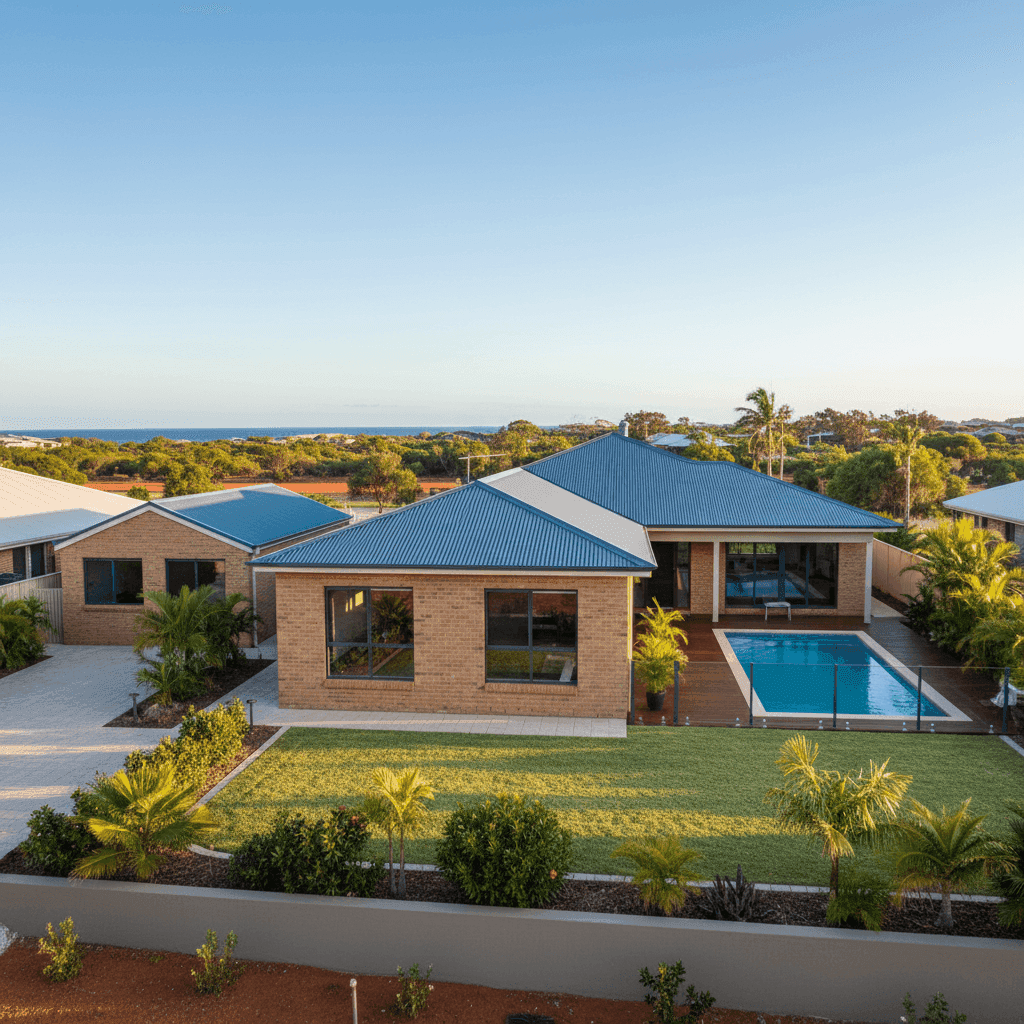
If you own a free standing home in Cable Beach, WA 6726, you already know that insuring a property in the Kimberley region comes with its own set of challenges — and costs. This article breaks down a real building insurance quote for a three-bedroom, brick veneer home in Cable Beach, comparing it against suburb, state, and national benchmarks to help you understand whether you're getting a fair deal.
---
Is This Quote Fair?
The quote in question sits at $4,465 per year (or $421 per month) for building-only cover on a home insured for $554,000, with a $2,000 building excess. According to CoverClub's pricing data, this quote is rated CHEAP — meaning it falls below the suburb average, which is a genuinely strong result for a property in this part of Western Australia.
To put that in perspective: the suburb average premium for Cable Beach sits at $7,305 per year, with a median of $7,412. This quote comes in at roughly 39% below the suburb average — a significant saving of over $2,800 annually compared to what many neighbours are likely paying.
Even against the 25th percentile (the cheapest quarter of quotes in the suburb), which sits at $6,430/yr, this premium is still considerably lower. That's a meaningful indicator that this particular quote is competitively priced by any local measure.
---
How Cable Beach Compares
Understanding your premium in isolation only tells part of the story. Here's how Cable Beach stacks up across different geographies:
| Benchmark | Average Premium |
|---|---|
| Cable Beach (suburb) | $7,305/yr |
| LGA: Broome | $6,808/yr |
| Western Australia | $2,811/yr |
| National | $5,347/yr |
A few things stand out immediately. Cable Beach premiums are dramatically higher than the WA state average of $2,811/yr — nearly 2.6 times more expensive. This reflects the elevated risk profile of properties in the Broome region, particularly cyclone exposure, which is a major pricing driver for insurers operating in northern WA.
Interestingly, Cable Beach also sits well above the national average of $5,347/yr (and well above the national median of $2,764/yr), which highlights just how significant the regional risk loading is for this part of Australia. You can explore broader WA home insurance statistics and national home insurance data on CoverClub to see how other regions compare.
The Broome LGA average of $6,808/yr also confirms this isn't just a Cable Beach anomaly — elevated premiums are a reality across the wider Broome district.
---
Property Features That Affect Your Premium
Several characteristics of this property directly influence how insurers assess and price the risk:
Cyclone Risk Zone
This is the single biggest factor. Cable Beach sits firmly within a designated cyclone risk area, and insurers apply substantial loadings to properties in northern WA as a result. Cyclone damage — from wind, rain ingress, and flying debris — can be catastrophic, and this risk is baked into every premium in the region.
Brick Veneer Walls & Colorbond Roof
Brick veneer construction is generally viewed favourably by insurers compared to lightweight cladding or fibrous cement, as it offers reasonable wind and impact resistance. The steel/Colorbond roof is also a practical choice for cyclone-prone areas — it's durable and less likely to fail than older roofing materials, which can help moderate the premium.
Slab Foundation & Tile Flooring
A concrete slab foundation is standard for the region and presents no particular risk concerns. Tiled flooring is similarly low-risk from an insurance perspective — it's durable, not susceptible to water damage in the same way timber floors are, and easy to repair or replace.
Swimming Pool
The presence of a pool adds a small but measurable liability and replacement cost component to the sum insured calculation. Pools also require specific coverage consideration for equipment like pumps and filtration systems.
Granny Flat
A secondary dwelling on the property increases the overall replacement cost and structural complexity of the risk. Insurers will factor this into the building sum insured, and it's important to ensure the granny flat is explicitly covered under the policy — not all building policies automatically extend to secondary structures.
Ducted Climate Control
Ducted air conditioning is a significant fixed asset in the building and contributes meaningfully to the sum insured. In a region like Cable Beach where temperatures regularly exceed 35°C, it's also a high-use system, making coverage for mechanical breakdown or storm damage particularly relevant.
1989 Construction
At over 35 years old, this home sits in a mid-range age bracket. Properties from this era may have older wiring, plumbing, or roofing materials that some insurers view as slightly higher risk — though the Colorbond roof suggests the property may have had at least partial renovation or re-roofing over the years.
---
Tips for Homeowners in Cable Beach
1. Don't underinsure your building — especially with a granny flat With a granny flat on site, it's easy to underestimate your total replacement cost. Make sure your sum insured reflects the cost of rebuilding both structures from scratch, including demolition, site clearance, and current construction costs in the Broome region (which can be higher than metro areas due to labour and materials logistics).
2. Review your cyclone-specific policy conditions Many policies in cyclone-prone areas include specific conditions around storm preparation — such as securing outdoor furniture, maintaining roof fixings, or having compliant cyclone shutters. Failing to meet these conditions could affect a claim. Read the Product Disclosure Statement (PDS) carefully before cyclone season.
3. Compare quotes annually — don't auto-renew This quote demonstrates that premiums in Cable Beach can vary enormously between insurers. The difference between the cheapest and most expensive quotes in this suburb spans thousands of dollars per year. Shopping around at renewal time — rather than simply accepting the auto-renewal — can result in significant savings.
4. Consider your excess strategically A $2,000 building excess is on the higher end. While a higher excess reduces your annual premium, in a cyclone-risk area where claims can be large and potentially frequent, it's worth modelling whether a lower excess might be worth the modest additional cost — particularly if a major weather event could result in multiple claims in a short period.
---
Ready to Compare Home Insurance in Cable Beach?
Whether you're reviewing your current policy or insuring a property for the first time, comparing multiple quotes is the most effective way to make sure you're not overpaying. CoverClub makes it easy to see real premium data for your suburb and get quotes from a range of insurers — all in one place.