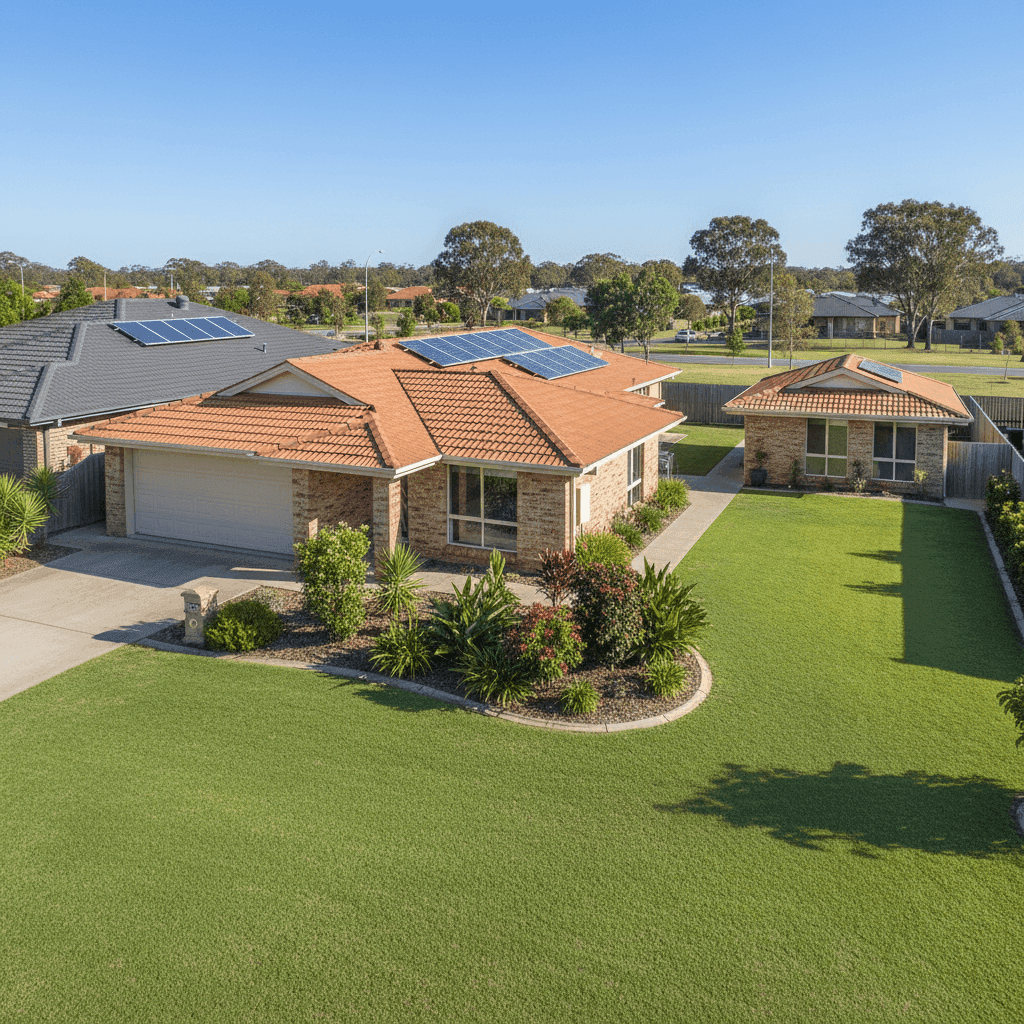
Caboolture, sitting in the heart of the Moreton Bay region just north of Brisbane, has grown into one of South-East Queensland's most popular family destinations. With its mix of established neighbourhoods and newer estates, the suburb attracts homeowners looking for space and value — and a five-bedroom free-standing home is a perfect example of what the area has to offer. If you own a property like this, understanding what you should be paying for home and contents insurance is just as important as finding the right cover.
This article breaks down a real insurance quote for a 5-bedroom, 2-bathroom brick veneer home in Caboolture (postcode 4510), built in 2008, with a building sum insured of $650,000 and contents cover of $100,000 — and helps you understand whether the $1,496 annual premium represents good value.
---
Is This Quote Fair?
The short answer: yes, broadly speaking — but with some important context.
This quote has been rated Fair (Around Average) based on how it sits within the local pricing landscape. At $1,496 per year (or around $138 per month), it lands comfortably below the Caboolture suburb average of $2,369/yr and also below the suburb median of $2,189/yr. That's a meaningful saving compared to what many Caboolture homeowners are paying.
However, "fair" doesn't mean "the best available." The suburb's 25th percentile sits at $1,239/yr, which means roughly a quarter of comparable properties in the area are being insured for less. There's room to explore whether a lower premium is achievable without sacrificing cover quality — particularly given the property's size and the inclusion of a granny flat.
It's also worth noting that the building excess is set at $3,000, which is on the higher side. A higher excess typically reduces your premium, so part of the reason this quote looks competitive may be that the policyholder has accepted more out-of-pocket risk in the event of a claim.
---
How Caboolture Compares
To put this quote in proper perspective, it helps to zoom out and look at the broader pricing environment.
| Benchmark | Premium |
|---|---|
| This quote | $1,496/yr |
| Caboolture suburb average | $2,369/yr |
| Caboolture suburb median | $2,189/yr |
| Moreton Bay LGA average | $3,145/yr |
| QLD state average | $4,547/yr |
| QLD state median | $3,931/yr |
| National average | $2,965/yr |
| National median | $2,716/yr |
The figures here tell an interesting story. Queensland's average home insurance premium of $4,547/yr is dramatically higher than the national average — a reflection of the state's significant exposure to cyclones, flooding, and severe storms. Caboolture itself, while not classified as a cyclone risk area, does sit in a region that experiences heavy rainfall and storm events.
Despite that broader state context, Caboolture's local averages are considerably lower than the QLD state figure, suggesting the suburb benefits from relatively moderate risk compared to far north Queensland or coastal cyclone zones. And this particular quote, at $1,496/yr, sits well below even the national median of $2,716/yr — making it look quite reasonable on a national scale.
The Moreton Bay LGA average of $3,145/yr is a useful local reference point. This quote comes in at less than half that figure, which is worth noting — though LGA averages can be skewed by higher-risk pockets within a large geographic area.
---
Property Features That Affect Your Premium
Several characteristics of this property work in the homeowner's favour when it comes to insurance pricing.
Brick veneer construction is generally viewed favourably by insurers. It offers solid fire resistance and structural durability compared to lightweight or weatherboard alternatives, which can translate into lower premiums.
Tiled roofing is similarly well-regarded. Tiles are durable and perform well in storm conditions, though they can be more expensive to repair or replace if damaged — a trade-off insurers factor into their calculations.
Slab foundation is the standard for Queensland homes built in this era and carries no particular risk loading. Combined with tiled flooring throughout, the property has a solid, low-maintenance profile that insurers tend to price more favourably.
Built in 2008, the home falls into a relatively modern bracket. Newer builds generally comply with more stringent building codes, which can reduce the likelihood of structural issues and fire risk — both of which influence premiums.
Solar panels are worth flagging. While they're an asset, insurers need to account for the cost of repairing or replacing panels in the event of storm damage, hail, or fire. It's important to confirm with your insurer that your solar system is explicitly covered under your building policy and that the sum insured reflects its replacement value.
The granny flat is a significant factor. Many standard home insurance policies have specific conditions around secondary dwellings — some cover them automatically, others require a separate endorsement or policy. If the granny flat is used as a rental, this can further complicate coverage and may affect your premium or eligibility. Always clarify this with your insurer directly.
---
Tips for Homeowners in Caboolture
1. Review your sum insured regularly Building costs have risen sharply in recent years. A $650,000 sum insured for a 325 sqm home in Caboolture may be adequate today, but it's worth reassessing annually — particularly if you've made improvements or if local construction costs have shifted. Underinsurance is one of the most common and costly mistakes homeowners make.
2. Clarify granny flat coverage explicitly Don't assume your granny flat is automatically covered under your standard building policy. Ask your insurer in writing what is and isn't included, especially if it's tenanted. You may need a landlord insurance policy or a specific endorsement to be fully protected.
3. Confirm solar panel coverage Check that your policy covers the full replacement value of your solar panel system, including inverters and mounting hardware. Some policies treat solar panels as a separate item with their own sub-limit or exclusions.
4. Consider your excess carefully The $3,000 building excess on this policy is relatively high. While it has helped keep the premium down, it means you'd need to absorb a significant cost before your insurer steps in. If a storm causes $3,500 worth of roof tile damage, you're essentially paying for most of it yourself. Weigh up whether a lower excess (and slightly higher premium) might make more sense for your financial situation.
---
Compare Your Options at CoverClub
Whether you're renewing your existing policy or shopping for cover on a new property, it pays to compare. CoverClub makes it easy to see what Caboolture homeowners are actually paying and to get quotes tailored to your specific property. Start comparing home insurance quotes today and make sure you're not leaving money on the table — or gaps in your cover.
For more localised data, explore the Caboolture suburb insurance stats or browse Queensland-wide home insurance benchmarks to see how your premium stacks up.