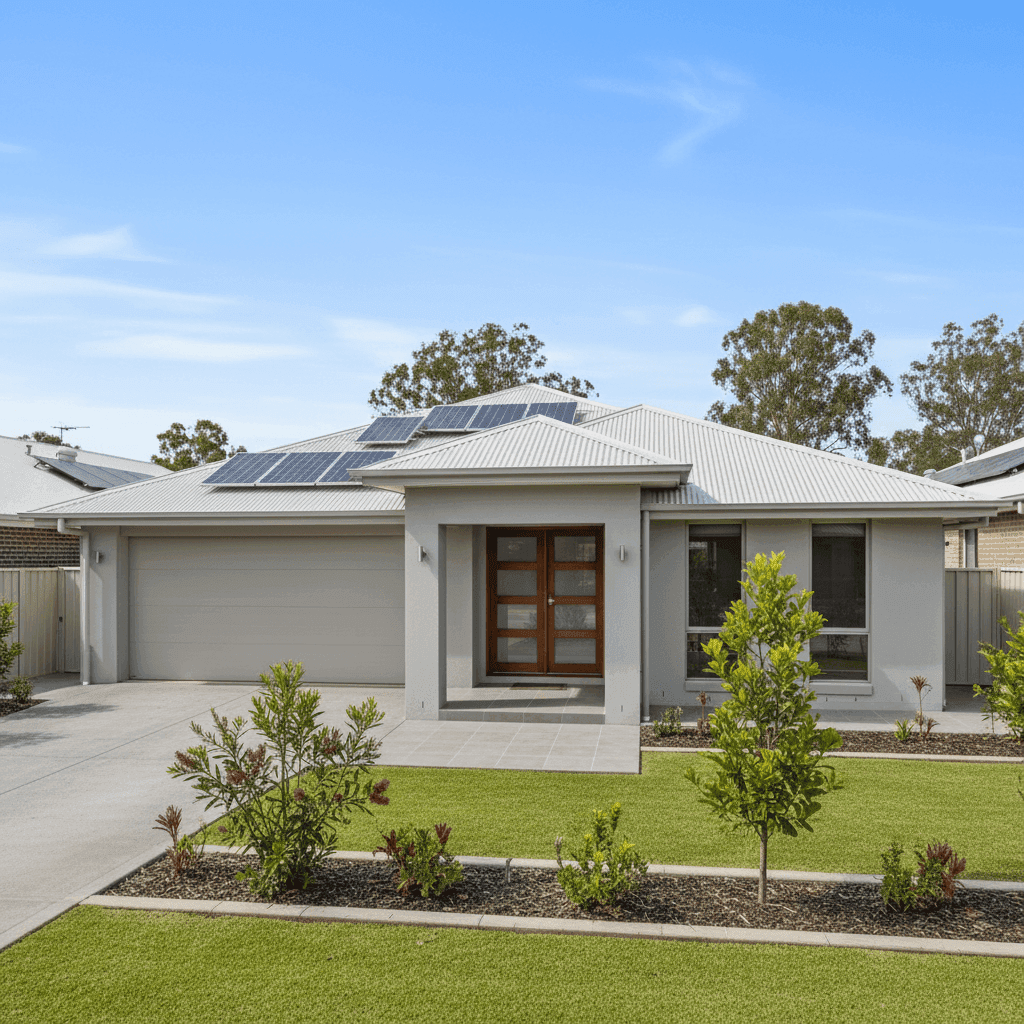
If you own a free standing home in Caboolture South, QLD 4510, you might be wondering whether your home insurance premium is competitive — or whether you're quietly overpaying year after year. This article breaks down a real building-only insurance quote for a two-bedroom, two-bathroom property in the suburb, compares it against local, state, and national benchmarks, and offers practical guidance for homeowners in the area.
---
Is This Quote Fair?
The quote in question sits at $683 per year (or roughly $63 per month) for building-only cover on a 139 sqm free standing home insured for $433,000. Our price rating for this quote is CHEAP — well below the suburb average.
To put that in perspective: the average building insurance premium across the 42 quotes we've recorded for Caboolture South sits at $1,782 per year, with a median of $1,826. Even at the lower end of the local spread (25th percentile), premiums typically reach $1,246 per year. This quote comes in at less than half that figure — a genuinely strong result for the homeowner.
So yes, by any reasonable measure, this is a fair — and in fact, an exceptionally competitive — quote. That said, it's always worth understanding why a premium lands where it does, and what factors are working in this property's favour.
---
How Caboolture South Compares
Caboolture South sits within the Moreton Bay LGA, a large and diverse local government area that spans both coastal and inland communities. Insurance pricing across the region reflects that variety.
Here's how the suburb stacks up against broader benchmarks:
| Benchmark | Average Premium |
|---|---|
| Caboolture South (suburb avg.) | $1,782/yr |
| Moreton Bay LGA avg. | $3,435/yr |
| Queensland avg. | $4,547/yr |
| National avg. | $2,965/yr |
A few things stand out here. First, Queensland's average home insurance premium of $4,547 per year is significantly higher than the national average of $2,965 — a reflection of the state's elevated exposure to extreme weather events including cyclones, flooding, and severe storms. Second, Caboolture South's suburb average of $1,782 is notably lower than both the LGA and state figures, suggesting the immediate area carries a relatively contained risk profile compared to many Queensland postcodes.
You can explore the full pricing data for this postcode on the Caboolture South insurance stats page.
The wide spread between the 25th percentile ($1,246) and 75th percentile ($2,311) also tells an important story: premiums in the suburb vary considerably depending on individual property features, insurer choice, and cover configuration. Shopping around genuinely makes a difference here.
---
Property Features That Affect Your Premium
Several characteristics of this particular property likely contribute to its competitive premium. Let's unpack the most relevant ones.
Hebel External Walls
Hebel (autoclaved aerated concrete panels) is a modern, lightweight building material with excellent fire resistance and good structural integrity. Insurers generally view it favourably compared to older materials like weatherboard or fibro, which can be more susceptible to fire damage and deterioration. This is likely a positive factor in the premium calculation.
Steel / Colorbond Roof
Colorbond steel roofing is one of the most common and well-regarded roofing materials in Australia. It's durable, low-maintenance, and performs well in both heat and rain. From an insurance perspective, it represents lower risk than materials like terracotta tiles (which can crack) or older iron roofing.
Slab Foundation & Tiled Flooring
A concrete slab foundation is standard for modern Queensland builds and is generally considered structurally sound and resistant to movement. Tiled flooring similarly presents a lower risk profile — it's durable, water-resistant, and less susceptible to damage from moisture or pests compared to carpet or timber.
Construction Year: 2018
Newer homes benefit from being built to more recent Australian building codes, which include improved standards for structural resilience, fire safety, and weather resistance. A 2018 build is relatively young in insurance terms, meaning fewer concerns about wear, outdated materials, or deferred maintenance.
Solar Panels
Solar panels do add a small degree of complexity to a building insurance policy — they need to be covered as part of the building sum insured, and there's some risk associated with electrical faults or storm damage. However, they're a standard feature in modern Australian homes and most insurers accommodate them without significant premium loading.
High Excess
It's worth noting that the $5,000 building excess on this policy is on the higher end. Choosing a higher excess is a common strategy to reduce premiums — the insurer takes on less small-claim risk, and passes some of that saving on to the policyholder. If you're comfortable covering smaller repair costs out of pocket, this can be a smart trade-off. Just make sure you have those funds accessible if you ever need to claim.
Not in a Cyclone Risk Zone
Unlike many parts of Queensland — particularly Far North Queensland — Caboolture South is not classified as a cyclone risk area. This is a meaningful premium factor. Cyclone-rated cover adds substantial cost for properties in affected zones, so being outside that classification keeps premiums more manageable.
---
Tips for Homeowners in Caboolture South
Whether you're reviewing an existing policy or shopping for the first time, here are four practical tips tailored to homeowners in this part of Queensland.
- Get your sum insured right. A $433,000 building sum insured for a 139 sqm home in Caboolture South is a reasonable figure, but building costs change over time. Use a reputable building cost calculator annually to make sure you're not underinsured — particularly given the rise in construction costs across Queensland in recent years.
- Compare quotes across multiple insurers. The spread between the 25th and 75th percentile premiums in Caboolture South is over $1,000 per year. That gap exists because different insurers price risk differently. Running a comparison each renewal cycle is one of the simplest ways to avoid overpaying.
- Review your excess settings. If your current policy has a high excess (like the $5,000 in this example), make sure it reflects your financial situation. If your emergency savings have grown, a high excess might make sense. If they haven't, consider whether a lower excess with a slightly higher premium might give you better peace of mind.
- Check your solar panels are covered. If you have solar panels (as this property does), confirm with your insurer that they're explicitly included in your building sum insured. Some policies include them automatically; others require you to specify them. Leaving them out could mean a gap in cover if they're damaged in a storm or hailstorm.
---
Ready to Compare?
Whether this quote resonates with your own situation or you're simply curious about what you should be paying, the best next step is to run your own comparison. CoverClub makes it easy to get multiple building insurance quotes side by side, so you can see exactly where your premium sits relative to the market.