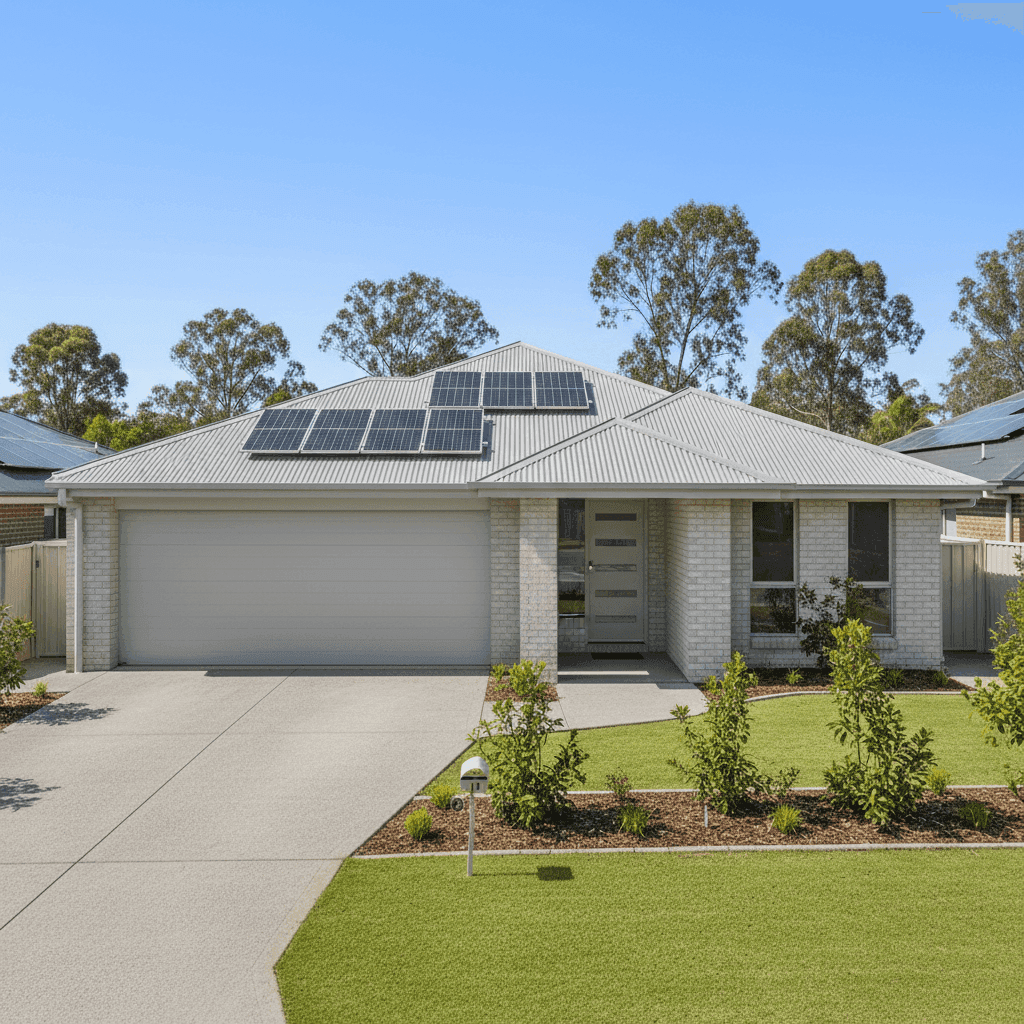
If you own a free standing home in Caboolture South, QLD 4510, you've probably noticed that insurance premiums in South East Queensland can vary wildly depending on your property's features, location, and the insurer you choose. This article breaks down a real home and contents insurance quote for a three-bedroom, two-bathroom brick veneer home in the suburb — and puts the numbers into context so you know whether you're getting a fair deal.
---
Is This Quote Fair?
The quote in question comes in at $889 per year (or $84 per month) for combined home and contents cover, with a building sum insured of $410,000 and contents valued at $30,000. The building excess is $3,000 and the contents excess is $1,000.
Our rating? Cheap — below average. That's a genuinely positive result.
To put it plainly: this premium sits well below what most homeowners in Caboolture South are paying. The suburb average sits at $1,782 per year, meaning this quote is roughly 50% cheaper than the typical price in the area. Even compared to the 25th percentile — the cheapest quarter of quotes in the suburb — which comes in at $1,246 per year, this premium still undercuts the field by a significant margin.
For a homeowner watching the household budget, that's a meaningful saving of nearly $900 annually compared to what a neighbour might be paying for similar cover.
---
How Caboolture South Compares
Caboolture South sits within the Moreton Bay Local Government Area, and the broader regional and state-level data paints a striking picture of just how expensive home insurance has become across Queensland.
| Benchmark | Annual Premium |
|---|---|
| This Quote | $889 |
| Suburb Average (4510) | $1,782 |
| Suburb Median (4510) | $1,826 |
| LGA Average (Moreton Bay) | $3,145 |
| QLD State Average | $4,547 |
| QLD State Median | $3,931 |
| National Average | $2,965 |
| National Median | $2,716 |
Queensland's state average of $4,547 per year is the highest in the country, driven largely by the elevated risk of cyclones, flooding, and severe storms across much of the state. While Caboolture South is not classified as a cyclone risk area, it still sits in a region where insurers price in the possibility of storm damage, hail, and flash flooding — all of which are genuine weather risks in South East Queensland.
What's notable here is that even the Caboolture South suburb average of $1,782 is dramatically lower than the broader QLD state average, suggesting that postcode 4510 is considered a comparatively lower-risk location by insurers. The quote analysed here goes even further, sitting below the suburb's own 25th percentile — meaning fewer than one in four quotes in the area come in this cheaply.
You can explore the full breakdown of local pricing data on the Caboolture South insurance stats page.
---
Property Features That Affect Your Premium
Insurance underwriters don't price policies arbitrarily — every feature of your home feeds into the risk calculation. Here's how the characteristics of this particular property likely contribute to its competitive premium:
Brick Veneer Walls Brick veneer is one of the most common wall constructions in Australian suburban homes, and it's generally viewed favourably by insurers. It offers solid fire resistance and durability compared to timber or weatherboard, which can translate to lower premiums.
Steel / Colorbond Roof Colorbond steel roofing is durable, lightweight, and performs well in high-wind and hail events. It's also non-combustible, which reduces fire risk. Insurers tend to price this material more competitively than terracotta tiles or older roofing types that may be more prone to storm damage.
Concrete Slab Foundation A slab foundation is structurally sound and eliminates the underfloor space that can be vulnerable to moisture, pests, and flooding ingress. This reduces the risk profile compared to homes on stumps or piers.
Built in 2014 A relatively modern construction date means the home was built to contemporary building codes, which include improved standards for cyclone, wind, and flood resistance. Newer homes generally attract lower premiums than older stock.
Solar Panels Solar panels are an asset worth noting on your policy. While they can add some complexity to a claim (they're typically covered as part of the building), they don't significantly inflate premiums for most standard residential properties. It's worth confirming with your insurer that your panels are explicitly included in the building sum insured.
Ducted Climate Control Ducted air conditioning systems are a fixed installation and should be covered under the building component of your policy. Ensure your sum insured accounts for the replacement cost of this system — it can be a costly item to replace if not adequately covered.
214 sqm Building Size At 214 square metres, this is a mid-sized home. Building size directly influences the cost to rebuild, which is the foundation of your sum insured calculation. It's worth periodically reviewing your sum insured to ensure it keeps pace with rising construction costs.
---
Tips for Homeowners in Caboolture South
Even if your current premium is already competitive, there are always steps you can take to protect your cover and potentially reduce costs further.
1. Review your sum insured regularly Construction costs have risen sharply in recent years. A sum insured of $410,000 for a 214 sqm home may be appropriate today, but it's worth recalculating annually using a building cost estimator. Being underinsured at claim time can leave you significantly out of pocket.
2. Consider your excess settings carefully This policy carries a $3,000 building excess — higher than the standard $1,000–$2,000 range. A higher excess typically reduces your premium, but make sure you're comfortable covering that amount out of pocket in the event of a claim. If cash flow is a concern, a lower excess (with a slightly higher premium) might offer better peace of mind.
3. Bundle your home and contents cover This quote already combines home and contents, which is a smart move. Many insurers offer discounts for bundling, and managing a single policy is simpler come renewal time. Just make sure your contents sum of $30,000 genuinely reflects the value of everything inside your home — furniture, appliances, clothing, and electronics can add up quickly.
4. Compare quotes at every renewal The insurance market is competitive, and loyalty doesn't always pay. Premiums can shift significantly from year to year, and the best deal today may not be the best deal in 12 months. Use a comparison tool to benchmark your renewal quote against the market before you auto-renew.
---
Ready to Compare Home Insurance in Caboolture South?
Whether you're a first-time buyer or a long-term homeowner in Caboolture South, it pays to know what the market looks like before you commit to a policy. CoverClub makes it easy to get a home insurance quote and compare your options side by side — so you can make a confident, informed decision rather than just accepting whatever lands in your inbox at renewal time.