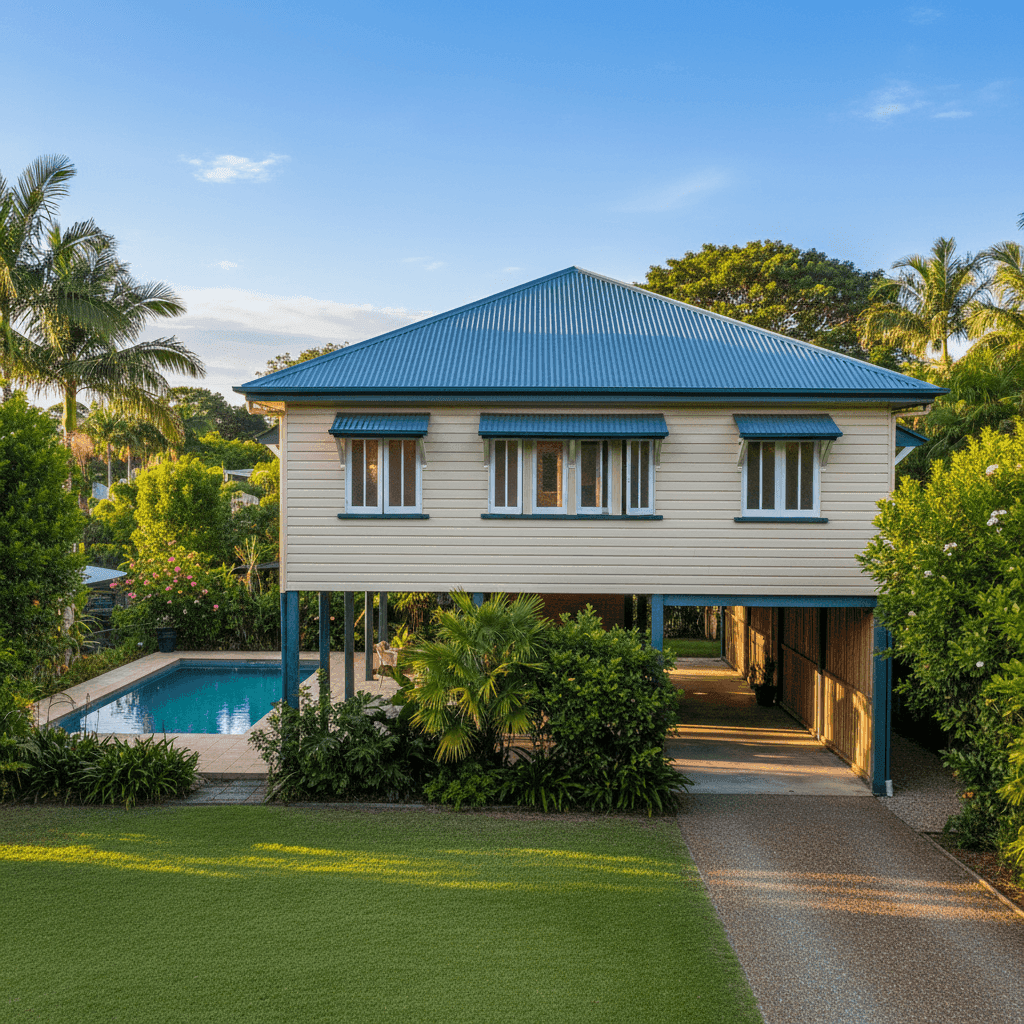
If you own a free standing home in Cairns North, QLD 4870, you already know that insuring it comes with a few extra considerations compared to properties further south. Between cyclone exposure, tropical rainfall, and the unique construction styles common to Far North Queensland, home insurance in this part of the world is a different beast entirely. This article breaks down a real home and contents insurance quote for a 4-bedroom, 2-bathroom weatherboard home in Cairns North — and helps you understand whether the price stacks up.
---
Is This Quote Fair?
The quote in question comes in at $9,615 per year (or $921/month) for combined home and contents cover, with a building sum insured of $784,000 and contents valued at $31,500. The building excess is $1,000 and the contents excess is $500.
Our price rating for this quote is Expensive — above the suburb average.
Here's the context: the average home insurance premium in Cairns North currently sits at $8,241 per year, with a median of $7,452. This quote lands above the 75th percentile for the suburb (which is $9,336/yr), meaning it's pricier than roughly three-quarters of comparable quotes we've seen in the area.
That said, "expensive" doesn't automatically mean "wrong." Several features of this particular property — which we'll cover below — justify a higher-than-average loading. The key question is whether the cover is competitive given those specific risk factors. Based on our data from 22 quotes in the suburb, there is room to shop around.
---
How Cairns North Compares
To put this quote in perspective, here's how Cairns North stacks up against broader benchmarks:
| Benchmark | Average Premium | Median Premium |
|---|---|---|
| Cairns North (4870) | $8,241/yr | $7,452/yr |
| Queensland | $9,129/yr | $3,903/yr |
| National | $5,347/yr | $2,764/yr |
| Cairns LGA | $12,404/yr | — |
A few things stand out here. The Queensland state average of $9,129/yr is notably high compared to the national average of $5,347 — a reflection of the elevated natural hazard risk across much of the state, particularly in cyclone-prone coastal regions. Interestingly, the state median of $3,903 is far lower, which tells us that premiums in QLD are heavily skewed by high-risk properties pulling the average upward.
Cairns North sits comfortably above the national average, which is expected. What's more striking is that the Cairns LGA average reaches $12,404/yr — significantly higher than the suburb average for Cairns North specifically. This suggests that some surrounding suburbs within the Cairns local government area carry even greater risk loadings.
For a deeper look at local pricing trends, visit our Cairns North suburb stats page, the Queensland state overview, or the national home insurance statistics.
---
Property Features That Affect Your Premium
This isn't a vanilla suburban brick home — and the premium reflects that. Here's a breakdown of the key property characteristics and how they influence the cost of cover:
🌀 Cyclone Risk Area
This is the single biggest driver of elevated premiums in Cairns North. Properties in designated cyclone risk zones attract significantly higher building insurance costs due to the potential for catastrophic wind damage. Insurers apply cyclone-specific loadings, and some policies include separate cyclone excess provisions. This alone can add thousands of dollars annually to a premium.
🏚️ Weatherboard Construction (1935 Build)
Older weatherboard homes are generally considered higher risk than modern brick or steel-frame construction. The property was built in 1935, making it nearly 90 years old. While heritage homes have character and often excellent craftsmanship, they can be more expensive to repair or replace, and may be more vulnerable to wind and moisture damage — both highly relevant in Far North Queensland.
🏗️ Pole Foundation (Elevated by at Least 1m)
The elevated, pole-set foundation is a classic Queensland construction style — and for good reason. Raising a home above ground level provides meaningful protection against flooding and storm surge, which can actually reduce certain risk loadings. However, elevated homes also have exposed understorey areas that add to rebuild complexity and cost.
🏊 Swimming Pool
Having a pool on the property adds to the sum insured and can increase liability exposure, both of which contribute to a higher overall premium. Pool equipment, fencing compliance, and liability for injuries are all considerations insurers factor in.
❄️ Ducted Climate Control
Ducted air conditioning systems are expensive to replace and are included in the building sum insured calculation. In a tropical climate like Cairns, these systems are essential — but they do add to the overall rebuild cost, which is reflected in the $784,000 building sum insured.
🪵 Timber Flooring
Timber and laminate flooring in an older elevated home can be susceptible to moisture and termite damage. While not always a direct premium driver, it contributes to the overall rebuild cost profile of the property.
---
Tips for Homeowners in Cairns North
If you're looking to get better value on your home insurance without compromising on cover, here are four practical steps worth taking:
- Shop around — seriously. With a quote above the 75th percentile for the suburb, there's a genuine chance a comparable policy is available at a lower price. Use a comparison tool like CoverClub to see multiple quotes side by side rather than renewing on autopilot.
- Review your building sum insured carefully. At $784,000, the building sum insured is a significant figure. Make sure it reflects the actual cost to rebuild your home (not the market value), and consider using a professional building cost estimator to avoid over-insuring — which directly inflates your premium.
- Ask about cyclone mitigation discounts. Some insurers offer reduced premiums for homes that have been cyclone-proofed — things like storm shutters, reinforced roofing connections, or compliance with modern cyclone construction standards. Given the age of this home, even targeted upgrades could unlock savings.
- Consider your excess settings. Opting for a higher voluntary excess can meaningfully reduce your annual premium. If you have the financial buffer to cover a larger out-of-pocket cost in the event of a claim, this can be a smart way to bring down ongoing costs.
---
Ready to Compare?
Home insurance in Cairns North is complex, and the difference between the cheapest and most expensive quotes in the suburb is substantial. Whether you're renewing an existing policy or insuring a new purchase, it pays to compare. Visit CoverClub to get a personalised quote for your property and see how your current cover measures up against the market.