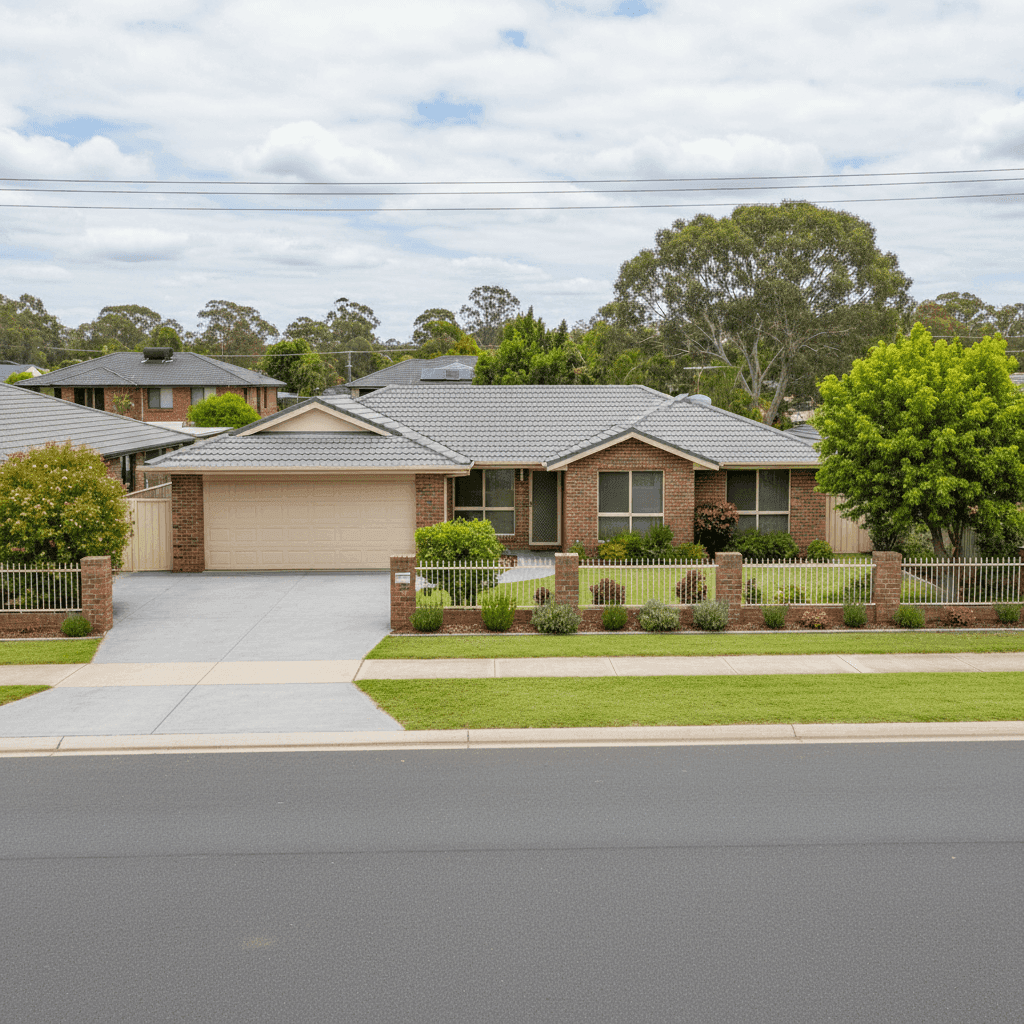
If you own a free standing home in Calamvale, QLD 4116, you might be wondering whether you're paying a fair price for your home and contents insurance — or leaving money on the table. This article breaks down a real insurance quote for a four-bedroom, two-bathroom brick veneer home in Calamvale, comparing it against local, state, and national benchmarks so you can make a more informed decision at renewal time.
---
Is This Quote Fair?
The short answer: yes — and then some. This quote came in at $1,244 per year (or roughly $121 per month), covering both building ($685,000 sum insured) and contents ($149,000). Based on our pricing data, this sits firmly in the "Cheap" category, meaning it's well below the average for the suburb.
To put that in perspective, the average home and contents premium in Calamvale currently sits at $1,895 per year, and the median is $1,877. That means this quote is approximately $651 cheaper than the suburb average — a saving of around 34%. Even compared to the 25th percentile (the cheapest quarter of quotes in the area), which sits at $1,679, this quote still undercuts the market meaningfully.
For a homeowner budgeting carefully, that's a significant difference. At $1,244 annually, this policy offers strong value without appearing to sacrifice meaningful coverage.
---
How Calamvale Compares
Zooming out beyond the suburb level paints an even clearer picture. You can explore the full local data on the Calamvale suburb insurance stats page.
| Benchmark | Annual Premium |
|---|---|
| This Quote | $1,244 |
| Calamvale Suburb Average | $1,895 |
| Calamvale Suburb Median | $1,877 |
| QLD State Average | $4,547 |
| QLD State Median | $3,931 |
| National Average | $2,965 |
| National Median | $2,716 |
The contrast with Queensland as a whole is striking. The QLD state average of $4,547 per year is more than three and a half times this quote — a reflection of how dramatically cyclone-prone and flood-affected regions in Far North Queensland and coastal areas drive up the state-wide figures. Calamvale, sitting in Brisbane's southern suburbs, benefits from a far more benign risk profile.
Even against the national average of $2,965, this quote is well below par. Nationally, insurers are pricing in elevated risks across many parts of Australia — bushfire corridors, cyclone zones, and flood-prone river towns — which pushes the average up considerably. Calamvale homeowners, by contrast, tend to enjoy relatively moderate premiums by comparison.
It's worth noting that the Brisbane LGA average sits at a staggering $16,277 — but this figure is heavily skewed by high-value properties and elevated-risk pockets across the broader LGA, and shouldn't be used as a benchmark for a typical suburban home in Calamvale.
---
Property Features That Affect Your Premium
Several characteristics of this particular home work in the owner's favour from an insurance pricing perspective.
Brick Veneer Construction Brick veneer is one of the more insurer-friendly wall materials in Australia. It's durable, fire-resistant, and less susceptible to storm damage than lightweight cladding or weatherboard. Many insurers apply lower risk weightings to brick veneer homes, which can translate directly into lower premiums.
Tiled Roof A tiled roof is similarly well-regarded by underwriters. Tiles are long-lasting, handle heat well, and perform reliably in moderate weather events. Compared to older corrugated iron or asbestos-cement roofing, tiles are generally associated with lower claim frequencies.
Concrete Slab Foundation Slab foundations are standard across Brisbane's southern suburbs and are considered low-risk by most insurers. They're not prone to the subsidence issues that can affect older stumped homes, which keeps structural risk — and premiums — in check.
Tiled Flooring Tiled flooring throughout the home reduces the risk of water damage claims compared to carpet or timber, particularly in bathrooms and kitchens. This is a subtle but real factor in how some insurers assess contents and building risk.
No Pool, No Solar, No Ducted Climate Control Each of these additions introduces incremental risk or replacement cost. The absence of a pool removes liability exposure; no solar panels means no complex electrical system to insure; and without ducted air conditioning, there's one less expensive system that could fail or cause water ingress. Keeping the property "standard" in this regard helps contain the premium.
1997 Build Year Homes built in the late 1990s generally comply with modern building codes while being old enough that any early construction defects have long since surfaced. This vintage is typically viewed neutrally to favourably by insurers.
Standard Fittings With standard (rather than premium or high-end) fittings, the cost to repair or rebuild is more predictable and less expensive, which is reflected in the building sum insured and, ultimately, the premium.
---
Tips for Homeowners in Calamvale
Whether you're renewing soon or just shopping around, here are a few practical steps to make sure you're getting the best deal on your home insurance.
1. Don't Auto-Renew Without Comparing Loyalty rarely pays in insurance. Insurers often reserve their sharpest pricing for new customers, meaning your premium can creep up year after year without a corresponding increase in risk. Make it a habit to compare quotes at renewal — even if your current insurer's price seems reasonable.
2. Review Your Sum Insured Annually Building costs have risen sharply across Australia in recent years. If your sum insured hasn't kept pace with construction cost inflation, you could be underinsured in the event of a total loss. Use a building cost calculator or speak to a valuer to make sure your $685,000 (or whatever your figure is) still reflects realistic rebuild costs.
3. Consider Your Excess Carefully This quote carries a $2,000 building excess and a $1,000 contents excess. Opting for a higher excess is one of the most reliable ways to reduce your annual premium — but make sure you could comfortably cover that excess out of pocket if you needed to make a claim. There's no benefit in a lower premium if it leaves you financially exposed at claim time.
4. Check What's Actually Covered A cheap premium is only valuable if the policy covers what you need. Review the Product Disclosure Statement (PDS) for inclusions and exclusions — particularly around storm, flood, and accidental damage. Not all policies are equal, and the cheapest option isn't always the best fit for your circumstances.
---
Ready to See What You Could Pay?
The best way to know if you're getting a competitive rate is to compare. At CoverClub, we make it easy to see real quotes from multiple insurers side by side — so you can find the right cover at the right price for your home in Calamvale.