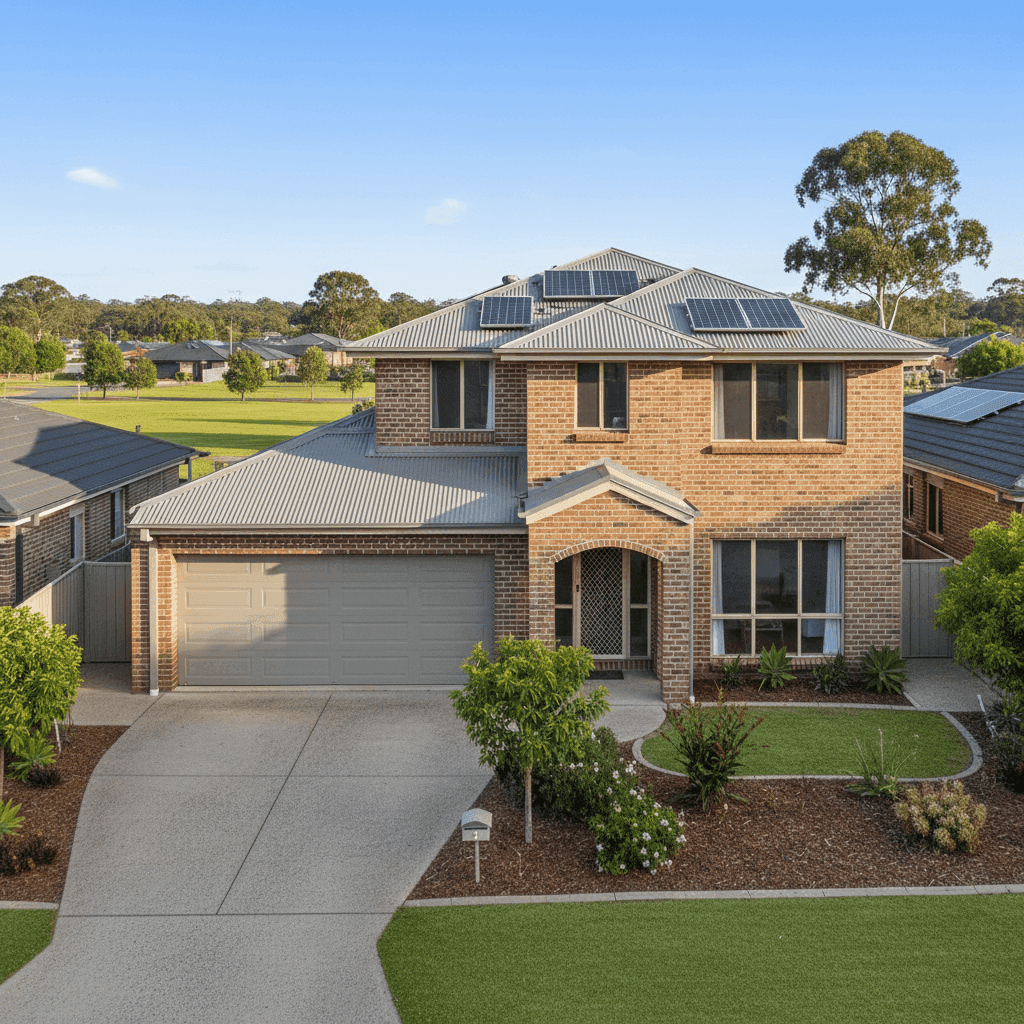
Calamvale is a well-established residential suburb in Brisbane's southern corridor, popular with families thanks to its leafy streets, good schools, and solid housing stock. If you own a free-standing home here, you're probably paying close attention to the cost of home and contents insurance — especially as premiums across Queensland have been making headlines in recent years. This article breaks down a real insurance quote for a four-bedroom, three-bathroom brick veneer home in Calamvale, and puts the numbers into context so you can judge whether you're getting a fair deal.
---
Is This Quote Fair?
The quote in question comes to $1,988 per year (or $191/month) for combined home and contents cover, with a $700,000 building sum insured and $30,000 in contents cover. Both the building and contents excess are set at $1,000.
Our price rating for this quote is FAIR — Around Average, and the data backs that up. Based on 106 quotes collected for Calamvale (postcode 4116), the suburb average sits at $1,827/year and the median at $1,814/year. At $1,988, this quote lands modestly above both figures — roughly 9% above the median — which is well within the normal range of variation you'd expect given differences in sum insured, cover inclusions, and insurer pricing models.
Importantly, this quote falls comfortably within the suburb's interquartile range: the 25th percentile is $1,053/year and the 75th percentile is $2,387/year. In other words, a quarter of Calamvale homeowners are paying more than $2,387, while another quarter are paying under $1,053. At $1,988, this property sits in the upper-middle band — reasonable for a larger, well-appointed home with a higher-than-average building sum insured.
---
How Calamvale Compares
One of the most striking things about this quote is just how affordable it looks when placed alongside broader Queensland insurance data.
| Benchmark | Average Premium | Median Premium |
|---|---|---|
| Calamvale (4116) | $1,827/yr | $1,814/yr |
| Brisbane LGA | $16,277/yr avg | — |
| Queensland (state) | $9,129/yr avg | $3,903/yr |
| National | $5,347/yr avg | $2,764/yr |
The Queensland state average of $9,129/year is heavily skewed by high-risk regional areas — particularly far north Queensland, where cyclone exposure, flooding, and storm surge drive premiums to extraordinary levels. The median of $3,903 is a more representative figure for typical Queensland homeowners, and even then, Calamvale's median of $1,814 sits well below it.
The Brisbane LGA average of $16,277 may seem startling, but this figure is similarly distorted by a small number of very high-risk or high-value properties pulling the average upward. Calamvale's position within Brisbane is actually quite favourable from an insurance risk perspective.
Compared to the national picture — where the average is $5,347 and the median is $2,764 — Calamvale homeowners are generally paying less than their counterparts in many other parts of the country. That's a meaningful advantage worth recognising.
---
Property Features That Affect Your Premium
Several characteristics of this particular property influence how insurers price the risk:
Brick Veneer Construction Brick veneer walls are viewed favourably by most Australian insurers. They offer good fire resistance and structural durability, which can contribute to more competitive premiums compared to timber-framed or clad homes.
Steel / Colorbond Roof Colorbond roofing is another positive signal for insurers. It's lightweight, resistant to corrosion, and performs well in storms — all factors that reduce the likelihood of a significant claim. This is particularly relevant in Queensland, where severe weather events are a real consideration.
Slab Foundation A concrete slab foundation is generally considered low-risk from an insurance standpoint. It offers stability and is less susceptible to issues like subsidence or termite ingress compared to raised timber stumps.
Solar Panels This property has solar panels installed, which is increasingly common in Queensland. Insurers treat solar panels as fixtures of the building, so they should be covered under the building sum insured. It's worth confirming with your insurer that the panels are explicitly included in your policy and that the $700,000 sum insured adequately accounts for their replacement value.
Ducted Climate Control Ducted air conditioning is a significant fixed asset. Like solar panels, it forms part of the building and should be reflected in the building sum insured. Given the cost of replacing a full ducted system, this is one area where underinsurance can quietly creep in.
1993 Construction A home built in 1993 is over 30 years old. While it's well past the teething stage, it's worth periodically reviewing whether your sum insured keeps pace with current construction costs. Rebuild costs have risen sharply in recent years due to labour shortages and material price increases, and a sum insured that was adequate five years ago may no longer be sufficient today.
Timber / Laminate Flooring Timber and laminate floors add aesthetic value but can be costly to repair or replace following water damage or impact events. Ensuring your building cover adequately accounts for flooring replacement is a detail worth checking in your policy documents.
---
Tips for Homeowners in Calamvale
1. Review your sum insured annually With construction costs continuing to rise across Australia, the $700,000 building sum insured on this property should be reassessed each year at renewal. Use a building cost calculator or speak with a quantity surveyor if you're unsure — underinsurance is one of the most common and costly mistakes homeowners make.
2. Confirm solar panels and ducted systems are covered Not all policies automatically include solar panels and ducted air conditioning in the standard building definition. Read your Product Disclosure Statement (PDS) carefully and ask your insurer directly if you're unsure. If these items aren't covered, you may need to increase your sum insured or arrange a policy endorsement.
3. Consider your excess strategically Both the building and contents excess on this policy are set at $1,000. A higher excess typically reduces your annual premium, while a lower excess means less out-of-pocket cost at claim time. Think about your financial buffer and how often you'd realistically make a claim — for many homeowners, a slightly higher excess in exchange for a lower premium makes good financial sense.
4. Shop around at renewal Even if your current premium feels reasonable, the insurance market is competitive and pricing can vary significantly between providers for the same property. Using a comparison platform like CoverClub at renewal time takes only a few minutes and could reveal meaningfully cheaper options — or confirm that your current insurer is already offering good value.
---
Compare Your Own Quote
Whether you're a first-time buyer in Calamvale or a long-time homeowner reviewing your cover, it pays to know where your premium sits relative to the market. CoverClub makes it easy to get a home insurance quote and compare your options in one place. With transparent pricing data and suburb-level benchmarks, you'll always know if you're paying a fair price — or if it's time to switch.