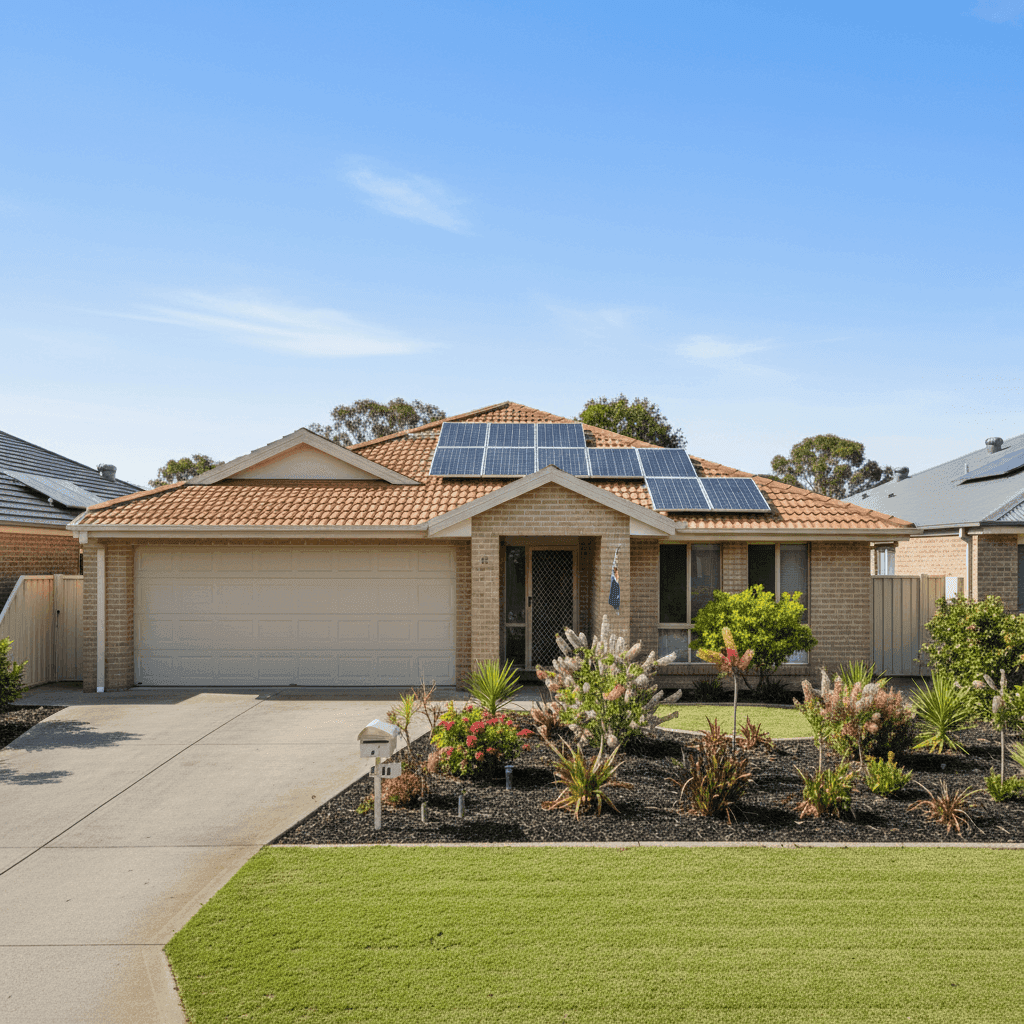
A four-bedroom, two-bathroom free standing home in Calliope, QLD 4680 is a solid family property — and getting the right home insurance cover at a fair price matters. This article breaks down a real home and contents insurance quote for a property in this suburb, compares it against local, state, and national benchmarks, and offers practical tips to help Calliope homeowners make smarter insurance decisions.
---
Is This Quote Fair?
The annual premium on this quote comes in at $2,146 per year (or $206 per month), covering both building (sum insured: $550,000) and contents ($40,000), with a building excess of $1,000 and a contents excess of $500.
Our price rating for this quote is CHEAP — below average — which is genuinely good news for the homeowner. To put that in perspective, the average home insurance premium across Calliope sits at $6,243 per year, with a median of $6,407. That means this quote is coming in at roughly one-third of what many neighbours are paying.
At the national level, the average premium is $5,347 per year, and the median is $2,764. Even against the national median — which tends to be a more reliable benchmark than the average — this quote is sitting comfortably below. For a property of this size and specification, that's a strong result.
So yes, by almost any measure, this is a very competitive quote. Whether you're shopping for the first time or reviewing your renewal, it's worth understanding why this premium is low — and whether the cover on offer is genuinely comparable to pricier alternatives.
---
How Calliope Compares
Here's a snapshot of how premiums in Calliope stack up against broader benchmarks:
| Benchmark | Annual Premium |
|---|---|
| This Quote | $2,146 |
| Calliope Suburb Average | $6,243 |
| Calliope Suburb Median | $6,407 |
| Calliope 25th Percentile | $6,061 |
| Calliope 75th Percentile | $7,400 |
| QLD State Average | $9,129 |
| QLD State Median | $3,903 |
| National Average | $5,347 |
| National Median | $2,764 |
A few things stand out here. First, the Calliope suburb average is notably high — nearly $6,243 per year — which reflects the elevated risk profile that insurers assign to parts of regional Queensland. Flood exposure, storm damage, and proximity to coastal weather systems all contribute to higher base premiums in many QLD postcodes.
Second, the QLD state average of $9,129 is significantly above the national average of $5,347, reinforcing just how expensive home insurance can be across the Sunshine State as a whole. Queensland consistently ranks as one of the most expensive states for home insurance in Australia, driven by natural hazard exposure.
It's worth noting that the suburb sample size here is 11 quotes, so the local averages should be treated as indicative rather than definitive. That said, the directional story is clear: this quote is well below what most comparable properties in the area are paying.
---
Property Features That Affect Your Premium
Several characteristics of this property work in the homeowner's favour when it comes to insurance pricing.
Brick veneer construction is generally viewed favourably by insurers. While not as robust as full brick, brick veneer offers good fire resistance and structural durability compared to timber or weatherboard alternatives. Combined with a tiled roof, the property sits in a construction category that typically attracts lower premiums — tiles are more fire-resistant than Colorbond in some assessments, and less prone to wind uplift damage than some other materials.
The slab foundation is standard for homes built in Queensland during this era and presents no unusual risk factors. Similarly, tile flooring throughout the home is a practical, durable choice that insurers view neutrally to positively — it's less susceptible to water damage than carpet or timber.
Built in 2009, this home benefits from being constructed under more modern building codes, which generally means better cyclone and storm-proofing standards compared to older stock. Importantly, this property is not located in a designated cyclone risk area, which is a meaningful factor — cyclone cover can add substantially to premiums for properties further north.
The presence of solar panels is worth flagging. Most standard home insurance policies cover solar panels as part of the building sum insured, but it's important to confirm this with your insurer. Make sure the $550,000 building sum insured accounts for the replacement cost of the solar system, as panels can cost $8,000–$20,000 or more to replace.
Ducted climate control is another inclusion to verify. Ducted systems are typically covered under building insurance, but again, confirming this is part of the sum insured — rather than an add-on — is worth a quick call to your insurer.
At 214 sqm, this is a well-sized family home. The building sum insured of $550,000 equates to roughly $2,570 per sqm, which is broadly in line with current construction costs in regional Queensland, though it's always wise to revisit this figure annually as building costs fluctuate.
---
Tips for Homeowners in Calliope
1. Review your sum insured annually Construction costs in Queensland have risen significantly in recent years. The cost to rebuild a 214 sqm brick veneer home has increased, and being underinsured can leave you seriously out of pocket after a major claim. Use an online building cost calculator or speak to a quantity surveyor to validate your sum insured each year.
2. Confirm solar panel and ducted system coverage Before renewing or switching policies, ask your insurer explicitly whether your solar panels and ducted climate control system are included in the building sum insured. Some policies treat these as separate items or exclude them altogether.
3. Shop around at renewal time The gap between this quote ($2,146) and the suburb average ($6,243) is enormous — a difference of over $4,000 per year. That kind of variation shows how much premiums can differ between insurers for the same property. Don't auto-renew without comparing at least two or three alternatives.
4. Consider your excess settings carefully This quote carries a $1,000 building excess and $500 contents excess. Opting for a higher excess can reduce your premium, but make sure the excess amount is something you could comfortably cover in an emergency. For most households, keeping the excess below $2,000 is a sensible balance.
---
Compare Your Own Quote at CoverClub
Whether you're a Calliope local or own a property anywhere in Queensland, it pays to compare. CoverClub makes it easy to see what insurers are quoting for your specific address and property type — and with premiums varying so dramatically across the market, a few minutes of comparison could save you thousands. Get a quote today and see how your current premium stacks up.