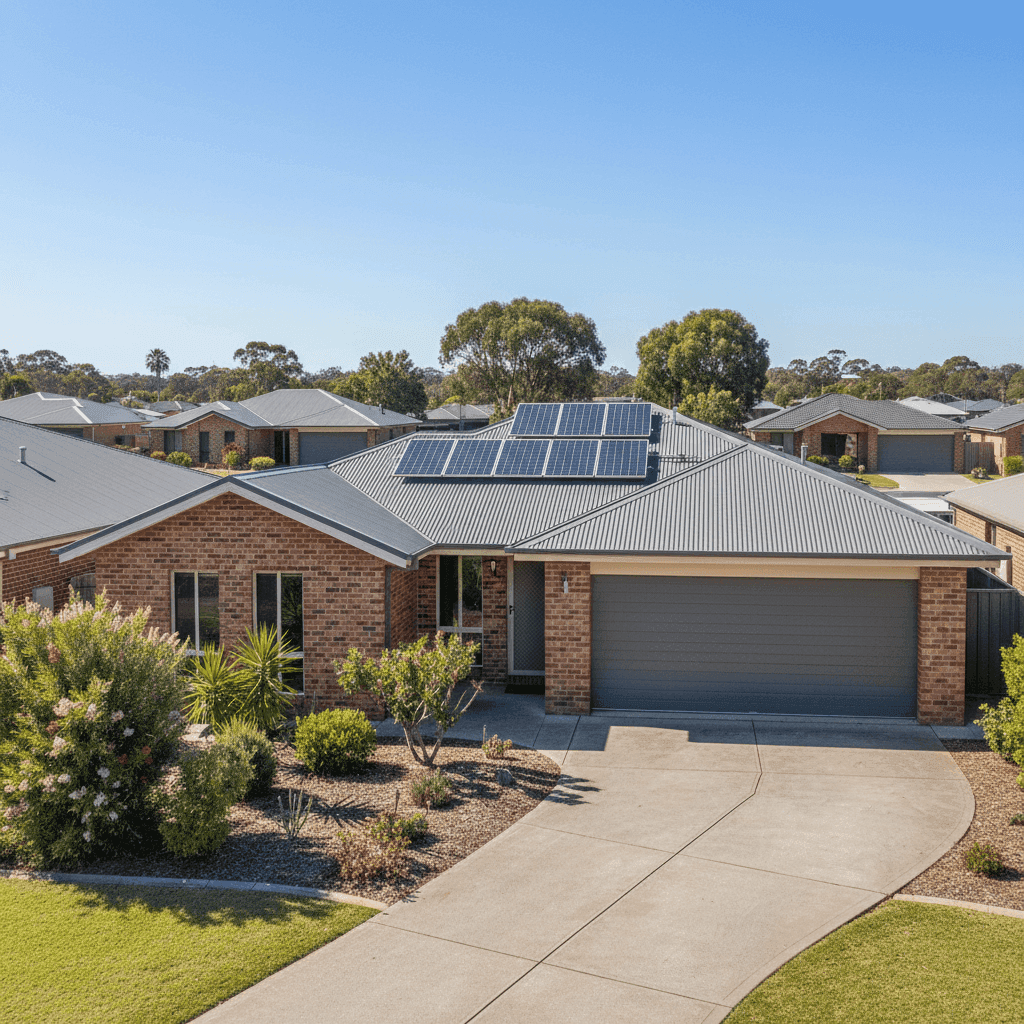
If you own a free standing home in Calliope, QLD 4680, you've probably noticed that insurance costs in regional Queensland can vary enormously. This article breaks down a real home and contents insurance quote for a three-bedroom, brick veneer property in Calliope — and puts that number into context using suburb, state, and national benchmarks. Whether you're shopping around for the first time or reviewing your existing policy, understanding what drives your premium is the first step to making sure you're not overpaying.
---
Is This Quote Fair?
The annual premium for this property came in at $2,371 per year (or roughly $227 per month), covering both building (sum insured: $455,000) and contents ($50,000), each with a $1,000 excess.
Based on CoverClub's pricing data, this quote is rated CHEAP — below average for the area. That's a strong result. In a region where premiums can climb steeply due to weather exposure, flood risk corridors, and the general cost of rebuilding in regional Queensland, landing well below the local average is genuinely meaningful.
To put it plainly: this homeowner is paying significantly less than most of their neighbours for comparable cover. That said, "cheap" doesn't automatically mean the right policy — it's always worth checking that the sum insured is adequate and that the policy terms suit your circumstances.
---
How Calliope Compares
Here's where things get interesting. The pricing gap between this quote and local benchmarks is substantial:
| Benchmark | Premium |
|---|---|
| This quote | $2,371/yr |
| Calliope suburb average | $6,243/yr |
| Calliope suburb median | $6,407/yr |
| Calliope 25th percentile | $6,061/yr |
| QLD state average | $9,129/yr |
| QLD state median | $3,903/yr |
| National average | $5,347/yr |
| National median | $2,764/yr |
A few things stand out here. First, the Calliope suburb average of $6,243 per year is more than 2.6 times what this quote came in at — a remarkable gap. Even the cheapest quarter of quotes in the suburb (the 25th percentile) sits at $6,061, meaning this quote is cheaper than virtually every other result in the local sample.
Second, Queensland as a state has one of the highest average premiums in the country at $9,129 — though the median of $3,903 tells a more nuanced story, suggesting a skewed distribution where some properties attract very high premiums (likely due to flood or cyclone exposure) and pull the average up. This quote sits comfortably below even the state median.
Compared to national figures, the result also holds up well — below the national average of $5,347 and just under the national median of $2,764.
It's worth noting that the Calliope suburb sample size is 11 quotes, so while directionally useful, the local data should be interpreted with some caution. Premiums in the area can vary considerably depending on individual property risk factors.
---
Property Features That Affect Your Premium
Several characteristics of this property likely contribute to its competitive premium:
Brick Veneer Walls Brick veneer is generally viewed favourably by insurers. It offers solid fire resistance and reasonable structural integrity, which can translate to lower rebuild risk compared to timber-framed or clad homes.
Steel / Colorbond Roof Colorbond roofing is durable, low-maintenance, and performs well in Queensland's harsh climate. It's resistant to corrosion and holds up better in high winds than some older roofing materials — a relevant consideration in regional QLD even outside formal cyclone zones.
Slab Foundation A concrete slab foundation is a stable base that reduces the risk of subsidence or pest-related structural damage. Insurers tend to price slab homes more favourably than those on stumps or piers, particularly in areas with variable soil conditions.
No Cyclone Risk Classification Calliope is not classified as a cyclone risk area, which is a meaningful premium factor in Queensland. Properties in cyclone-prone coastal zones can attract significant loading — so being outside that classification helps keep costs down.
Construction Year: 1980 At around 45 years old, this home is neither brand new nor extremely aged. Homes from this era can sometimes attract slightly higher premiums due to older electrical wiring or plumbing, but a well-maintained 1980s brick home generally doesn't face major pricing penalties.
Solar Panels The property has solar panels installed, which adds some replacement value to the building sum insured. It's important to confirm that your policy explicitly covers solar panel damage — not all policies treat them the same way.
Ducted Climate Control Ducted air conditioning is a significant fixed asset. Like solar panels, it should be factored into your building sum insured to ensure you're not underinsured in the event of a total loss.
---
Tips for Homeowners in Calliope
1. Double-check your building sum insured At $455,000 for a 130 sqm home, the sum insured works out to roughly $3,500 per square metre — which is within a reasonable range for regional Queensland, but rebuilding costs have risen sharply in recent years. Use a building cost calculator or speak to a quantity surveyor to make sure you're not underinsured.
2. Confirm solar panels and ducted AC are covered Ask your insurer specifically how solar panels and ducted climate control systems are treated under your policy. Some insurers include them automatically in the building sum; others require you to list them separately or may apply sub-limits.
3. Review your contents cover annually $50,000 in contents cover is a starting point, but it's easy to accumulate more than you realise over time. Do a room-by-room inventory every year to make sure your electronics, furniture, appliances, and valuables are adequately covered.
4. Compare quotes before renewal Even if you're happy with your current premium, the insurance market shifts every year. New insurers enter the market, risk models are updated, and your own property profile may have changed. Running a comparison at renewal takes only a few minutes and could save you hundreds of dollars.
---
Ready to Compare?
Whether you're a first-time buyer or a long-term Calliope homeowner, comparing home insurance quotes is one of the simplest ways to protect your budget. CoverClub makes it easy to see what multiple insurers would charge for your specific property — no obligation, no pressure.