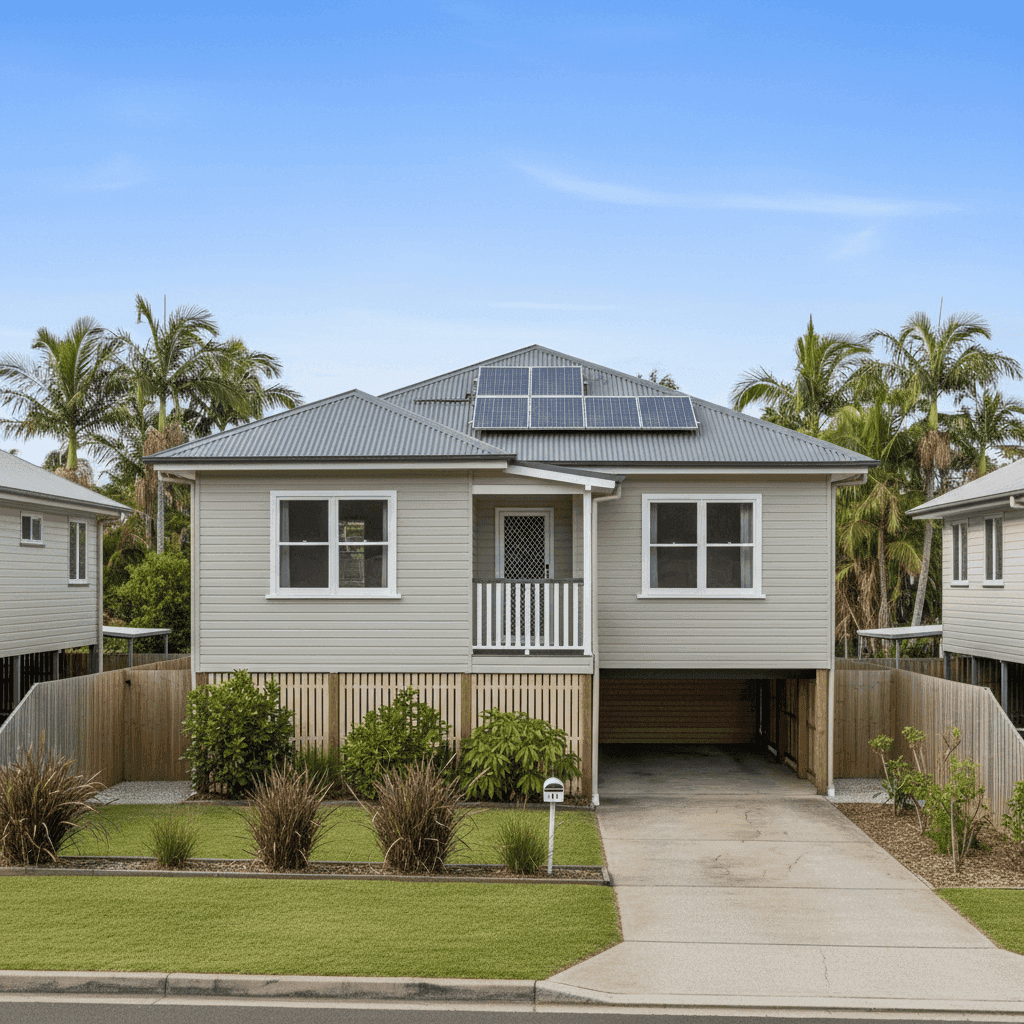
If you own a free standing home in Caloundra West, QLD 4551, you're probably all too aware that home insurance costs on the Sunshine Coast can vary enormously. This article breaks down a real home and contents insurance quote for a 2-bedroom property in the suburb, compares it against local, state, and national benchmarks, and highlights the key factors that shape what you pay.
---
Is This Quote Fair?
The quote in question comes in at $1,429 per year (or around $147 per month) for combined home and contents cover — insuring the building for $284,000 and contents for $50,000. Our price rating for this quote is CHEAP, meaning it sits well below the average for the area.
To put that in perspective, the suburb average for Caloundra West sits at $2,896 per year, and the median is $2,863. This quote is roughly 51% below the suburb average — a significant saving by any measure. Even compared to the 25th percentile (the cheapest quarter of quotes in the suburb, at $2,280/yr), this premium is still notably lower.
In short: yes, this is a genuinely competitive quote, and homeowners in a similar situation would do well to benchmark their own policy against it.
---
How Caloundra West Compares
Understanding where Caloundra West sits in the broader insurance landscape helps put individual quotes in context. Here's a snapshot:
| Benchmark | Annual Premium |
|---|---|
| This Quote | $1,429 |
| Caloundra West Suburb Average | $2,896 |
| Caloundra West Suburb Median | $2,863 |
| Sunshine Coast LGA Average | $7,249 |
| QLD State Average | $9,129 |
| QLD State Median | $3,903 |
| National Average | $5,347 |
| National Median | $2,764 |
(Based on [Caloundra West suburb data](https://coverclub.com.au/stats/QLD/4551/caloundra-west) from 48 quotes, [QLD state data](https://coverclub.com.au/stats/QLD), and [national benchmarks](https://coverclub.com.au/stats/national).)
A few things stand out here. The QLD state average of $9,129 is extraordinarily high — driven largely by extreme-risk postcodes in Far North Queensland, flood-prone areas, and cyclone-exposed coastal communities. The state median of $3,903 is a more representative figure for most Queensland homeowners, and even that is nearly three times this quote.
The Sunshine Coast LGA average of $7,249 is also notably elevated, likely reflecting the mix of high-value coastal properties, flood risk zones, and storm-exposed suburbs across the region. Caloundra West's own suburb average of $2,896 is considerably more moderate, suggesting the immediate area carries a relatively lower risk profile compared to the broader LGA.
Nationally, the average home insurance premium sits at $5,347, with a median of $2,764 — meaning this quote is even below the national median, which is a strong result.
---
Property Features That Affect Your Premium
Several characteristics of this property likely contribute to its competitive premium. Let's unpack the most relevant ones.
Construction Materials
The home features Hardiplank/Hardiflex external walls — a fibre cement cladding that is widely regarded as durable, fire-resistant, and low-maintenance. Combined with a steel Colorbond roof, this is a construction profile that insurers generally view favourably. Both materials perform well in Queensland's harsh climate, offering solid resistance to heat, moisture, and storm impact.
Foundation and Elevation
The property sits on stumps and is elevated by less than 1 metre. This style of construction — common in Queensland — can offer some degree of flood resilience compared to slab-on-ground homes, as water may pass beneath the structure rather than entering the living area. However, the degree of benefit depends heavily on local flood modelling, and homeowners should always verify their flood cover with their insurer.
Solar Panels
The presence of solar panels is worth noting. Most standard home insurance policies cover rooftop solar as part of the building sum insured, but it's important to confirm this with your insurer. Panels can be costly to replace after a hailstorm or severe weather event, so ensuring they're adequately covered is essential.
Size and Fittings
At 105 square metres with standard fittings, this is a modest, no-frills home. Smaller properties with standard (rather than premium) finishes generally attract lower building sum insureds and, consequently, lower premiums. The $284,000 building sum insured reflects the cost to rebuild — not the market value of the land — which is the correct basis for insuring a home.
No Pool, No Ducted Climate Control
The absence of a swimming pool and ducted air conditioning removes two common sources of liability and mechanical breakdown claims, which can subtly influence premiums.
Cyclone Risk
Caloundra West is not classified as a cyclone risk area, which is a meaningful factor. Properties in cyclone-prone parts of Queensland — particularly north of Bundaberg — can face dramatically higher premiums due to the potential for catastrophic wind damage. Being outside this zone is a genuine pricing advantage.
---
Tips for Homeowners in Caloundra West
Whether you're reviewing your existing policy or shopping for the first time, here are four practical steps worth taking.
1. Check your building sum insured annually. Construction costs have risen sharply in recent years. A sum insured set a few years ago may no longer reflect what it would actually cost to rebuild your home today. Use a building cost calculator or ask your insurer to help you reassess.
2. Confirm your solar panels are covered. Ask your insurer explicitly whether rooftop solar panels are included in your building cover and up to what value. If you've recently upgraded your system, you may need to update your sum insured accordingly.
3. Understand your flood and storm cover. Even if your suburb isn't in a designated flood zone, extreme rainfall events can cause localised inundation. Review your policy's definition of flood versus storm damage — these are treated differently by many insurers, and the distinction matters when it comes to claims.
4. Compare quotes at renewal time. The gap between the cheapest and most expensive quotes in Caloundra West spans from around $2,280 at the 25th percentile to $3,414 at the 75th — a difference of over $1,100 per year for broadly similar cover. Shopping around at renewal can make a real difference to your household budget.
---
Ready to Compare?
If you're a homeowner in Caloundra West or anywhere else on the Sunshine Coast, it pays to see what the market has to offer. Get a home insurance quote at CoverClub and compare your options side by side — it takes just a few minutes and could save you hundreds of dollars a year.