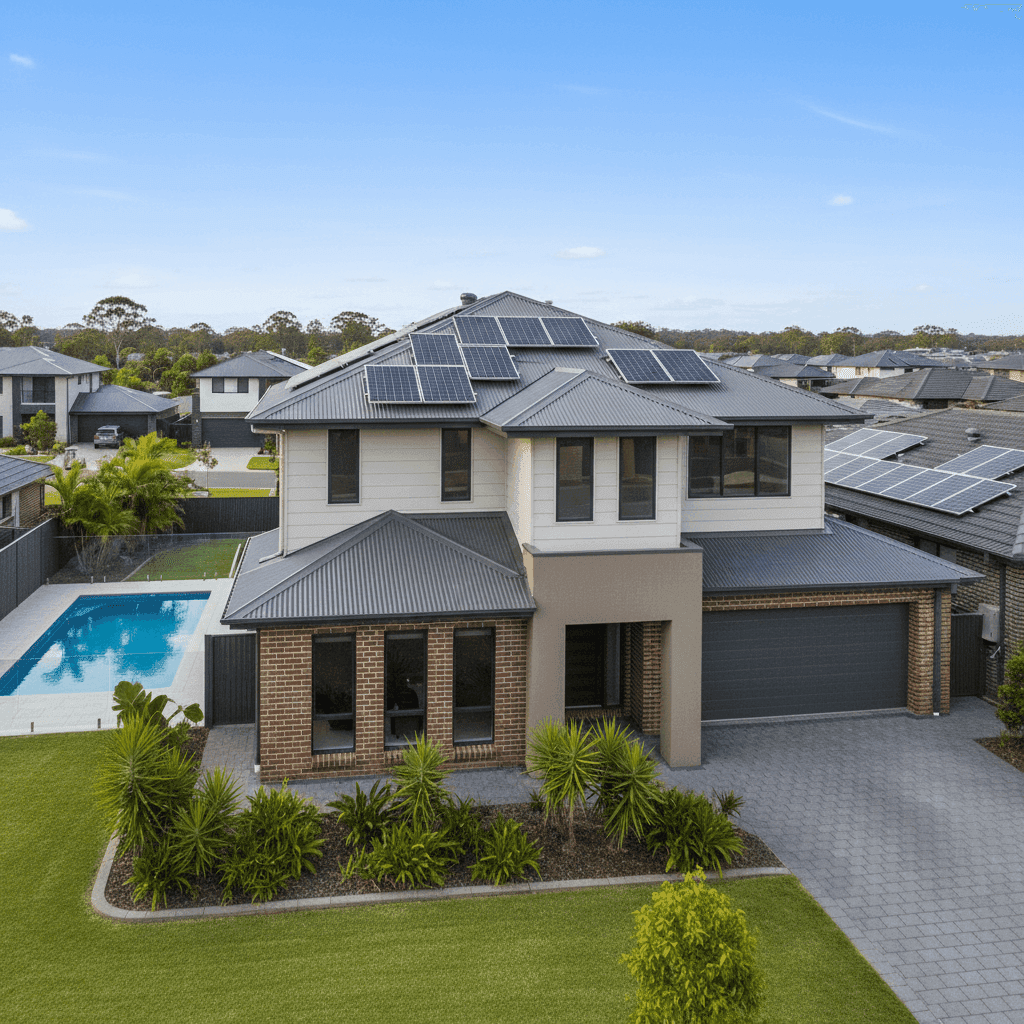
If you own a free standing home in Caloundra West, QLD 4551, you're likely no stranger to the question of whether you're getting a fair deal on your home insurance. With property values on the Sunshine Coast continuing to rise and insurers adjusting their pricing models regularly, it pays to understand exactly what's driving your premium — and whether there's room to do better.
This article breaks down a real home and contents insurance quote for a five-bedroom, four-bathroom brick veneer home in Caloundra West, comparing it against local suburb data, Queensland-wide figures, and national benchmarks to help you make a more informed decision.
---
Is This Quote Fair?
The quote in question comes in at $3,985 per year (or $375 per month) for combined home and contents cover, with a building sum insured of $1,137,000 and contents valued at $50,000. Both the building and contents excess are set at $1,000.
Our pricing analysis rates this quote as Expensive — above average for the Caloundra West area.
To put that in perspective, the suburb average premium sits at $2,686/yr and the median at $2,756/yr, meaning this quote is running roughly 48% above the suburb average. Even at the 75th percentile — where only one in four quotes are priced higher — the benchmark is $3,520/yr, still meaningfully below what's being quoted here.
That said, context matters. This is a large, well-appointed home: 315 sqm of living space, built in 2016, with a swimming pool and solar panels. These features all influence the cost to rebuild and the overall risk profile, which we'll explore further below.
---
How Caloundra West Compares
Understanding where Caloundra West sits relative to broader markets gives useful perspective. Here's a quick snapshot:
| Benchmark | Average Premium | Median Premium |
|---|---|---|
| Caloundra West (4551) | $2,686/yr | $2,756/yr |
| Sunshine Coast LGA | $4,457/yr | — |
| Queensland | $4,547/yr | $3,931/yr |
| National | $2,965/yr | $2,716/yr |
Interestingly, Caloundra West actually tracks below the national average and well below the broader Queensland and Sunshine Coast LGA figures. This suggests the suburb itself is considered a relatively lower-risk postcode compared to many other parts of QLD — particularly coastal or cyclone-prone areas further north.
The quote of $3,985/yr sits above the suburb norm but below both the Queensland average and the Sunshine Coast LGA average, which is worth keeping in mind. For a property of this size and value, the premium isn't outlandish in a state context — but there's clearly room to shop around within the suburb.
You can explore the full pricing data for this postcode at CoverClub's Caloundra West stats page, or compare against Queensland-wide figures and national benchmarks.
---
Property Features That Affect Your Premium
Several characteristics of this property have a direct bearing on what insurers charge. Here's how each one plays into the pricing:
Size and Sum Insured
At 315 sqm with a building sum insured of $1,137,000, this is a substantial home. Rebuild costs in South-East Queensland have risen sharply in recent years due to labour shortages and elevated material costs. A higher sum insured naturally means a higher premium — and underinsurance remains a serious risk if that figure isn't kept up to date.
Brick Veneer Walls and Colorbond Roof
Brick veneer construction is generally well-regarded by insurers for its fire resistance and structural durability. A steel Colorbond roof similarly performs well in terms of longevity and weather resistance. Together, these materials typically attract more favourable premium treatment than, say, weatherboard or fibrous cement cladding.
Concrete Slab Foundation
A slab foundation is considered low-risk for subsidence and moisture-related damage, which can be a positive factor in premium calculations — particularly relevant in Queensland's wet season conditions.
Swimming Pool
Pools add to the insured value of the property and introduce additional liability considerations. Most insurers factor pool coverage into the building sum insured, and some may apply loadings depending on the pool type and fencing compliance.
Solar Panels
Solar panels are increasingly common in Queensland, but they're not always automatically included in standard building cover. Insurers may treat them as a fixed fixture of the home, but it's worth confirming that your panel system — including inverters — is adequately covered under your policy.
Timber and Laminate Flooring
While aesthetically appealing and popular in modern homes, timber and laminate floors can be more susceptible to water damage than tiles. This can be a factor in how insurers assess contents and internal fitout risk.
---
Tips for Homeowners in Caloundra West
1. Compare Multiple Quotes — Especially for Larger Homes
The spread between the 25th percentile ($1,748/yr) and the 75th percentile ($3,520/yr) in Caloundra West is significant. For a property of this size, the difference between the cheapest and most expensive quote could easily be $1,500 or more annually. Use a comparison platform like CoverClub to see multiple quotes side by side.
2. Review Your Building Sum Insured Annually
Construction costs in Queensland have climbed steadily. If your sum insured hasn't been reviewed recently, you may be underinsured — or conversely, paying for more cover than you need. Many insurers offer a rebuild cost calculator; use it each year at renewal.
3. Confirm Solar Panel and Pool Coverage
Don't assume your policy automatically covers your solar system and pool to their full replacement value. Check the policy wording carefully and ask your insurer directly what's included. Some policies cap coverage on solar panels or exclude certain types of pool damage.
4. Consider Your Excess Level
Both the building and contents excess on this quote are set at $1,000. Opting for a higher excess — say $2,500 — can reduce your annual premium meaningfully. If you have a solid emergency fund and are unlikely to make small claims, this trade-off can work in your favour over time.
---
Ready to Find a Better Deal?
Whether you're renewing your policy or buying cover for the first time, comparing quotes is the single most effective way to make sure you're not overpaying. CoverClub makes it easy to benchmark your premium against real data from your suburb and across Australia.
Get a home insurance quote today at CoverClub and see how your current premium stacks up.