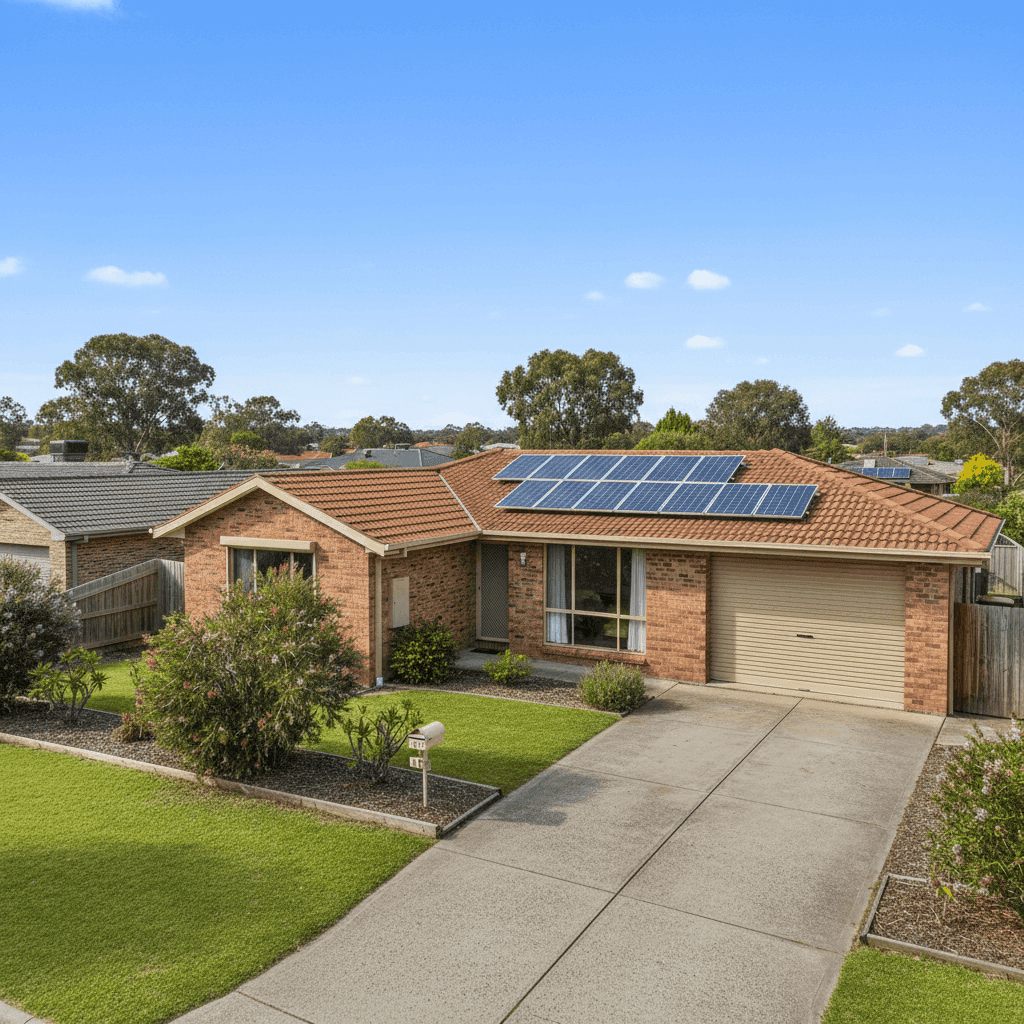
If you own a free standing home in Calwell, ACT 2905, you've probably wondered whether you're paying a fair price for home and contents insurance — or whether you're leaving money on the table. This article breaks down a real insurance quote for a three-bedroom, two-bathroom brick veneer home in Calwell, benchmarking it against suburb, territory, and national data to help you make a more informed decision.
---
Is This Quote Fair?
The quote in question comes in at $1,176 per year (or $120/month) for combined home and contents cover, with a building sum insured of $651,000 and contents valued at $100,000. The building excess is $3,000, and the contents excess is $1,000.
By any reasonable measure, this is an excellent result. CoverClub rates this quote as CHEAP — Below Average, meaning it sits well below what most comparable properties in the area are paying. To put that in perspective:
- The suburb average for Calwell is $1,835/year
- The suburb median sits at $1,678/year
- Even the 25th percentile — the cheapest quarter of quotes in the suburb — is $1,507/year
This quote undercuts even the cheapest tier of local pricing, coming in $331 below the suburb's 25th percentile. That's a meaningful saving, not just a marginal one.
At the ACT level, the picture is even starker. The ACT state average is $2,288/year, meaning this homeowner is paying roughly 49% less than the typical Canberran policyholder. That's a significant gap — and one worth understanding.
---
How Calwell Compares
To appreciate just how well-priced this quote is, it helps to zoom out and look at the broader landscape. Based on data from 26 quotes collected in the Calwell suburb:
| Benchmark | Annual Premium |
|---|---|
| This Quote | $1,176 |
| Calwell 25th Percentile | $1,507 |
| Calwell Median | $1,678 |
| Calwell Average | $1,835 |
| Calwell 75th Percentile | $2,293 |
| LGA (Unincorporated ACT) Average | $2,172 |
| ACT State Average | $2,288 |
| National Average | $5,347 |
| National Median | $2,764 |
The national average of $5,347/year is dramatically higher, largely skewed by high-risk coastal and cyclone-prone regions in Queensland and northern Australia. Calwell's location in the ACT — away from cyclone zones, coastal flooding, and extreme weather corridors — naturally contributes to lower baseline premiums across the suburb.
Even so, this quote beats the local field convincingly. It suggests the insurer has assessed this particular property favourably, likely due to a combination of construction quality, low-risk features, and the property's overall profile.
---
Property Features That Affect Your Premium
Several characteristics of this home work in its favour from an insurance pricing perspective.
Brick veneer construction is generally regarded as a resilient building material. It offers solid fire resistance and structural durability, both of which insurers tend to reward with more competitive premiums compared to timber-framed or clad homes.
A tiled roof is another positive. Tiles are durable, long-lasting, and perform well in hail and storm events — a relevant consideration in the ACT, which does experience hailstorms. Compared to Colorbond or older corrugated iron roofing, tiles typically attract lower risk assessments.
Slab foundation is standard for homes of this era and construction type, and it's generally considered stable and low-maintenance — another tick in the insurer's eyes.
The home was built in 1986, which places it in a mature but not ageing bracket. Homes from this period are typically well-constructed under solid building codes, though insurers may factor in the age of plumbing and electrical systems. At roughly 40 years old, it's worth ensuring these systems are well-maintained to avoid claim complications.
Solar panels are present on this property. While solar panels add value and can sometimes be a complicating factor in claims (particularly around roof damage), many insurers now routinely include them in building cover. It's worth confirming with your insurer that your panels are explicitly covered under your policy.
Ducted climate control is listed among the home's features, which contributes to the top-of-the-range fittings quality noted in the property data. High-quality fixtures and fittings can influence both the contents valuation and the overall rebuild cost — both of which are factored into the sum insured.
At 160 sqm, this is a modest but well-appointed home. The building sum insured of $651,000 reflects a thorough replacement cost estimate, accounting for construction costs in the ACT which tend to run higher than many other parts of Australia.
---
Tips for Homeowners in Calwell
Whether you're reviewing your existing policy or shopping for the first time, here are some practical steps to make sure you're getting the best outcome.
1. Review your sum insured regularly. Construction costs in Canberra have risen considerably in recent years. A sum insured that was accurate two or three years ago may no longer reflect the true cost of rebuilding your home. Use a building cost calculator or speak with a quantity surveyor to validate your figure — being underinsured can be a costly mistake.
2. Check what's included for your solar panels. Solar panel systems are a significant asset. Confirm with your insurer whether your panels are covered as part of the building, whether there are any exclusions for inverter damage, and what happens if a storm causes roof damage that also affects the array.
3. Consider your excess settings carefully. This policy carries a $3,000 building excess and a $1,000 contents excess. Higher excesses generally translate to lower premiums, but you need to be comfortable covering that amount out of pocket in the event of a claim. If $3,000 feels steep, it may be worth comparing quotes with a lower excess to see how the premium changes.
4. Compare quotes at renewal — every year. Insurance loyalty rarely pays off. Premiums can shift significantly from year to year, and the gap between the cheapest and most expensive quotes in Calwell spans more than $780 (from the 25th to 75th percentile). Running a fresh comparison at renewal takes minutes and could save you hundreds.
---
Ready to Compare Your Own Quote?
Whether you're a Calwell local or own a home anywhere across Australia, it pays to know where your premium sits relative to the market. Get a home insurance quote at CoverClub and see how your property stacks up against suburb, state, and national benchmarks — in seconds, with no obligation.