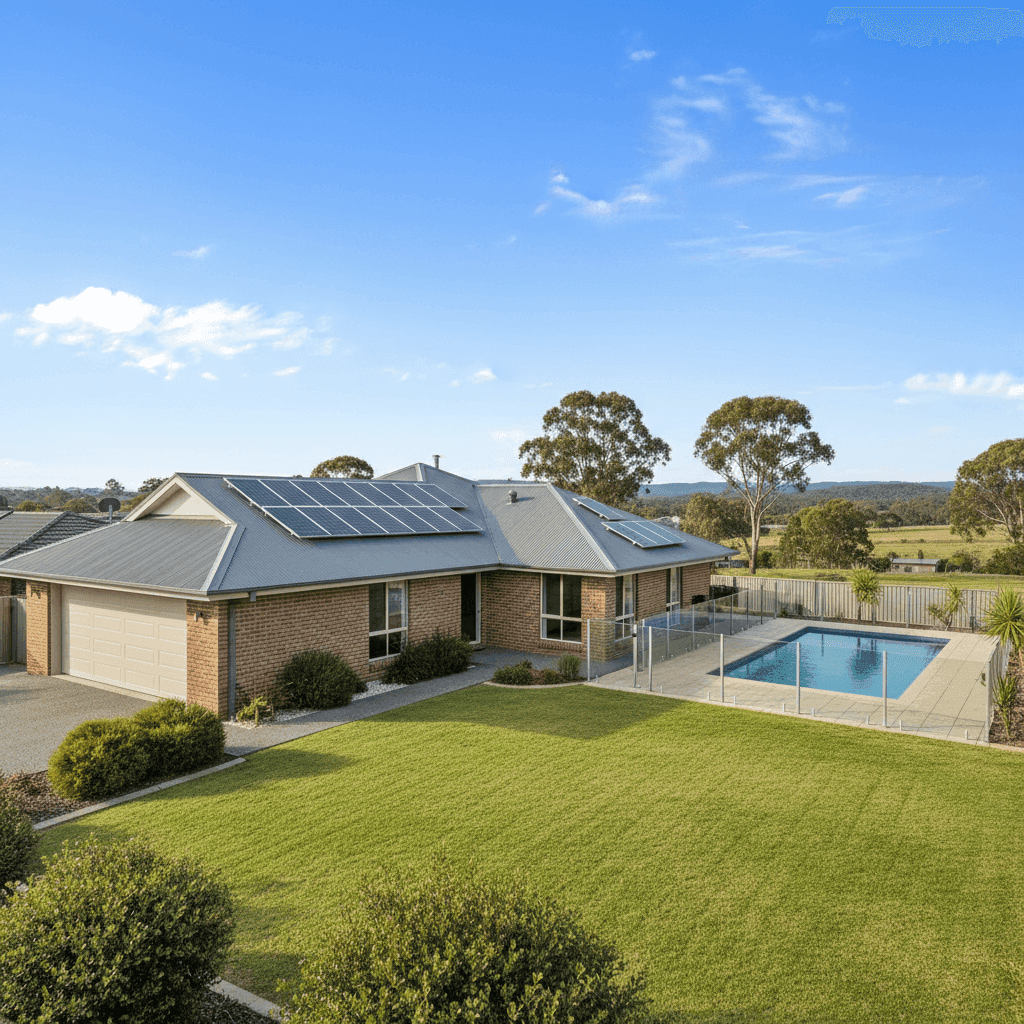
If you own a free standing home in Cambewarra Village, NSW 2540, you're likely curious about what a fair home and contents insurance premium looks like — and whether the quote sitting in your inbox is competitive. This article breaks down a real quote for a four-bedroom, two-bathroom property in the area, compares it against local and national benchmarks, and offers practical tips to help you make a more informed decision.
---
Is This Quote Fair?
The quote in question comes in at $3,110 per year (or $298 per month) for combined home and contents cover, with a building sum insured of $710,000 and contents valued at $140,000. Both the building and contents excess are set at $1,000.
Our price rating for this quote is Expensive — above average for the Cambewarra Village area.
To put that in perspective: the suburb average annual premium sits at $2,183, and the median is $2,139. This quote is roughly $927 above the suburb average — a meaningful gap that's worth investigating before you commit to renewing or taking out this policy.
That said, "expensive" doesn't automatically mean "wrong." Several property-specific factors can legitimately push a premium higher than the suburb norm, and we'll explore those below. The key is understanding why the price is where it is.
---
How Cambewarra Village Compares
Understanding your quote requires a bit of context across different geographic levels. Here's how the numbers stack up:
| Benchmark | Annual Premium |
|---|---|
| This Quote | $3,110 |
| Suburb Average (2540) | $2,183 |
| Suburb Median (2540) | $2,139 |
| Suburb 25th Percentile | $1,722 |
| Suburb 75th Percentile | $2,663 |
| LGA Average | $2,613 |
| NSW Average | $9,528 |
| NSW Median | $3,770 |
| National Average | $5,347 |
| National Median | $2,764 |
A few things stand out here. First, while this quote looks expensive at the suburb level, it actually sits below both the NSW median ($3,770) and the national average ($5,347). The NSW average of $9,528 is heavily skewed by high-risk and high-value properties across the state, so the median is a more reliable comparison point.
Relative to the national insurance benchmarks, this quote is below average — which is a positive sign. But compared to what others in the immediate Cambewarra Village area are paying, it's on the higher end. It's also worth noting that the suburb sample size is relatively small (14 quotes), so local averages can shift with just a few outliers.
You can also explore broader NSW home insurance trends to see how your region fits into the statewide picture.
---
Property Features That Affect Your Premium
Several characteristics of this property are likely influencing the premium. Here's what insurers typically weigh up:
Age of Construction (1963)
A home built in 1963 is over 60 years old. Older properties can attract higher premiums because ageing infrastructure — plumbing, wiring, roofing — carries a greater risk of failure or damage. Insurers may price in the likelihood of more costly claims or complications during repairs.
Foundation: Stumps
Homes on stump foundations are more susceptible to subsidence, movement, and pest damage compared to slab-on-ground construction. This is a known risk factor that many insurers account for in their pricing models.
Brick Veneer Walls & Colorbond Roof
Brick veneer is a common and generally well-regarded wall type in Australia. Combined with a steel/Colorbond roof, the property benefits from solid fire resistance and durability. These features can actually work in your favour when it comes to premiums, as they're considered lower risk than timber-framed exteriors or older tile roofs.
Swimming Pool
A pool adds to the replacement cost of the property and can introduce liability considerations. Insurers factor in the cost of pool surrounds, fencing, equipment, and the risk of accidental injury — all of which can nudge premiums upward.
Solar Panels
Solar panels are increasingly common on Australian homes, but they do add to the insured value of the building. Replacement costs for panels and inverters can be significant, and some insurers price this in explicitly.
Building Size: 214 sqm
At 214 square metres, this is a reasonably sized family home. A higher building sum insured of $710,000 reflects both the size and the cost of full rebuilding in today's construction market — and a higher insured value naturally leads to a higher premium.
Contents: $140,000
A $140,000 contents value is a solid but not excessive figure for a four-bedroom home. It's worth ensuring this figure accurately reflects the replacement cost of your belongings — neither underinsuring nor over-insuring.
---
Tips for Homeowners in Cambewarra Village
1. Shop Around Before Renewing
The most effective way to reduce your premium is to compare quotes from multiple insurers. With this quote sitting above the suburb average, there's a reasonable chance another provider could offer comparable cover at a lower price. Get a quote through CoverClub to see what's available for your property.
2. Review Your Sum Insured Carefully
Make sure your building sum insured of $710,000 reflects the actual cost to rebuild — not the market value of the land and home combined. Overinsuring inflates your premium unnecessarily, while underinsuring can leave you exposed after a major claim. A quantity surveyor or online rebuild calculator can help you land on the right figure.
3. Consider Your Excess Level
Both the building and contents excess on this quote are set at $1,000. Opting for a higher voluntary excess (say, $2,000 or $2,500) can meaningfully reduce your annual premium. Just make sure the excess is an amount you could comfortably cover out of pocket if you needed to make a claim.
4. Maintain Your Home Proactively
For an older stump-foundation home, regular maintenance is both a safety measure and an insurance strategy. Insurers can deny claims if damage is attributed to lack of upkeep. Keeping your stumps, wiring, and plumbing in good condition reduces your risk profile — and gives you stronger grounds to negotiate at renewal time.
---
Ready to Compare?
A quote is only as good as what else is on the market. CoverClub makes it easy to compare home and contents insurance options for properties across Australia, with transparent pricing data and suburb-level benchmarks to help you judge whether you're getting a fair deal.
Compare home insurance quotes for your Cambewarra Village property →