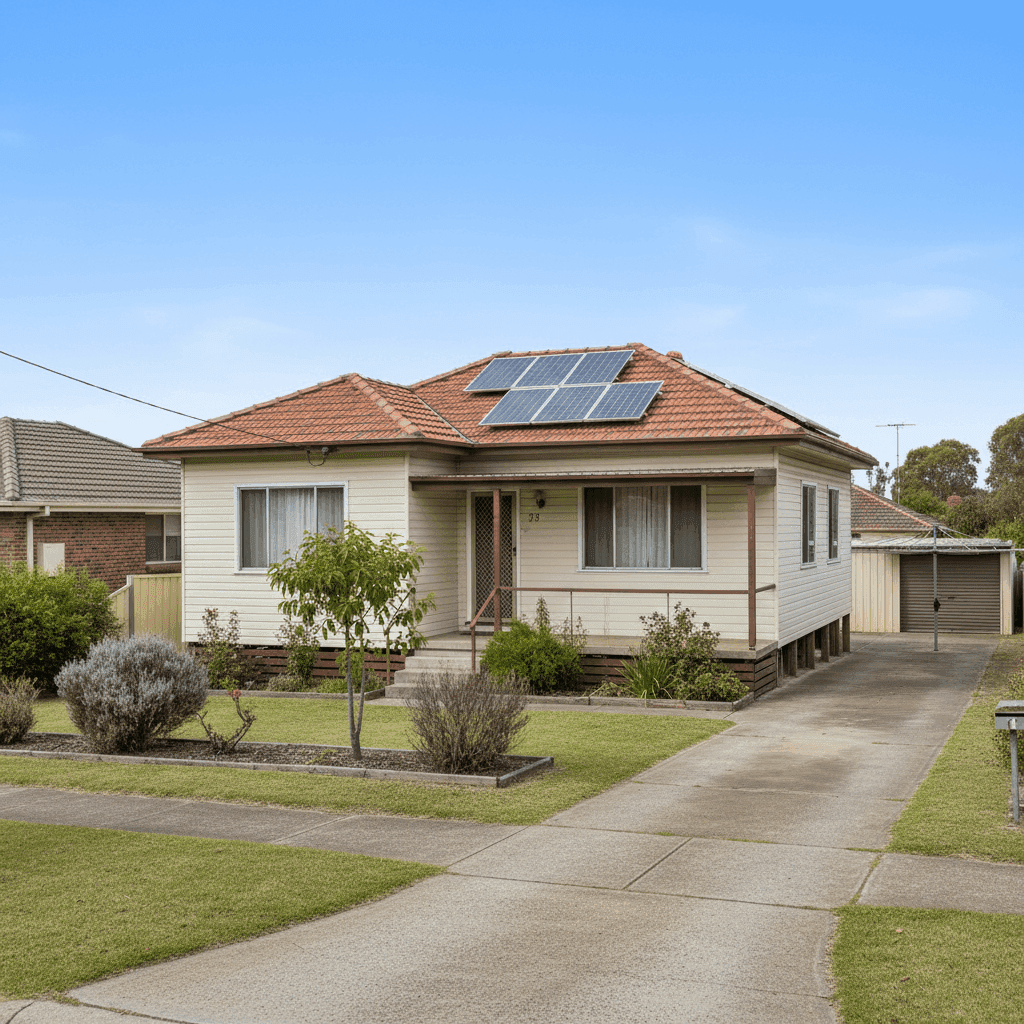
If you own a four-bedroom free standing home in Cambridge Park, NSW 2747, you're probably no stranger to the annual ritual of reviewing your home insurance premium and wondering whether you're getting a fair deal. This article breaks down a real home and contents insurance quote for a property in this suburb, compares it against local, state, and national benchmarks, and offers practical tips to help you make a more informed decision at renewal time.
---
Is This Quote Fair?
The quote in question comes in at $2,641 per year (or $246/month) for combined home and contents cover, with a building sum insured of $200,000 and contents valued at $115,000. Both the building and contents excess are set at $2,000.
Our pricing analysis rates this quote as Expensive — above average for the Cambridge Park area.
To put that in perspective, the suburb average premium sits at $1,831 per year, and the median is even lower at $1,647 per year. That means this quote is roughly $810 above the suburb average and nearly $1,000 above the median — a meaningful gap worth investigating.
That said, "expensive" doesn't automatically mean "wrong." Several property-specific factors can legitimately push a premium higher than the suburb norm, and in this case, there are a few clear candidates (more on those below). The key question is whether the price reflects genuine risk — or whether a better deal is available elsewhere for the same level of cover.
---
How Cambridge Park Compares
Understanding where Cambridge Park sits in the broader insurance landscape is useful context for any homeowner.
According to data from Cambridge Park suburb insurance stats, based on a sample of 27 quotes in the 2747 postcode:
| Benchmark | Premium |
|---|---|
| Suburb 25th percentile | $1,244/yr |
| Suburb median | $1,647/yr |
| Suburb average | $1,831/yr |
| Suburb 75th percentile | $2,246/yr |
| This quote | $2,641/yr |
This quote sits above the 75th percentile for the suburb — meaning it's more expensive than at least three-quarters of comparable quotes in the area.
Zooming out to the state level, the picture shifts considerably. The NSW state average is a striking $9,528 per year, though the median of $3,770 is a far more representative figure — the average is heavily skewed by high-value and high-risk properties in flood and bushfire zones across the state. Against the NSW median, this Cambridge Park quote is actually below average, which tells you something about the relatively moderate risk profile of Western Sydney compared to parts of regional NSW.
At the national level, the average premium is $5,347/yr and the median is $2,764/yr — again, both skewed upward by cyclone-prone Queensland and high-risk coastal or rural areas. Cambridge Park, sitting in the Penrith basin, doesn't carry those extreme environmental risk factors, which is why local suburb comparisons are the most meaningful yardstick here.
The LGA average for Blacktown (which covers a broad area including parts of Western Sydney) is $2,242/yr — still below this quote, reinforcing the "above average" rating.
---
Property Features That Affect Your Premium
Several characteristics of this property are likely contributing to a higher-than-average premium. Here's what insurers are probably weighing up:
Fibro Asbestos External Walls
This is arguably the most significant risk factor for this property. Homes built with fibro (fibrous cement sheeting containing asbestos) — common in Australian homes constructed before the mid-1980s — are more expensive to insure because repairs and rebuilds require specialist asbestos removal and handling. The 1970 construction year aligns with this era of building practice. Insurers price this risk carefully, and some may decline cover altogether or apply significant loadings.
Construction Year (1970)
A home built over 50 years ago carries inherent risks around ageing plumbing, wiring, and structural components. While well-maintained older homes can be perfectly sound, insurers factor in the statistical likelihood of age-related claims.
Stump Foundation
Homes on stumps (also called pier foundations) are more vulnerable to movement, subsidence, and pest damage than slab-on-ground homes. This can affect both the cost to rebuild and the likelihood of structural claims.
Timber and Laminate Flooring
Timber floors in an elevated, older home can be susceptible to moisture damage, warping, and pest ingress — all factors that may contribute to a slightly higher premium.
Solar Panels
Good news for the environment, but solar panels add to the replacement cost of a home and can complicate roof-related claims. Most insurers include them under building cover, but their presence does nudge the insured value — and therefore the premium — upward.
Ducted Climate Control
Ducted air conditioning systems are expensive to repair or replace and are included in the building sum insured. Their presence is a legitimate contributor to a higher premium.
What Works in Your Favour
The property is not in a cyclone risk area, sits on tiles (a durable and commonly insured roof type), and is only slightly elevated (less than 1 metre), which limits flood and storm surge exposure compared to more significantly raised or low-lying homes.
---
Tips for Homeowners in Cambridge Park
1. Shop Around — Seriously
With this quote sitting above the 75th percentile for the suburb, comparing at least three to five insurers is strongly recommended. Premiums for the same property can vary by hundreds of dollars depending on how each insurer models the fibro asbestos risk and construction age. Get a comparison quote at CoverClub to see what else is available.
2. Review Your Sum Insured
A building sum insured of $200,000 for a 130 sqm home built in 1970 may or may not reflect the true cost to rebuild — including asbestos removal and disposal, which can add tens of thousands of dollars to a rebuild. Make sure your sum insured accounts for this. Underinsuring to save on premiums can be a costly mistake at claim time.
3. Consider Your Excess Strategy
Both the building and contents excess are set at $2,000. Opting for a higher voluntary excess can reduce your annual premium, but make sure the excess is an amount you could comfortably pay out of pocket in the event of a claim. For many households, $2,000 is already a meaningful amount — going higher may not be worth the risk.
4. Ask About Asbestos Disclosure and Specialist Insurers
Not all insurers handle fibro asbestos homes the same way. Some mainstream insurers apply blanket loadings, while specialist or niche providers may offer more competitive pricing for this property type. Be transparent about the wall construction when getting quotes — non-disclosure can void a claim.
---
Compare Your Options with CoverClub
Whether you're renewing your policy or shopping for the first time, it pays to compare. CoverClub makes it easy to benchmark your current premium against real quotes from across the market — so you can see at a glance whether you're getting value or paying too much. Start your comparison today and find out what Cambridge Park homeowners are actually paying for cover like yours.