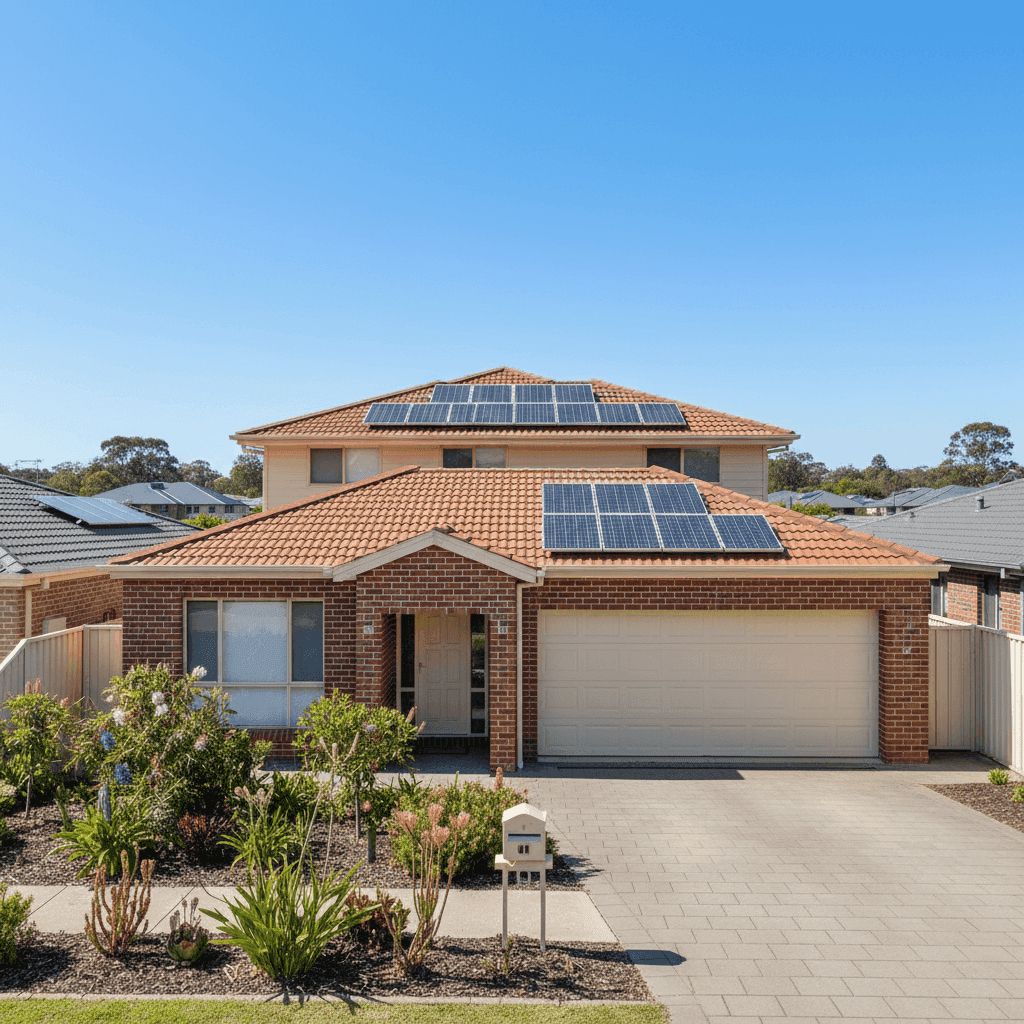
If you own a free standing home in Camden Park, NSW 2570, you're probably curious whether you're paying a fair price for home insurance — or quietly overpaying year after year. This article breaks down a real home and contents insurance quote for a four-bedroom, two-bathroom brick veneer home in the suburb, and puts it in context against local, state, and national benchmarks.
---
Is This Quote Fair?
The quote in question comes in at $1,582 per year (or $152 per month) for combined home and contents cover. The building is insured for $649,000, with $50,000 in contents cover. Both the building and contents excess sit at $2,000.
Our price rating for this quote is FAIR — Around Average, which is a reasonable outcome for a property of this size and specification. It's not the cheapest quote you'll find in the suburb, but it's also comfortably below the upper end of what Camden Park homeowners are paying.
To put that in perspective:
- The suburb average for Camden Park is $1,615/yr — this quote sits just below that.
- The suburb median is $1,520/yr — so the quote is slightly above the midpoint, but well within a normal range.
- The 25th percentile in the suburb is $1,453/yr, meaning roughly a quarter of comparable quotes are cheaper.
- The 75th percentile is $1,864/yr — so this quote is solidly in the lower half of the market.
In short, this is a competitive quote. There's room to potentially do better with some shopping around, but there's no cause for alarm here.
---
How Camden Park Compares
One of the most striking things about this quote is how reasonable it looks when you zoom out to the state and national level.
The NSW state average for home insurance is a staggering $9,528 per year, though this figure is heavily skewed by high-risk and high-value properties across the state. The NSW median — a more reliable indicator — sits at $3,770/yr. Even against that benchmark, this Camden Park quote looks very attractive. You can explore the full NSW home insurance statistics here.
At the national level, the average premium across Australia is $5,347/yr, with a national median of $2,764/yr. Again, this Camden Park quote at $1,582/yr comes in well below both figures. Browse national home insurance data to see how different regions stack up.
Closer to home, the Wollondilly LGA average (the local government area covering Camden Park) is $2,297/yr — nearly $700 more than this particular quote. That gap is meaningful and suggests this property's risk profile is relatively favourable within the broader LGA.
You can dig deeper into local pricing trends on the Camden Park suburb stats page.
---
Property Features That Affect Your Premium
Several characteristics of this property work in the homeowner's favour when it comes to insurance pricing.
Brick veneer construction is generally well-regarded by insurers. It's fire-resistant, durable, and widely used in Australian suburban homes built from the 1990s onwards. Combined with a tiled roof, this property presents a lower risk profile than homes with timber cladding or metal roofing in certain environments.
The slab foundation is another positive. Slab-on-ground construction is common in NSW and tends to be straightforward for insurers to assess — there's no underfloor space that could be damaged by moisture or pests, and repairs after events like subsidence are generally more predictable in cost.
Built in 2005, the home sits in a sweet spot for insurers. It's modern enough to comply with updated building codes introduced in the early 2000s, but not so new that replacement costs are inflated by premium finishes or bespoke materials. The standard fittings quality further supports a reasonable sum insured.
The presence of solar panels is worth noting. While panels can add modest complexity to a claim (they're typically covered under building insurance), they're a common feature on Australian homes and most insurers price them in routinely. Homeowners should confirm their policy explicitly covers solar panel damage, including storm and hail events.
Ducted climate control is another feature to flag. These systems can be expensive to repair or replace, and it's worth confirming whether your policy covers mechanical breakdown or only damage caused by an insured event (such as storm or fire).
At 214 sqm, this is a well-sized family home, and the $649,000 building sum insured reflects a reasonable rebuild cost for a property of this specification in the greater Sydney region.
---
Tips for Homeowners in Camden Park
1. Review your sum insured annually Construction costs in NSW have risen significantly over the past few years. A sum insured that was accurate in 2022 may no longer reflect what it would actually cost to rebuild your home today. Use a building cost calculator or speak with a quantity surveyor to make sure you're not underinsured.
2. Confirm solar panel and climate control coverage As mentioned above, these are two features that can catch homeowners off guard at claim time. Read your Product Disclosure Statement (PDS) carefully, or call your insurer directly to confirm what's covered and under what circumstances.
3. Consider your excess carefully This quote carries a $2,000 excess on both building and contents. A higher excess typically lowers your premium, but make sure you could comfortably cover that amount out of pocket if you needed to make a claim. If cash flow is a concern, a lower excess — even at a slightly higher premium — may be the smarter choice.
4. Shop around at renewal time Even a "fair" quote has room for improvement. Insurers adjust their pricing algorithms regularly, and loyalty doesn't always pay. Set a reminder to compare quotes at least 30 days before your renewal date so you have time to switch if you find a better deal.
---
Compare Your Own Quote
Whether you're reviewing an existing policy or shopping for the first time, comparing quotes is the single most effective way to make sure you're not overpaying. CoverClub makes it easy to see how your premium stacks up against real data from your suburb and across Australia.
Get a home insurance quote today and find out if you're getting a fair deal — or if there's a better option waiting for you.