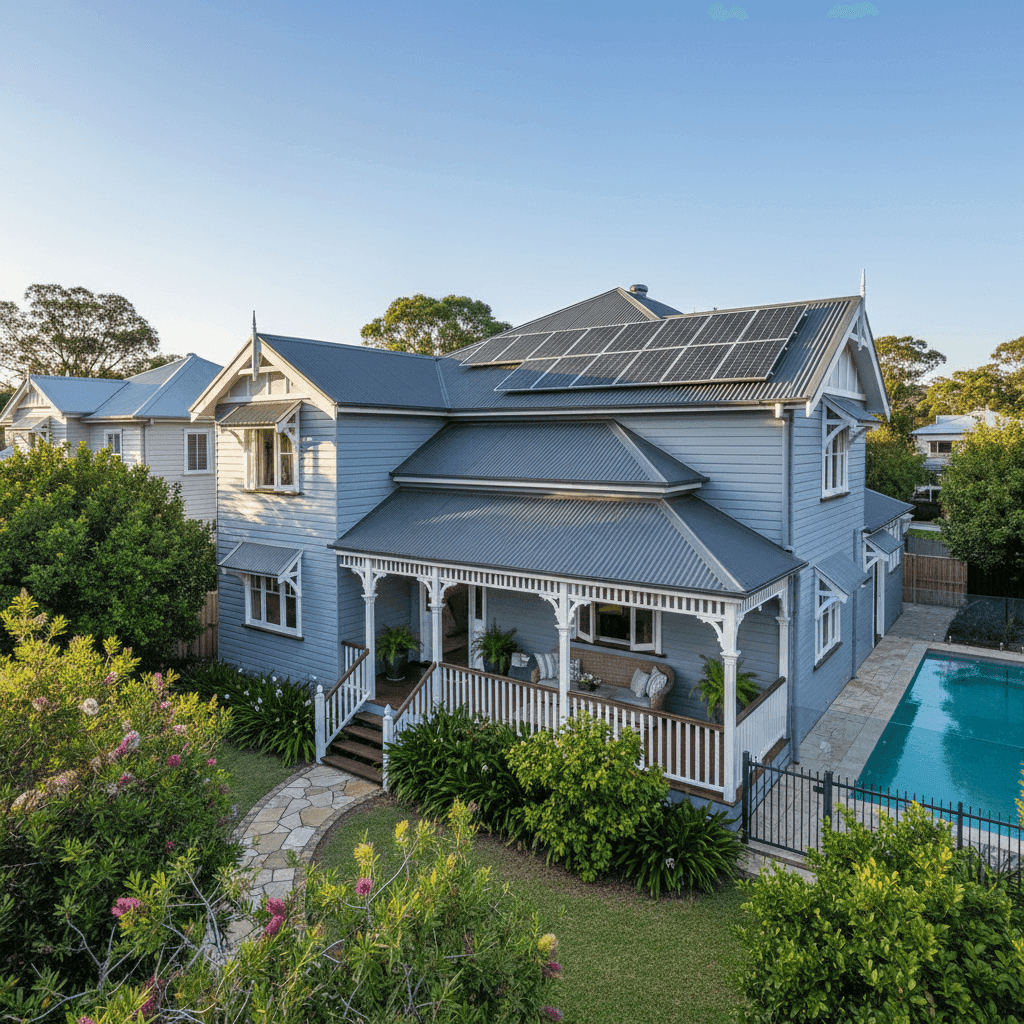
Camp Hill is a well-established inner-eastern suburb of Brisbane, known for its leafy streets, character homes, and elevated blocks with sweeping city views. If you own a free standing home here, you're likely sitting on a significant asset — and making sure it's properly insured is one of the most important financial decisions you can make. This article breaks down a real home and contents insurance quote for a 4-bedroom, 3-bathroom weatherboard home in Camp Hill (QLD 4152), and puts the numbers in context so you can judge whether you're getting a fair deal.
---
Is This Quote Fair?
The quote in question comes in at $1,699 per year (or $172/month) for combined home and contents cover, with a building sum insured of $840,000 and contents valued at $249,000. The building excess is $3,000, and the contents excess is $500.
Our pricing engine rates this quote as Fair — Around Average, and when you dig into the data, that assessment holds up well. The premium sits comfortably above the suburb's 25th percentile ($1,400/yr) but well below the 75th percentile ($3,171/yr), placing it in the middle band of what Camp Hill homeowners are currently paying. It's slightly below the suburb average of $2,341/yr and the suburb median of $2,339/yr, which means this policyholder is actually doing a touch better than most of their neighbours.
In other words: not the cheapest deal on the market, but far from the most expensive — and reasonable given the property's age, construction type, and the features it includes.
---
How Camp Hill Compares
To really appreciate this quote, it helps to zoom out and look at the broader picture. You can explore the full data on the Camp Hill suburb stats page, but here's a snapshot:
| Benchmark | Premium |
|---|---|
| This quote | $1,699/yr |
| Camp Hill suburb average | $2,341/yr |
| Camp Hill suburb median | $2,339/yr |
| QLD state average | $9,129/yr |
| QLD state median | $3,903/yr |
| Brisbane LGA average | $16,277/yr |
| National average | $5,347/yr |
| National median | $2,764/yr |
The contrast with Queensland's state-wide figures is striking. The QLD average premium of $9,129/yr is heavily skewed by high-risk regions — particularly cyclone-prone areas in Far North Queensland, where premiums can be eye-watering. Camp Hill sits in a non-cyclone zone, which is one of the key reasons premiums here are so much more manageable.
Similarly, the Brisbane LGA average of $16,277/yr looks alarming until you realise it's pulled up by flood-affected and storm-exposed pockets across the broader local government area. Camp Hill's elevated terrain works in homeowners' favour here.
Compared to the national picture, where the average sits at $5,347/yr and the median at $2,764/yr, this quote looks quite competitive. At $1,699/yr, it comes in below even the national median — a solid outcome for a property of this size and value.
---
Property Features That Affect Your Premium
Several characteristics of this property will have influenced how insurers priced this policy. Understanding them can help you anticipate future changes and make smarter coverage decisions.
Weatherboard timber construction (1945): Older weatherboard homes are generally considered higher risk by insurers due to their susceptibility to fire, rot, and the higher cost of like-for-like replacement. A home built in 1945 may also have older wiring and plumbing that adds to the risk profile. That said, many Camp Hill weatherboard homes have been extensively renovated, which can partially offset these concerns.
Steel/Colorbond roof: This is actually a positive from an insurer's perspective. Colorbond roofing is durable, low-maintenance, and performs well in storms — a meaningful upgrade over older tile or fibrous cement roofs. It may help keep the premium lower than it would otherwise be.
Slab foundation: Concrete slab foundations are generally viewed favourably by insurers. They're structurally sound and less prone to subsidence or pest damage compared to older suspended timber subfloors — common in many Camp Hill homes of a similar era.
Swimming pool: A pool adds to the replacement cost of the property and introduces some liability considerations, which can nudge premiums upward slightly.
Solar panels: Solar systems add to the insured value of the home and can be a point of contention in claims if not explicitly covered. It's worth confirming with your insurer that your solar panels are included in your building sum insured.
No ducted climate control: The absence of ducted air conditioning simplifies the mechanical systems in the home, which can marginally reduce risk from a claims perspective.
Building size (244 sqm) and high sum insured ($840,000): For a 4-bedroom home in Camp Hill, a $840,000 building sum insured is substantial but not unreasonable given construction costs in Brisbane. Underinsurance is a genuine risk in this suburb — rebuilding a character weatherboard home with quality finishes can be surprisingly expensive.
---
Tips for Homeowners in Camp Hill
1. Review your building sum insured regularly Construction costs have risen sharply across Australia in recent years. A sum insured that was adequate two years ago may no longer cover a full rebuild today. Use a building cost calculator or speak with a quantity surveyor to make sure your $840,000 figure still reflects current rebuild costs — especially for a character home with timber detailing.
2. Confirm your solar panels are covered Solar panel systems are a common source of claim disputes. Check your policy wording carefully to confirm whether panels are covered under the building section, and whether damage from storms, hail, or electrical faults is included. If in doubt, ask your insurer directly.
3. Consider your excess strategy This policy carries a $3,000 building excess — on the higher end. A higher excess typically lowers your annual premium, which can make sense if you have the savings buffer to cover it. However, make sure you're genuinely comfortable with that out-of-pocket cost before a claim event. The $500 contents excess is much more manageable.
4. Shop around at renewal Even a "fair" quote can be beaten. Insurers reprice at renewal, and loyalty doesn't always pay. Compare quotes on CoverClub before your renewal date to make sure you're still getting competitive value — particularly as your property's age and the local claims environment evolve.
---
Ready to Compare?
Whether you're renewing your policy or insuring a Camp Hill home for the first time, it pays to see what the market is offering. CoverClub makes it easy to compare home and contents quotes tailored to your property. Get a quote today and find out if you could be paying less — or make sure the cover you have is genuinely up to the job.