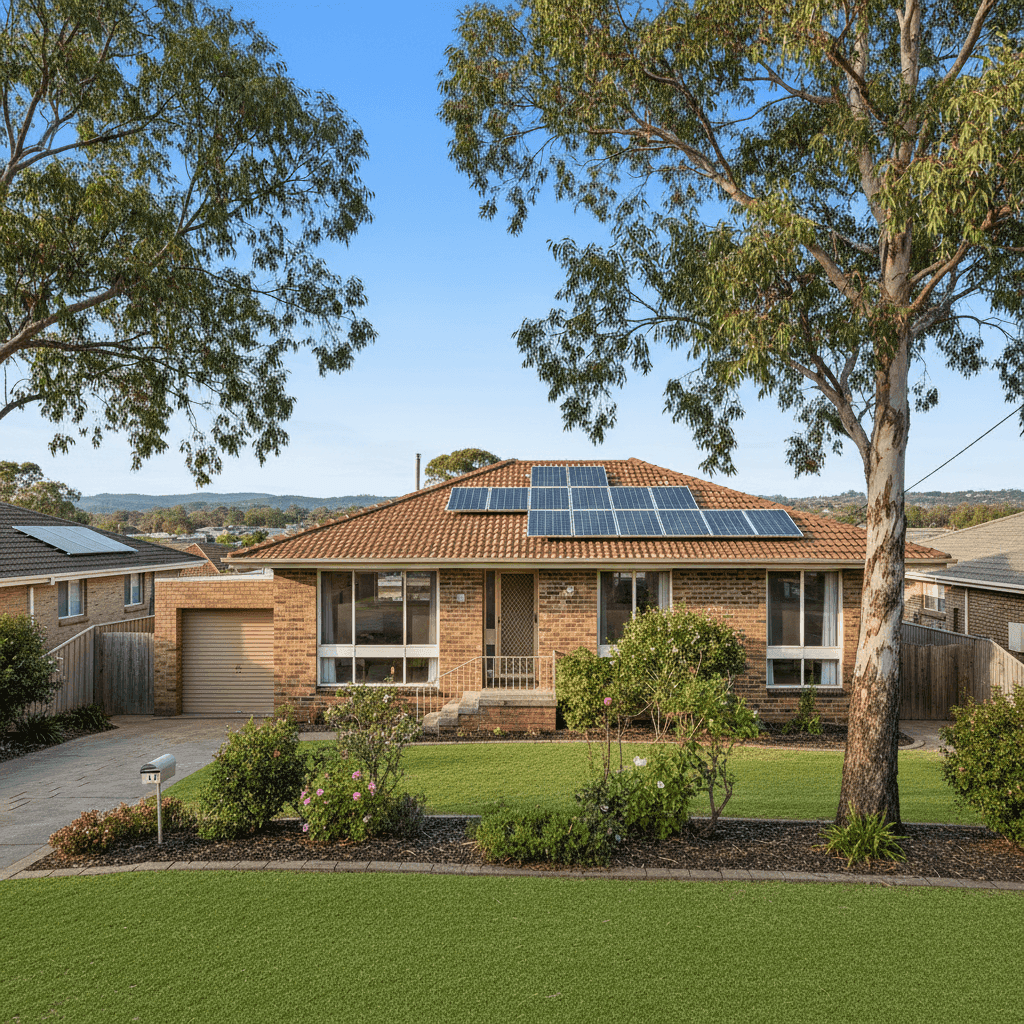
Campbelltown, nestled in Sydney's south-west, is a well-established suburb with a mix of older character homes and newer builds. If you own a free standing home here, understanding what drives your home insurance premium — and whether you're paying a fair price — can make a real difference to your household budget. This article breaks down a recent home and contents insurance quote for a five-bedroom brick veneer home in Campbelltown (NSW 2560), compares it against local, state, and national benchmarks, and offers practical tips to help you get better value on your cover.
---
Is This Quote Fair?
The quote in question comes in at $3,281 per year (or $321 per month) for combined home and contents cover, with a building sum insured of $811,000 and contents valued at $98,000. Both the building and contents excess are set at $1,000.
Based on our price rating system, this premium is rated Expensive — above average for the Campbelltown area. That's a meaningful signal worth paying attention to. While no two properties are identical, a premium sitting well above the local average suggests there may be room to shop around and secure a more competitive rate without sacrificing quality cover.
That said, it's important to remember that a higher sum insured naturally pushes premiums up. At $811,000 for the building alone, this is a substantial coverage amount — and for a 214 sqm home built in 1969, that figure reflects the real cost of rebuilding to modern standards, which can be significantly higher than market value.
---
How Campbelltown Compares
To put this quote in context, here's how it stacks up against suburb, state, and national data drawn from CoverClub's Campbelltown insurance statistics:
| Benchmark | Premium |
|---|---|
| This Quote | $3,281/yr |
| Campbelltown Suburb Average | $1,808/yr |
| Campbelltown Suburb Median | $1,836/yr |
| Campbelltown 75th Percentile | $2,305/yr |
| LGA (Wollongong) Average | $2,751/yr |
| NSW State Median | $3,770/yr |
| National Median | $2,764/yr |
A few things stand out here. At $3,281 per year, this quote sits above the suburb average by roughly 81% and exceeds even the 75th percentile for the area ($2,305). That means it's pricier than at least three-quarters of comparable quotes sourced in Campbelltown — a clear sign that shopping around is worthwhile.
Interestingly, when you zoom out to the NSW state level, the picture shifts. The NSW average premium is a striking $9,528 per year, though the median sits at a more grounded $3,770 — indicating that a small number of very high-risk or high-value properties skew the average considerably. Against the state median, this quote is actually slightly below, which adds some nuance to the "expensive" rating.
At the national level, the median sits at $2,764 per year, placing this quote modestly above the national midpoint. Australia-wide averages are heavily influenced by high-risk regions — particularly cyclone-prone areas in Queensland and Western Australia — so the national median is a useful but imperfect yardstick for a Sydney suburb like Campbelltown.
---
Property Features That Affect Your Premium
Several characteristics of this property have a direct bearing on the premium calculated:
Age of Construction (1969) Homes built in the late 1960s often carry higher rebuild costs due to outdated materials, non-standard construction methods, and the need to bring any repairs up to current building codes. Insurers factor this in when calculating risk.
Brick Veneer Walls and Tiled Roof Brick veneer is generally viewed favourably by insurers — it's durable and fire-resistant compared to timber or fibrous cement cladding. A tiled roof similarly performs well from a risk perspective, offering solid weather resistance. These features can work in your favour when it comes to premiums.
Slab Foundation A concrete slab foundation is common in NSW and is considered low-risk by most insurers. It eliminates the underfloor space that can be a source of moisture, pest, or structural issues in older homes with raised stumps.
Timber and Laminate Flooring While aesthetically appealing, timber and laminate flooring can be more costly to replace than carpet following a water or flood event. This may nudge the contents and building replacement cost estimates upward.
Solar Panels Solar panels add value to a property but also add complexity to an insurance assessment. They increase the replacement cost of the building and can be a source of claims if damaged by hail, storm, or fire. It's worth confirming your policy explicitly covers solar panels and checking the limits that apply.
Ducted Climate Control A ducted air conditioning system is a significant fixed asset within the building. Its inclusion in the building sum insured is appropriate, but it's worth verifying that your policy covers mechanical breakdown or storm damage to the external compressor unit.
Slight Elevation (Less Than 1m) The property is noted as slightly elevated — less than one metre. While this won't dramatically reduce flood risk, it can offer marginal protection against surface water ingress and may be viewed positively by underwriters in flood-susceptible areas.
No Pool, No Cyclone Risk Zone The absence of a swimming pool removes a common source of liability and equipment claims. Being outside a cyclone risk zone is also a significant premium advantage — cyclone cover can add substantially to premiums in northern Australia.
---
Tips for Homeowners in Campbelltown
1. Compare Multiple Quotes Before Renewing The data is clear: premiums in Campbelltown vary widely, from around $1,176 at the 25th percentile to $2,305 at the 75th. Don't accept your renewal notice at face value. Use a comparison tool like CoverClub to see what multiple insurers would charge for your specific property.
2. Review Your Sum Insured Carefully An $811,000 building sum insured is substantial. Make sure it reflects the actual cost to rebuild — not the market value of the property. Over-insuring can unnecessarily inflate your premium, while under-insuring leaves you exposed. Consider using a professional building cost estimator or asking your insurer how they calculated the figure.
3. Check What's Included for Solar Panels and Ducted AC These are high-value assets that not all policies treat equally. Some insurers cap payouts for solar systems or exclude certain types of damage. Read the Product Disclosure Statement (PDS) carefully and ask your insurer directly about coverage limits for these items.
4. Consider Your Excess Level Both the building and contents excess on this policy are set at $1,000. Opting for a higher excess — say, $2,000 — can reduce your annual premium meaningfully. If you're unlikely to make small claims (and many homeowners aren't), a higher excess can be a smart trade-off.
---
Ready to Find a Better Deal?
If your home insurance premium feels high, you're not alone — and you don't have to accept it. CoverClub makes it easy to compare home and contents quotes from a range of Australian insurers, all in one place. Whether you're in Campbelltown or anywhere else in NSW, you could find a policy that offers the same level of protection for significantly less.