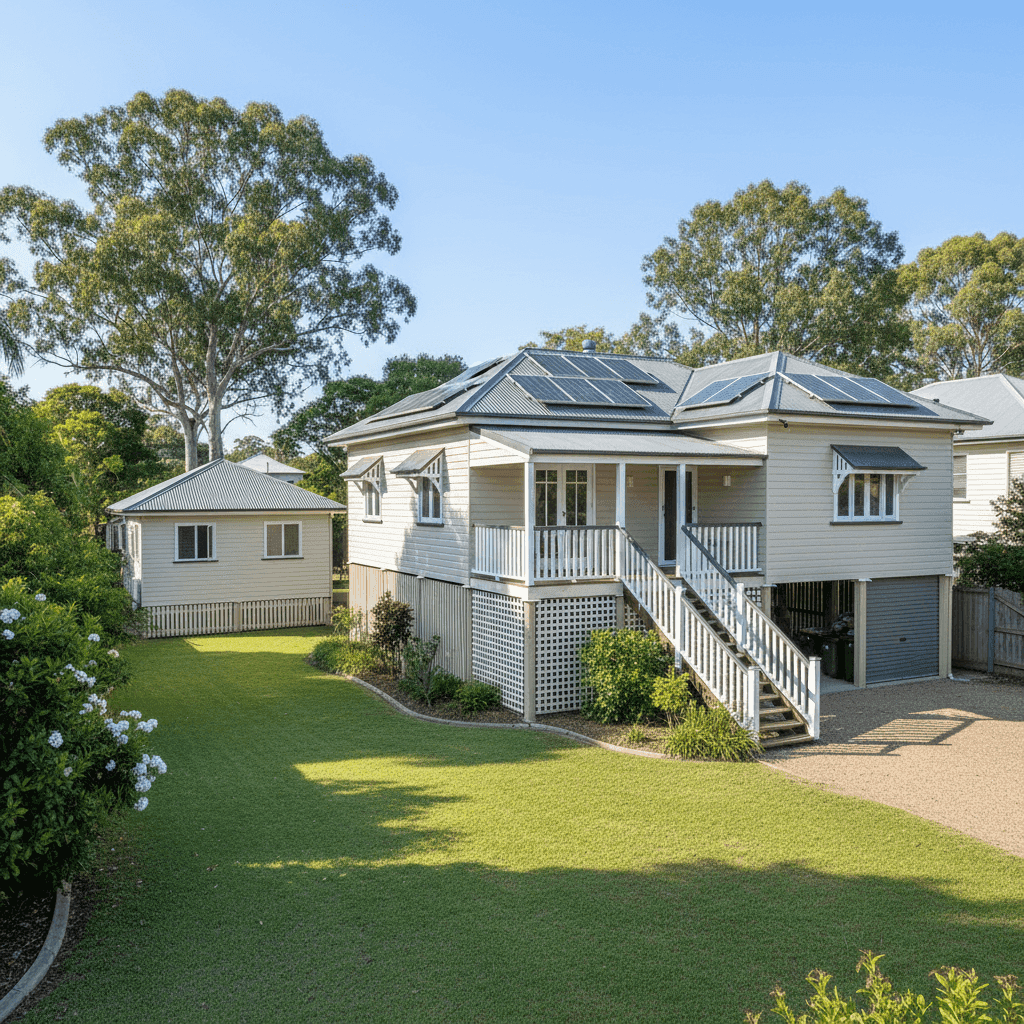
Cannon Hill is a well-established inner-eastern Brisbane suburb known for its leafy streets, post-war character homes, and strong community feel. For owners of a larger free standing home in this pocket of Queensland, understanding what drives your insurance premium — and whether you're paying a fair price — can make a real difference to your household budget. This article breaks down a recent home and contents insurance quote for a five-bedroom property in Cannon Hill, compares it against local, state, and national benchmarks, and offers practical guidance for getting better value on your cover.
---
Is This Quote Fair?
The quote in question sits at $7,445 per year (or $714 per month) for combined home and contents insurance, covering a building sum insured of $1,899,000 and contents valued at $120,000. Both the building and contents carry a $1,000 excess.
Our price rating for this quote is Expensive (Above Average) — and the data backs that up. When you look at Cannon Hill's suburb insurance statistics, the average annual premium sits at just $1,901, with a median of $1,703. At $7,445, this quote is nearly four times the suburb average.
That said, context matters enormously here. This is not a standard three-bedroom brick veneer. It's a large, elevated character home — 367 sqm, five bedrooms, five bathrooms, fibro asbestos construction, timber flooring, above-average fittings, a granny flat, ducted climate control, and solar panels. The building sum insured of $1,899,000 alone places this well above typical Cannon Hill properties in the comparison pool. Higher rebuild costs naturally translate to higher premiums, so while the price tag is steep, it reflects the complexity and scale of what's being insured.
---
How Cannon Hill Compares
To put this quote in perspective, here's how it stacks up across different benchmarks:
| Benchmark | Average Premium | Median Premium |
|---|---|---|
| Cannon Hill (suburb) | $1,901/yr | $1,703/yr |
| Queensland (state) | $9,129/yr | $3,903/yr |
| Australia (national) | $5,347/yr | $2,764/yr |
| Brisbane LGA | $16,277/yr | — |
A few things stand out. First, the Queensland state average of $9,129 per year is actually higher than this quote — driven largely by cyclone-prone regions in Far North Queensland where premiums can be extraordinary. Second, the national average of $5,347 is also below this quote, though again, the national figure is pulled upward by high-risk coastal and flood-prone areas.
When you compare against the Brisbane LGA average of $16,277 per year, this quote starts to look considerably more reasonable — particularly given the high rebuild value and the unique construction characteristics of the home. The suburb's 75th percentile sits at $2,461, but that sample of 17 quotes likely skews toward smaller, more standard homes. For a property of this scale and age, $7,445 is within a defensible range, though there is still room to shop around.
---
Property Features That Affect Your Premium
Several characteristics of this property have a meaningful impact on what insurers charge. Understanding them helps you have more informed conversations with insurers and brokers.
Fibro asbestos external walls are one of the most significant premium drivers here. Homes built with fibro asbestos (common in Queensland between the 1940s and 1970s) attract higher premiums because any damage requiring repairs must comply with strict asbestos removal regulations. This dramatically increases the cost of even minor claims.
Construction year (1961) compounds this. Older homes generally cost more to repair or rebuild to modern building codes, and sourcing period-appropriate materials can be expensive. Insurers price this risk accordingly.
Stump foundations are another factor. Elevated homes on stumps — particularly those raised less than one metre — can be more vulnerable to certain types of damage, and stumps themselves may require inspection or replacement over time. However, some elevation can also reduce flood risk, which may partially offset the premium impact in flood-prone areas.
Timber and laminate flooring tends to be more costly to replace than concrete or tile, and more susceptible to water damage. Combined with above-average fittings throughout, the contents and internal finishes represent a meaningful portion of the rebuild cost.
Solar panels and ducted climate control add to the insured value of the building and increase the complexity of any rebuild. Both are generally covered under building insurance but do contribute to the overall sum insured.
The granny flat is a notable inclusion. Secondary dwellings add square footage, separate fixtures, and in some cases separate electrical and plumbing systems — all of which increase the cost to rebuild and, therefore, the appropriate sum insured.
---
Tips for Homeowners in Cannon Hill
1. Get an independent building valuation. With a sum insured of $1,899,000, it's worth periodically verifying that this figure accurately reflects current rebuild costs — not just market value. An independent quantity surveyor can provide a formal replacement cost estimate, helping you avoid both underinsurance and overpaying on premiums for an inflated sum insured.
2. Ask insurers specifically about asbestos inclusions. Not all policies treat asbestos-containing materials the same way. Some policies include asbestos removal and remediation costs within the standard building cover, while others treat it as a separate or excluded item. Always read the Product Disclosure Statement (PDS) carefully and ask your insurer directly.
3. Review your contents sum insured annually. $120,000 in contents cover is a reasonable starting point for a large home with above-average fittings, but it's easy for this figure to drift out of date as you acquire new items. Consider doing a room-by-room inventory each year to ensure you're not underinsured — especially for electronics, jewellery, and high-end appliances.
4. Compare at least three quotes before renewing. The suburb sample data shows significant spread — from a 25th percentile of $947 to a 75th percentile of $2,461. While this property's profile sits above the typical Cannon Hill home, the principle holds: different insurers price the same risk very differently. Run a comparison at CoverClub to see what multiple insurers would charge for your specific property.
---
Ready to Compare?
Whether you're renewing your existing policy or shopping for cover for the first time, comparing quotes is the single most effective way to ensure you're not overpaying. CoverClub makes it easy to see real quotes side by side for your specific property — including homes with unique features like fibro construction, granny flats, and elevated stumped foundations. Get started with a free quote comparison today and see how much you could save.