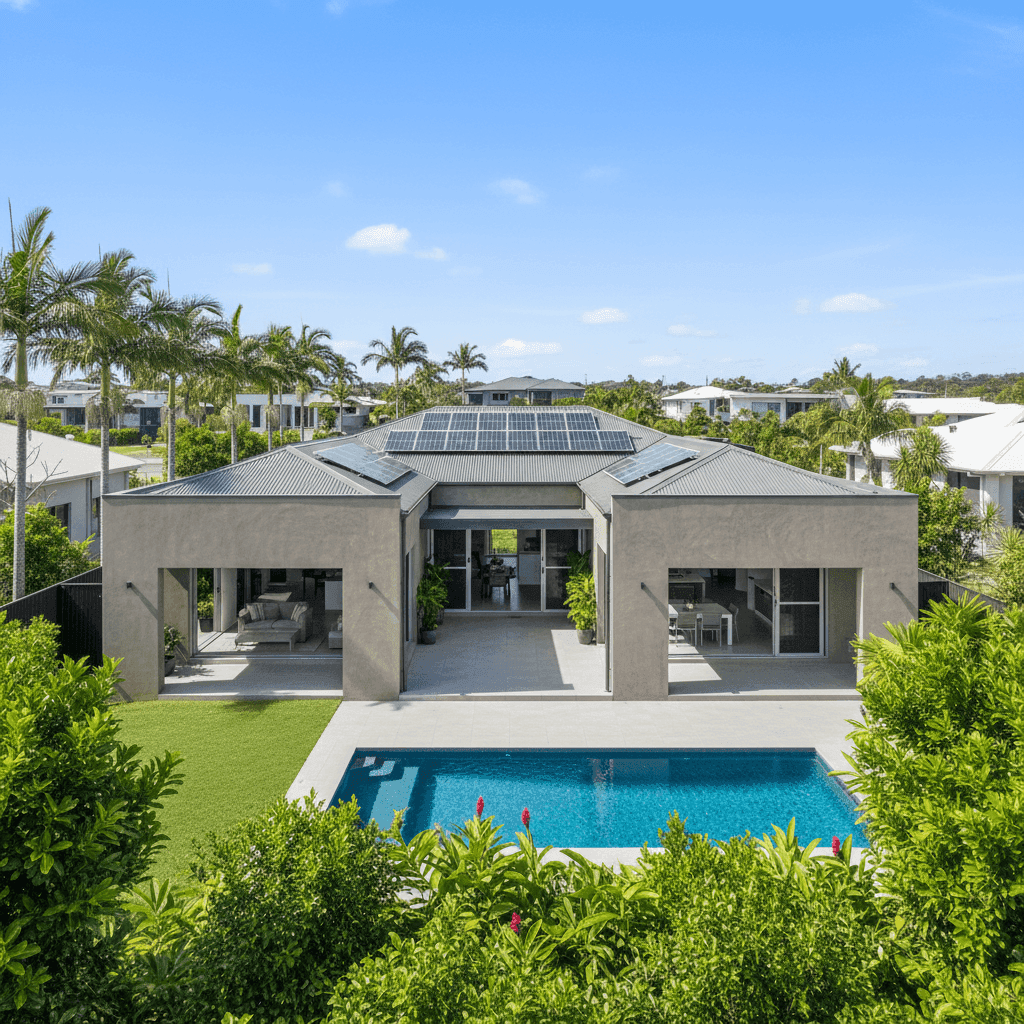
If you own a free standing home in Cannon Valley, QLD 4800, you're likely no stranger to the challenge of finding affordable home insurance. Nestled in the Whitsundays region near Airlie Beach, Cannon Valley sits in a part of Queensland where tropical weather, cyclone risk, and proximity to the coast all play a significant role in what you pay to protect your home. This article breaks down a real home and contents insurance quote for a four-bedroom property in the area — and puts it in context so you can judge whether you're getting a fair deal.
---
Is This Quote Fair?
The quote in question comes in at $4,383 per year (or $420 per month) for combined home and contents cover on a four-bedroom, two-bathroom free standing home — with a building sum insured of $1,200,000 and contents valued at $110,000.
Our price rating for this quote? Cheap — below average. That's genuinely good news for the homeowner.
To put that in perspective: the Queensland state average premium sits at $9,129 per year, and the state median is $3,903. This quote lands just above the state median but is less than half the state average — a meaningful saving of over $4,700 annually compared to what many Queensland homeowners are paying.
When measured against national benchmarks, the picture is similarly encouraging. The national average premium is $5,347 per year, and the national median is $2,764. So while this quote is above the national median (which reflects cheaper markets in lower-risk states), it comes in well below the national average — impressive given the elevated risk profile of this region.
For a property in a declared cyclone risk zone, this is a competitive result.
---
How Cannon Valley Compares
Cannon Valley sits within the Mackay LGA, where the average home insurance premium is a hefty $8,458 per year — nearly double what this homeowner is paying. That LGA average reflects the broader risk environment across the Mackay-Whitsunday region, which includes significant cyclone and storm surge exposure.
Unfortunately, suburb-level data for Cannon Valley isn't available in our current dataset, but you can explore the latest figures directly on the Cannon Valley suburb stats page as our data grows. What we can say with confidence is that this quote — rated cheap against both state and national benchmarks — represents strong value for a home in this postcode.
| Benchmark | Premium |
|---|---|
| This Quote | $4,383/yr |
| QLD State Median | $3,903/yr |
| QLD State Average | $9,129/yr |
| Mackay LGA Average | $8,458/yr |
| National Average | $5,347/yr |
| National Median | $2,764/yr |
---
Property Features That Affect Your Premium
Several characteristics of this property work in the homeowner's favour — and some add complexity. Here's how the key features influence the premium:
Concrete External Walls
Concrete construction is one of the most resilient building materials available, offering excellent resistance to fire, wind, and impact. Insurers generally view concrete-walled homes more favourably than timber or weatherboard equivalents, particularly in cyclone-prone regions. This is a meaningful advantage in a market like Cannon Valley.
Steel / Colorbond Roof
A Colorbond steel roof is another tick in the right column. It's durable, low-maintenance, and performs well under the kind of high-wind events common in North Queensland. Compared to older tile roofs or heritage materials, Colorbond is considered a lower-risk roofing choice by most insurers.
Slab Foundation & Tiled Flooring
A concrete slab foundation provides structural stability and reduces the risk of subsidence or pest-related damage. Combined with tiled flooring — which is both durable and easy to restore after water ingress — this property has a solid base that limits exposure to some of the most common claims.
Built in 2014
A relatively modern construction year means the home was built to contemporary building codes, which in Queensland have included cyclone-resistant standards since the post-Cyclone Tracy era reforms. Newer builds tend to attract more competitive premiums than older homes requiring more maintenance or built to outdated standards.
Swimming Pool
A pool adds to the overall replacement cost of the property and introduces some liability considerations, but it's a standard inclusion in many Queensland homes and unlikely to significantly inflate the premium on its own.
Solar Panels
Solar panels are increasingly common and most insurers now include them under building cover as a fixed structure. It's worth confirming with your insurer that your panels are explicitly covered under your policy — both for accidental damage and storm events.
Cyclone Risk Area
This is the most significant risk factor for this property. Cannon Valley's location in a declared cyclone risk zone means insurers apply higher base rates to account for potential structural damage from tropical cyclones. Despite this, the quote has come in below average — a testament to the quality of the construction and the competitiveness of the policy.
Above Average Fittings Quality
Above-average fittings — think stone benchtops, quality cabinetry, premium fixtures — increase the cost to rebuild or repair, which is reflected in the higher building sum insured of $1.2 million. Getting this figure right is critical: underinsurance is one of the most common and costly mistakes homeowners make.
---
Tips for Homeowners in Cannon Valley
1. Review Your Sum Insured Annually
Construction costs in Queensland have risen sharply in recent years. A sum insured of $1,200,000 may be appropriate today, but it's worth reassessing each year at renewal. Use a building cost calculator or speak with a quantity surveyor to make sure you're not left short after a major event.
2. Understand Your Cyclone Excess
Many policies in cyclone-declared zones apply a separate, higher excess for cyclone-related claims — often a percentage of the sum insured rather than a flat dollar amount. Make sure you know what your cyclone excess is before you need to make a claim.
3. Confirm Solar Panel Coverage
Ask your insurer directly: are your solar panels covered for storm damage, accidental breakage, and power surge? Some policies include them automatically; others require an endorsement. Don't assume — get it in writing.
4. Compare at Renewal, Not Just When You Buy
Home insurance premiums can shift significantly from year to year, especially in high-risk regions. The fact that this quote came in well below the Mackay LGA average suggests there's real variation between insurers. Shopping around at renewal — rather than auto-renewing — could save you thousands.
---
Find a Better Deal with CoverClub
Whether you're a new homeowner in Cannon Valley or simply wondering if your current policy still represents good value, CoverClub makes it easy to compare home and contents insurance quotes from a range of Australian insurers. Get a quote today and see how your premium stacks up against the suburb, state, and national benchmarks — all in one place.