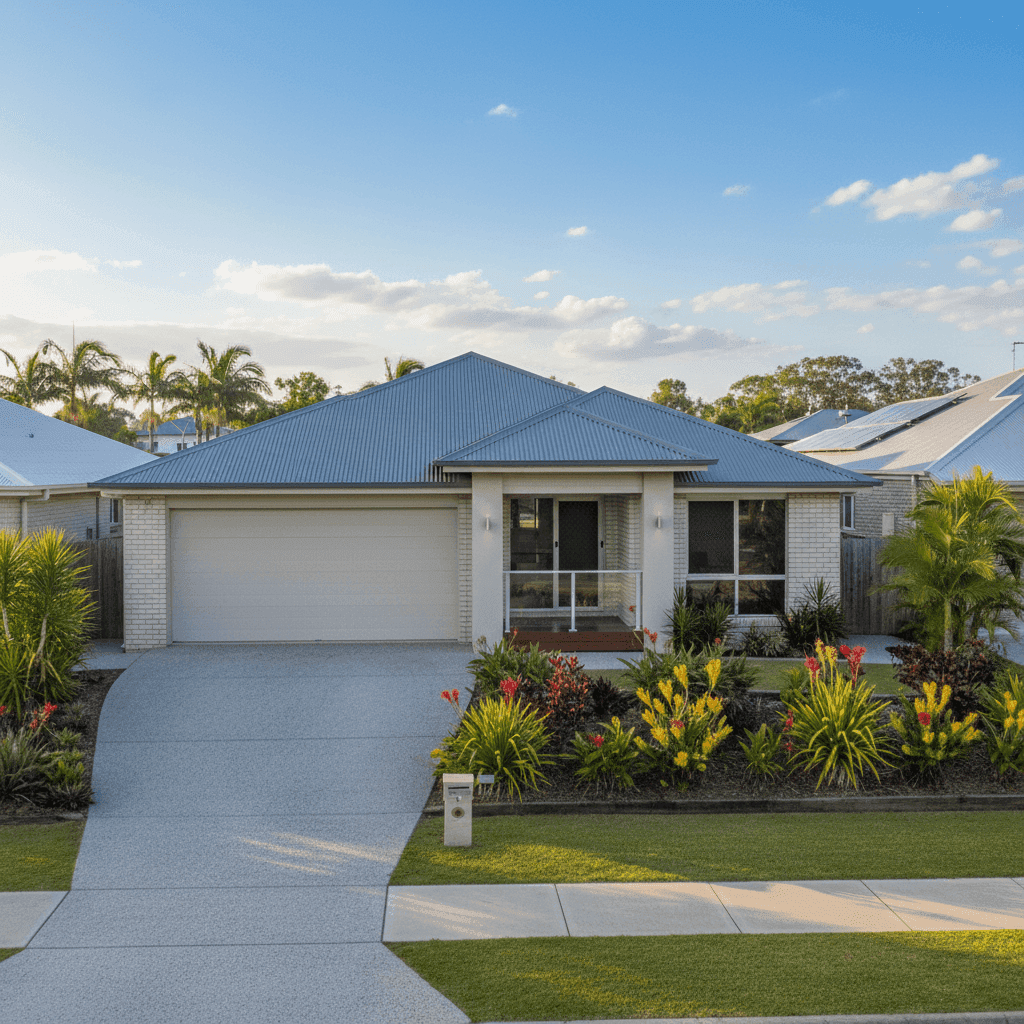
Cannonvale is a popular residential suburb sitting just outside the Whitsunday Coast's tourist hub of Airlie Beach — a place many Australians dream of calling home. But living in paradise comes with its own set of insurance considerations, particularly when it comes to cyclone risk. This article breaks down a real home and contents insurance quote for a three-bedroom, free-standing home in Cannonvale (postcode 4802), and puts the numbers in context so you can judge whether your own premium stacks up.
---
Is This Quote Fair?
The quote in question comes to $2,824 per year (or $271 per month) for a combined home and contents policy — covering a building sum insured of $575,000 and contents valued at $40,000, each with a $500 excess.
Based on CoverClub's pricing data, this premium is rated CHEAP — meaning it sits well below the average for the area. That's a meaningful result for a suburb where insurance costs are notoriously elevated due to natural hazard exposure.
To put it plainly: the typical homeowner in Cannonvale is paying considerably more than this for equivalent cover. If you're currently paying above $3,300 per year for a similar property, you may be leaving real money on the table.
---
How Cannonvale Compares
The numbers tell a compelling story when you line them up side by side:
| Benchmark | Annual Premium |
|---|---|
| This quote | $2,824 |
| Cannonvale suburb average | $4,474 |
| Cannonvale suburb median | $4,281 |
| Cannonvale 25th percentile | $3,322 |
| Cannonvale 75th percentile | $5,408 |
| QLD state average | $4,547 |
| QLD state median | $3,931 |
| Whitsunday LGA average | $5,162 |
| National average | $2,965 |
| National median | $2,716 |
Based on 68 quotes sampled for the Cannonvale suburb.
A few things stand out here. First, the Cannonvale suburb average of $4,474 is dramatically higher than the national average of $2,965 — a gap of over $1,500 per year. That's largely attributable to North Queensland's cyclone risk profile, which insurers price very carefully.
Second, the Queensland state average of $4,547 is itself well above the national average, reflecting the fact that a large portion of Queensland's population lives in cyclone-prone or flood-exposed regions.
Third — and perhaps most striking — the Whitsunday LGA average sits at $5,162 per year, making it one of the pricier local government areas in the state. This quote, at $2,824, comes in at roughly 55% of the LGA average. That's a significant saving for what is otherwise a high-risk postcode.
---
Property Features That Affect Your Premium
Several characteristics of this property are worth examining through an insurance lens.
Brick veneer construction with a Colorbond roof Brick veneer walls offer solid structural integrity and are generally well-regarded by insurers. Combined with a steel Colorbond roof — which is both durable and widely used in cyclone-prone areas — this home has a construction profile that many insurers view favourably. Colorbond roofing in particular is designed to withstand high winds, which matters enormously in a region like the Whitsundays.
Slab foundation and tile flooring A concrete slab foundation is a common and cost-effective building method in Queensland, and it performs well in terms of moisture resistance. Tile flooring throughout adds to the property's resilience — tiles are not susceptible to water damage in the same way carpet or timber floors can be, which can be a positive factor in storm and flood scenarios.
Built in 2018 At just a few years old, this home was constructed to relatively modern building codes. Post-2011 cyclone code upgrades in Queensland introduced stricter requirements for wind resistance, particularly in cyclone-designated areas. A newer build like this is likely to have benefited from those updated standards, which can translate into more competitive premiums.
139 sqm building size and standard fittings At 139 square metres with standard-quality fittings, this is a modest but functional home. The $575,000 sum insured reflects current rebuild costs rather than market value — a distinction that's easy to overlook but crucial to get right. Underinsurance remains one of the most common and costly mistakes homeowners make.
Cyclone risk area There's no getting around it: Cannonvale sits in a designated cyclone risk zone. This is the single biggest driver of elevated premiums in this postcode. Insurers apply significant loadings for properties in these areas, which is why the suburb average is nearly double the national average. The fact that this quote comes in below even the national average is all the more impressive given this context.
---
Tips for Homeowners in Cannonvale
1. Don't set and forget your sum insured Construction costs in Queensland have risen sharply in recent years due to labour shortages and material price increases. Review your building sum insured annually to ensure it reflects current rebuild costs — not what you paid for the property or what it was insured for three years ago. Underinsurance at claim time can leave you significantly out of pocket.
2. Shop the market every renewal The spread between the cheapest and most expensive quotes in Cannonvale is enormous — from around $3,322 at the 25th percentile to over $5,400 at the 75th percentile. That's a $2,000+ gap for comparable cover. Insurers price risk differently, and loyalty rarely pays. Comparing quotes at each renewal is one of the simplest ways to avoid overpaying.
3. Consider your excess strategically A $500 excess is relatively standard, but opting for a higher excess — say $1,000 or $2,000 — can meaningfully reduce your annual premium. In a cyclone-risk area where premiums are elevated, the maths can work in your favour if you're in a position to self-insure smaller claims.
4. Document your contents thoroughly With $40,000 in contents cover, it's worth maintaining an up-to-date home inventory. Photographs, receipts, and serial numbers stored securely in the cloud can make the claims process far smoother after a weather event. In cyclone season, having this documentation sorted in advance is simply good practice.
---
Ready to See What You Could Be Paying?
Whether you're a new homeowner in Cannonvale or you haven't reviewed your policy in a couple of years, it's worth knowing where your premium sits relative to the market. CoverClub makes it easy to compare home and contents insurance quotes in one place — so you can see whether you're getting a fair deal or paying more than you need to.