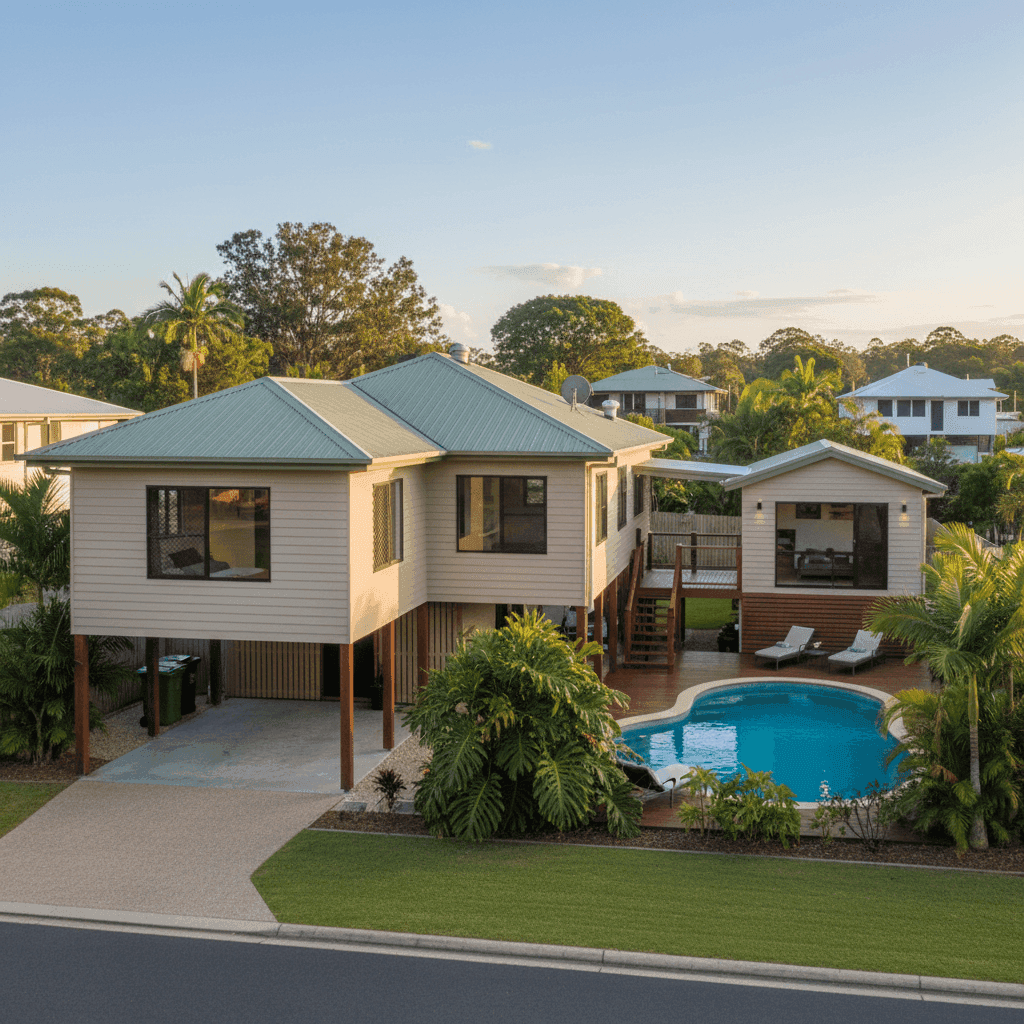
Cannonvale is a coastal suburb in the Whitsunday region of Queensland — a beautiful place to own a home, but one that comes with some of the more complex insurance considerations in the country. This article breaks down a real home and contents insurance quote for a three-bedroom, two-bathroom free-standing home in Cannonvale (postcode 4802), and puts the numbers into context so you can judge whether your own premium stacks up.
---
Is This Quote Fair?
The annual premium for this property came in at $4,359 per year (or $419/month), covering a building sum insured of $1,107,000 and $80,000 in contents. Our price rating for this quote is FAIR — Around Average.
That assessment is backed by the data. Based on 68 quotes collected for Cannonvale, the suburb average sits at $4,474/yr and the median at $4,281/yr. This quote lands between those two figures — slightly below the average and just above the median — which is precisely where a "fair" rating belongs.
It's worth noting the spread within the suburb is significant. The 25th percentile of quotes comes in at $3,322/yr, while the 75th percentile reaches $5,408/yr. That's a difference of over $2,000 between the cheaper and more expensive ends of the market for comparable properties. If your current premium is nudging toward that upper quartile, there's a real case for shopping around.
---
How Cannonvale Compares
To understand what Cannonvale homeowners are really paying, it helps to zoom out:
| Benchmark | Average Premium | Median Premium |
|---|---|---|
| Cannonvale (4802) | $4,474/yr | $4,281/yr |
| Whitsunday LGA | $5,162/yr | — |
| Queensland | $4,547/yr | $3,931/yr |
| National | $2,965/yr | $2,716/yr |
A few things stand out immediately. Cannonvale premiums are broadly in line with the Queensland state average, but they sit dramatically higher than the national average — nearly 51% above it on a median basis. That gap isn't a mystery; it reflects the elevated risk profile of coastal Queensland properties, particularly those in cyclone-declared zones.
Interestingly, Cannonvale's suburb average is actually lower than the broader Whitsunday LGA average of $5,162/yr, which suggests that some surrounding areas in the region carry even higher risk premiums. For Cannonvale homeowners, that's a modest silver lining.
---
Property Features That Affect Your Premium
Several characteristics of this property have a meaningful influence on what insurers charge. Understanding them helps explain the premium — and can guide decisions if you're looking to reduce costs over time.
Cyclone Risk Area
This is the single biggest factor. Cannonvale sits within a designated cyclone risk zone, and insurers price this in heavily. Cyclone cover typically comes with its own excess structure and can significantly lift the base premium compared to properties further inland or in southern states.
Elevated Foundation (Poles)
The home is elevated by at least one metre on a pole foundation — a classic Queenslander-style build that's actually a positive from an insurance perspective in flood-prone coastal areas. Elevation reduces the risk of inundation damage, which can work in your favour when insurers assess flood and storm surge exposure.
Hardiplank / Hardiflex External Walls
Fibre cement cladding like Hardiplank is considered a relatively resilient external wall material. It performs well in high-wind events compared to some older timber weatherboard constructions, which insurers generally view favourably.
Steel / Colorbond Roof
Colorbond roofing is a common and well-regarded choice in cyclone-prone regions. It's durable, lightweight, and — when properly installed with cyclone-rated fixings — holds up better than some alternatives in severe weather. Insurers typically consider this a neutral-to-positive factor.
Swimming Pool
The presence of a pool adds to the replacement cost of the property and contributes to the overall building sum insured. It also introduces a small liability consideration. Pools are a standard feature in many Queensland homes, and most insurers accommodate them, but they do nudge the premium upward.
Granny Flat
A secondary dwelling on the property increases the total insurable value of the structure. Depending on the policy, a granny flat may be covered under the main building sum insured or may require separate consideration — it's worth confirming with your insurer exactly what's included.
Timber / Laminate Flooring
Timber and laminate floors are more vulnerable to water damage than tiles, which can be a factor in storm or flood events. This is a relatively minor pricing variable but worth being aware of.
Building Sum Insured: $1,107,000
At 153 sqm, the building sum insured of $1,107,000 implies a rebuild cost of roughly $7,235 per square metre — which is on the higher end but not unreasonable for a coastal Queensland home with a pool, granny flat, elevated construction, and the added complexity of cyclone-rated rebuilding requirements. Underinsurance is a genuine risk in this region; building costs have risen sharply in recent years, and it's worth reviewing your sum insured annually.
---
Tips for Homeowners in Cannonvale
1. Review your building sum insured every year Construction costs in regional Queensland — particularly in coastal areas — have increased significantly. What was adequate coverage three years ago may leave you underinsured today. Use a building cost calculator or speak with a quantity surveyor to validate your sum insured before renewal.
2. Ask about your cyclone excess separately Many policies in cyclone-declared zones apply a separate, higher excess for cyclone-related claims. This quote carries a $3,000 building excess, but your cyclone-specific excess may differ. Clarify this with your insurer so there are no surprises after a severe weather event.
3. Shop around — the spread is wide With a 25th-to-75th percentile range of over $2,000 in Cannonvale alone, the market is far from uniform. Even with a "fair" rated premium, comparing multiple insurers could yield meaningful savings. Different providers assess cyclone risk, elevated foundations, and construction materials differently.
4. Maintain your property's cyclone readiness Some insurers offer better terms — or fewer disputes at claim time — for properties that demonstrate active cyclone preparedness. This includes things like strapping roof sheets, securing loose outdoor structures, and keeping gutters clear. It's also worth checking whether your granny flat meets current building codes, as this can affect claim outcomes.
---
Compare Your Home Insurance Quote Today
Whether you're renewing soon or just curious about where your premium sits, CoverClub makes it easy to see how your quote stacks up against real data from your suburb and beyond. Get a home insurance quote now and find out if you're getting a fair deal — or if there's room to do better.