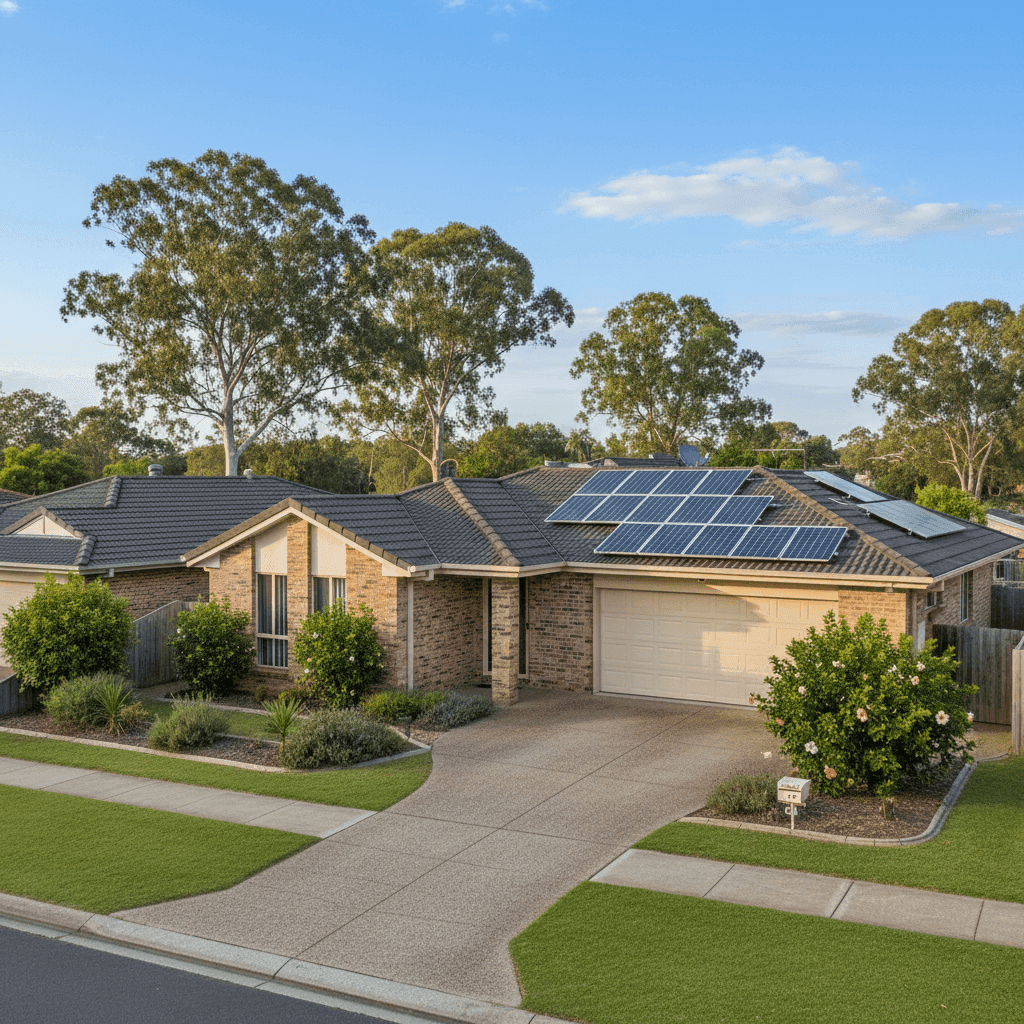
Capalaba, nestled in Brisbane's eastern suburbs within the Redland City Council area, is a well-established residential community known for its leafy streets and family-friendly character. If you own a free standing home here — particularly a four-bedroom brick veneer property built in the mid-1980s — understanding what you should be paying for home and contents insurance is an important part of managing your household finances. This article breaks down a real insurance quote for exactly this type of property, benchmarks it against local, state, and national data, and offers practical advice for homeowners in the area.
---
Is This Quote Fair?
The quote in question comes to $2,556 per year (or $245/month) for combined home and contents cover, with a building sum insured of $673,000 and contents valued at $50,000. Both the building and contents excess are set at $1,000.
Our pricing analysis rates this quote as Fair — Around Average, and the numbers back that up. The suburb average for Capalaba sits at $2,729/year, while the median is $2,585/year. At $2,556, this quote lands just below the suburb median, meaning roughly half of comparable quotes in the area cost more. That's a reasonable outcome — not a bargain, but certainly not overpriced.
It's worth noting that the spread of premiums in Capalaba is quite wide. The 25th percentile sits at just $1,451/year, while the 75th percentile reaches $3,207/year — a difference of nearly $1,800 annually. This kind of range is common in Queensland, where insurers assess risk very differently depending on property age, construction type, and proximity to flood or storm-prone areas. Landing in the middle of that range, as this quote does, suggests the property's risk profile is broadly typical for the suburb.
---
How Capalaba Compares
To put this quote in broader context, it's useful to look beyond the suburb. You can explore full pricing data on the Capalaba insurance stats page, the Queensland state overview, and national insurance benchmarks.
Here's how the numbers stack up:
| Benchmark | Average Premium | Median Premium |
|---|---|---|
| Capalaba (4157) | $2,729/yr | $2,585/yr |
| Redland LGA | $3,178/yr | — |
| Queensland | $9,129/yr | $3,903/yr |
| National | $5,347/yr | $2,764/yr |
The Queensland state average of $9,129/year looks alarming at first glance, but it's heavily skewed by high-risk coastal and cyclone-prone areas in North Queensland, where premiums can reach extraordinary levels. The state median of $3,903/year is a more representative figure, and against that benchmark, this Capalaba quote of $2,556 looks genuinely competitive.
Compared to the national median of $2,764/year, the quote is also slightly below average — a positive sign for homeowners in this part of Brisbane's east. The Redland LGA average of $3,178/year further reinforces that this quote is sitting in a favourable position relative to the broader local government area.
---
Property Features That Affect Your Premium
Several characteristics of this property directly influence how insurers price the risk. Understanding these factors can help you make sense of your premium — and potentially identify ways to adjust it.
Brick Veneer Construction (1985) Brick veneer is generally viewed favourably by insurers due to its fire resistance and structural durability. However, homes built in 1985 are approaching 40 years old, which can introduce concerns around ageing wiring, plumbing, and roofing components. Some insurers apply a loading to older homes, so it's worth checking whether your policy accounts for this.
Tiled Roof Terracotta or concrete tile roofs are a standard feature of Australian suburban homes and are generally well-regarded by insurers. They offer reasonable weather resistance, though they can be more expensive to repair or replace than corrugated metal roofing if damaged in a storm.
Slab Foundation A concrete slab foundation is considered one of the more stable and low-risk foundation types in Queensland's climate. Unlike homes on stumps or piers, slab homes are less susceptible to certain types of movement and pest ingress, which can work in your favour when insurers assess structural risk.
Timber and Laminate Flooring While aesthetically appealing, timber and laminate floors can be more vulnerable to water damage than tiles. In the event of a burst pipe or flooding event, these materials may need full replacement rather than simple drying — something worth keeping in mind when setting your contents and building sum insured.
Solar Panels This property has solar panels installed, which adds value to the building and is an important consideration for your sum insured. Many homeowners underestimate the cost of replacing a solar system in a total loss scenario. Ensure your building sum insured of $673,000 adequately accounts for the replacement cost of the panels and inverter.
Ducted Climate Control Ducted air conditioning systems are a significant fixed asset and are typically covered under building insurance rather than contents. Again, this reinforces the importance of ensuring your building sum insured is accurate and up to date.
No Pool, No Cyclone Risk Zone The absence of a swimming pool removes one common source of liability and maintenance-related claims. Additionally, Capalaba falls outside designated cyclone risk areas, which is a meaningful factor in keeping premiums lower than many other Queensland postcodes.
---
Tips for Homeowners in Capalaba
1. Review Your Building Sum Insured Regularly With a 214 sqm home, solar panels, ducted air conditioning, and quality timber flooring, construction costs can add up quickly. Building costs in South East Queensland have risen significantly in recent years. Use a building cost calculator or speak with a quantity surveyor to ensure $673,000 genuinely reflects the cost to rebuild — not just the market value of the property.
2. Shop Around — The Range Is Wide The gap between the 25th and 75th percentile premiums in Capalaba is nearly $1,800 per year. That means there's a real chance you could find a materially cheaper policy without sacrificing cover quality. Compare quotes at CoverClub to see what multiple insurers would charge for your specific property.
3. Consider Your Excess Carefully Both the building and contents excess on this policy are set at $1,000. Opting for a higher excess — say $2,000 or $2,500 — can reduce your annual premium meaningfully. If you have the financial buffer to cover a larger out-of-pocket cost in a claim, this is often a smart trade-off.
4. Check Your Contents Cover Is Sufficient A contents value of $50,000 is on the lower end for a four-bedroom home. Take the time to walk through each room and tally up the replacement cost of furniture, appliances, clothing, electronics, and valuables. Many households find their contents are worth considerably more than their initial estimate — and being underinsured at claim time can be a costly mistake.
---
Compare Your Home Insurance Today
Whether you're reviewing an existing policy or shopping for cover on a new property, CoverClub makes it easy to see how your quote stacks up. Get a home insurance quote and compare options from multiple insurers — it only takes a few minutes and could save you hundreds of dollars a year.