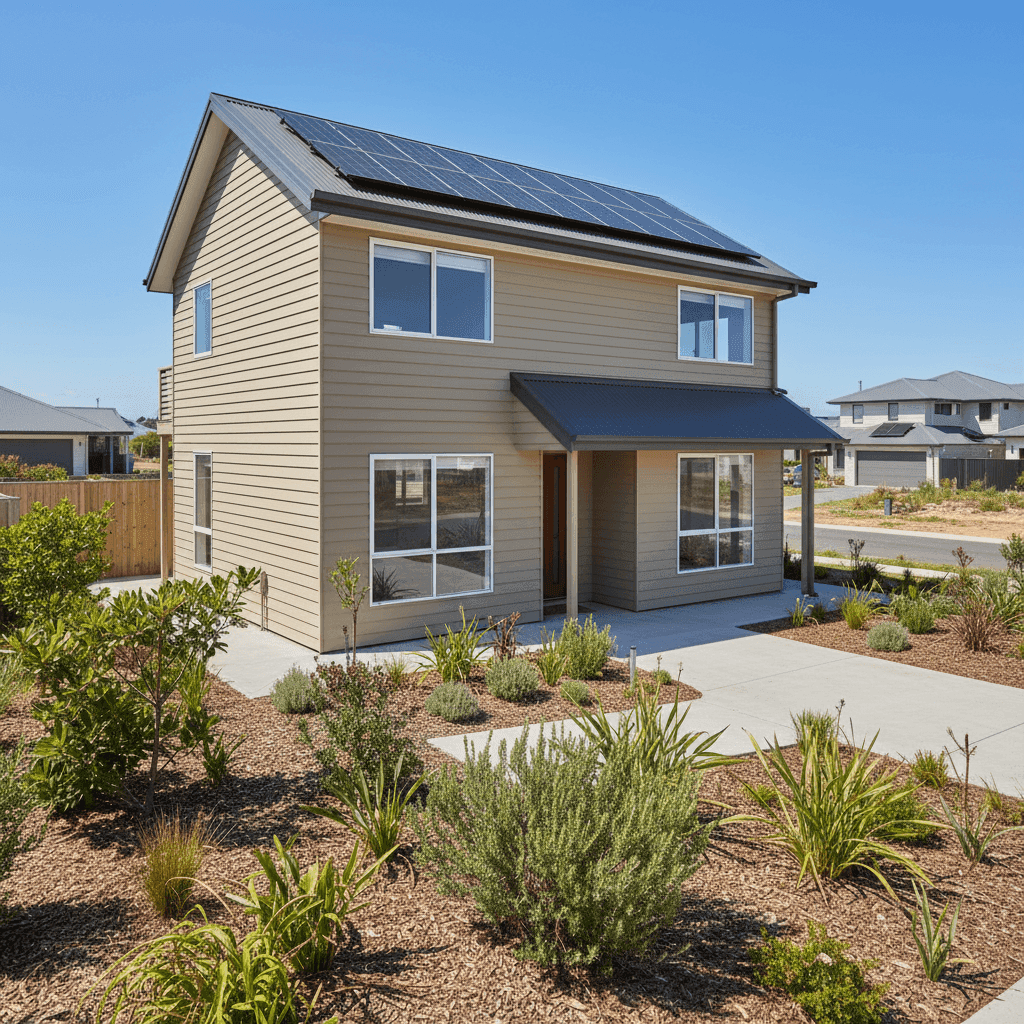
Cape Paterson is a quiet coastal township on Victoria's Bass Coast, popular with families and sea-change seekers drawn to its surf beaches and relaxed lifestyle. But owning property here — like anywhere in regional Victoria — comes with real insurance considerations. This article breaks down a recent home and contents insurance quote for a three-bedroom, two-bathroom semi detached home in Cape Paterson (postcode 3995), helping you understand what's driving the price and whether there's room to do better.
---
Is This Quote Fair?
The quote in question sits at $3,630 per year (or $348 per month), covering a building sum insured of $996,000 and $100,000 in contents, each with a $1,000 excess.
Our price rating for this quote is Expensive — above average for the area.
To put that in perspective: the suburb average for Cape Paterson sits at just $1,833 per year, with a median of $1,756. Even the 75th percentile — meaning 75% of quotes in the suburb are cheaper — comes in at $2,191 per year. At $3,630, this quote is nearly double the suburb median and well above what most Cape Paterson homeowners are paying.
That said, context matters. The building sum insured of $996,000 is on the higher end and will naturally push the premium up. A semi detached home built in 2014 with quality fittings, ducted climate control, and solar panels represents a meaningful replacement cost, and insurers price accordingly.
Still, the gap between this quote and the suburb benchmark is significant enough to warrant shopping around.
---
How Cape Paterson Compares
Understanding where Cape Paterson sits in the broader insurance landscape helps frame whether this quote is an outlier or part of a wider trend.
| Benchmark | Average Premium | Median Premium |
|---|---|---|
| Cape Paterson (3995) | $1,833/yr | $1,756/yr |
| Bass Coast LGA | $2,160/yr | — |
| Victoria (VIC) | $3,000/yr | $2,718/yr |
| National | $5,347/yr | $2,764/yr |
A few things stand out here. Cape Paterson's local premiums are notably lower than the Victorian state average, which itself is well below the national average. This suggests that, at a suburb level, Cape Paterson is considered a relatively moderate-risk area by insurers — likely due to its low crime rates, newer housing stock, and absence of cyclone risk.
You can explore the full VIC state insurance data or dive into national home insurance benchmarks to see how different regions stack up.
The Bass Coast LGA average of $2,160 sits between the suburb and state figures, which is typical — LGA-level data smooths out the variation you see at the suburb level, where a small sample (just 15 quotes in this case) can shift averages noticeably.
---
Property Features That Affect Your Premium
Several characteristics of this property will directly influence what insurers charge. Here's how they play out:
Weatherboard Timber Walls
Weatherboard wood is one of the more common external wall types in coastal Victoria, but it's also one that insurers treat with caution. Timber is more susceptible to fire, moisture damage, and pest ingress than brick or rendered concrete — all factors that can push premiums higher. Regular maintenance is essential to keep the home in good condition and avoid claim disputes.
Steel / Colorbond Roof
On the positive side, a Colorbond steel roof is generally viewed favourably by insurers. It's durable, low-maintenance, and performs well in high-wind conditions — a relevant consideration for a coastal location like Cape Paterson. This should work in the homeowner's favour when it comes to pricing.
Slab Foundation
A concrete slab foundation is standard for homes built in the 2010s and is generally considered low-risk from an insurance perspective. It eliminates many of the subsidence and pest concerns associated with older raised timber floors.
Solar Panels
This property includes solar panels, which are increasingly common across Australia but do add to the replacement cost of the home. Homeowners should confirm with their insurer that solar panels are explicitly covered under the building policy — not all standard policies include them by default, or they may be subject to separate limits.
Ducted Climate Control
A ducted heating and cooling system represents a significant fixed asset within the home. Like solar panels, it contributes to the overall building replacement cost and is worth verifying as a covered item under the policy schedule.
High Building Sum Insured
At $996,000, the building sum insured is the single biggest driver of this premium. While it may feel high, underinsurance is a serious risk — particularly for semi detached properties where shared walls and common structures can complicate rebuild costs. Getting a professional building valuation every few years is worthwhile.
---
Tips for Homeowners in Cape Paterson
1. Compare multiple quotes before renewing The gap between this quote ($3,630) and the suburb median ($1,756) is substantial. Even accounting for the higher sum insured, there's likely room to find a more competitive premium. Use a comparison tool like CoverClub to see what multiple insurers would offer for the same level of cover.
2. Review your sum insured annually Building costs fluctuate with the construction market. The $996,000 sum insured may be accurate today, but it's worth revisiting each year to ensure you're neither underinsured (a serious financial risk at claim time) nor overinsured (paying more than necessary). Some insurers offer index-linked policies that adjust automatically.
3. Confirm solar panels and ducted systems are covered Ask your insurer specifically whether solar panels and ducted climate control are included in your building cover and up to what limit. These are commonly overlooked items that can lead to nasty surprises after a storm or fire.
4. Consider a higher excess to reduce your premium Both the building and contents excess on this quote are set at $1,000. Increasing your excess — say, to $2,000 or $2,500 — can meaningfully reduce your annual premium. Just make sure the excess is an amount you could comfortably cover out of pocket if you needed to make a claim.
---
Ready to Find a Better Deal?
Whether you're a first-time buyer or a long-term Cape Paterson local, it pays to regularly review your home insurance. CoverClub makes it easy to compare quotes from leading Australian insurers in minutes — so you can make sure you're getting the right cover at a fair price.
👉 Get a home insurance quote for your Cape Paterson property
You can also explore detailed insurance statistics for Cape Paterson and the 3995 postcode to benchmark your own premium against local data.