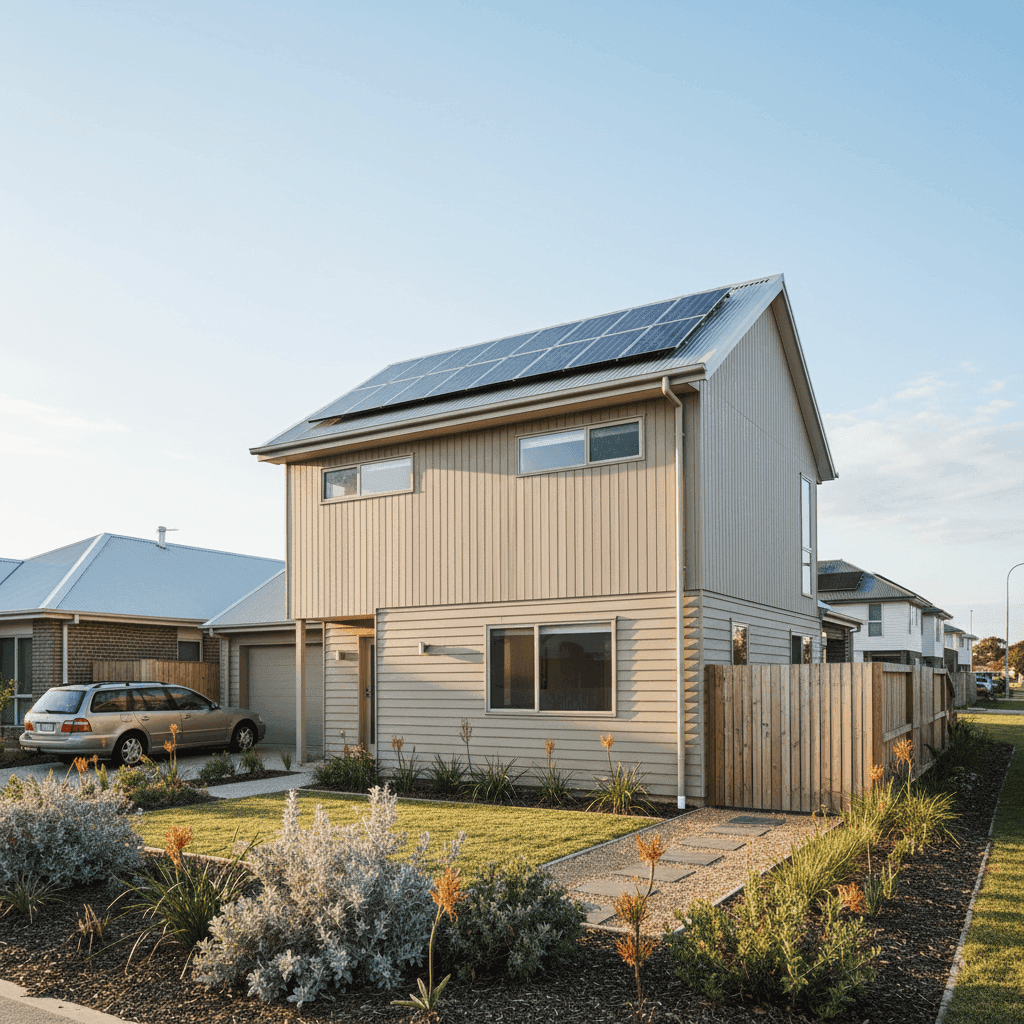
Cape Paterson is a quiet coastal township on Victoria's Bass Coast, popular with sea-changers and holiday homeowners alike. If you own a townhouse here, you already know the appeal — relaxed coastal living within a couple of hours of Melbourne. But coastal charm comes with its own insurance considerations, and understanding what drives your premium is essential to making sure you're getting genuine value. This article breaks down a real home and contents insurance quote for a three-bedroom, two-bathroom townhouse in Cape Paterson, comparing it against local, state, and national benchmarks to help you decide whether the price stacks up.
---
Is This Quote Fair?
The quote in question comes in at $3,490 per year (or $334/month) for combined home and contents cover, with a building sum insured of $850,000 and contents valued at $100,000. Both the building and contents excess are set at $1,000.
Our price rating for this quote is Expensive — Above Average.
To put that in context, the suburb average for Cape Paterson sits at just $1,833 per year, with a median of $1,756. This quote is nearly double the local average, which is a significant gap worth interrogating. Even sitting against the 75th percentile for the suburb — meaning 75% of quotes come in below $2,191 — this premium is still well above the pack.
That said, a few factors help explain the divergence. The building sum insured of $850,000 is on the higher end for a 139 sqm townhouse, and above-average fittings quality will push rebuild costs — and therefore premiums — upward. Contents cover of $100,000 also adds meaningfully to the total. Still, even accounting for these factors, shoppers in Cape Paterson with similar properties may find more competitive pricing by comparing across multiple insurers.
---
How Cape Paterson Compares
Understanding where your premium sits relative to broader benchmarks gives you real negotiating power. Here's how this quote lines up:
| Benchmark | Premium |
|---|---|
| This Quote | $3,490/yr |
| Cape Paterson Suburb Average | $1,833/yr |
| Cape Paterson Suburb Median | $1,756/yr |
| Victoria State Average | $3,000/yr |
| Victoria State Median | $2,718/yr |
| National Average | $5,347/yr |
| National Median | $2,764/yr |
| Bass Coast LGA Average | $2,160/yr |
A few observations stand out here. While this quote exceeds the Cape Paterson suburb average by a wide margin, it's actually not far above the Victorian state average of $3,000/yr — suggesting that insurers are pricing this property more in line with broader Victorian risk profiles than specifically local ones. Against the national average of $5,347, it looks relatively modest, though the national median of $2,764 tells a more grounded story.
It's worth noting the suburb sample size is 15 quotes, which is a reasonable but not large dataset. Premiums in Cape Paterson can vary considerably depending on the specific property, insurer, and level of cover selected.
---
Property Features That Affect Your Premium
Several characteristics of this townhouse have a direct bearing on what insurers charge. Understanding them helps you anticipate costs — and potentially reduce them.
Weatherboard timber external walls are a key risk factor. Timber-clad homes are more susceptible to fire spread and can be more expensive to repair or replace than brick veneer equivalents. Insurers typically apply higher premiums to weatherboard construction, particularly in areas with bushfire or coastal weather exposure.
Steel/Colorbond roofing is generally viewed favourably by insurers. It's durable, low-maintenance, and performs well in high-wind conditions — a relevant consideration for coastal properties like those in Cape Paterson.
Slab foundation is standard and presents no unusual risk, which is a neutral factor in premium calculations.
Timber and laminate flooring can be costly to replace following water damage or flooding events, and above-average fittings quality across the property means the cost to reinstate finishes and fixtures to their original standard will be higher than a standard build.
Solar panels add replacement value to the structure and must be covered under the building sum insured. If the declared building value of $850,000 already accounts for this, the cover is appropriate — but it's worth confirming with your insurer that solar panels are explicitly included.
Ducted climate control is another high-value fixture that contributes to the overall cost to rebuild or repair. Systems like these are expensive to replace and are a legitimate driver of a higher sum insured.
The 2007 construction year means the property is relatively modern, which can be a positive signal for insurers — newer builds are generally constructed to higher standards and are less likely to have ageing electrical or plumbing issues.
---
Tips for Homeowners in Cape Paterson
1. Review your sum insured carefully. At $850,000, the building sum insured is substantial for a 139 sqm townhouse. While it's critical not to underinsure — especially with above-average fittings — it's equally important not to over-insure. Use a professional building cost estimator or ask your insurer to justify the rebuild cost estimate. Even a modest adjustment could meaningfully reduce your annual premium.
2. Shop around — seriously. The gap between this quote and the suburb average is large enough that comparing at least three to five insurers is strongly advisable. Premiums for the same property can vary by hundreds of dollars annually depending on the insurer's risk appetite and how they assess coastal timber-clad homes.
3. Consider a higher excess to reduce your premium. Both the building and contents excess are set at $1,000. Opting for a higher excess — say $2,000 or $2,500 — can reduce your annual premium noticeably. This works best if you have an emergency fund and are unlikely to make small claims.
4. Confirm solar panel and ducted system coverage. Don't assume these are automatically included. Ask your insurer specifically whether solar panels and ducted climate control are covered under your building policy, and whether their replacement value is factored into the sum insured. Gaps here can be costly at claim time.
---
Ready to Find a Better Deal?
Whether you're renewing your existing policy or insuring a new property, comparing quotes is the single most effective way to ensure you're not overpaying. Get a home insurance quote at CoverClub and see how your premium stacks up against real data from properties like yours in Cape Paterson and across Victoria. You can also explore detailed suburb-level insurance stats for Cape Paterson or browse Victoria-wide benchmarks to inform your decision.