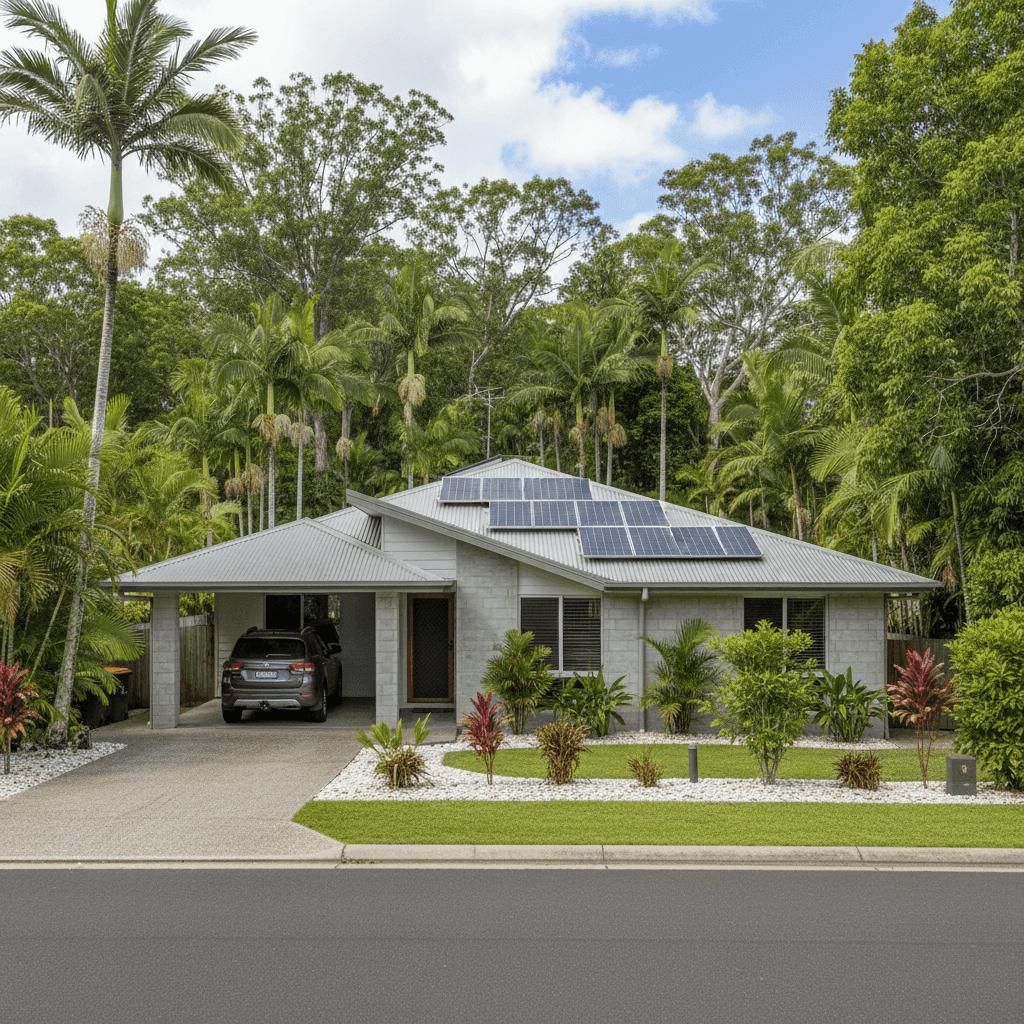
If you own a free standing home in Cardwell, QLD 4849, you already know that insuring it comes with some unique considerations. Nestled along the Cassowary Coast in Far North Queensland, Cardwell is a beautiful coastal community — but it's also a region where insurers pay close attention to natural hazard risk. This article breaks down a real building insurance quote for a three-bedroom, one-bathroom free standing home in Cardwell, examines how the price stacks up against local, state and national benchmarks, and offers practical tips to help you get the best value on your cover.
---
Is This Quote Fair?
The quote in question is $4,259 per year (or $408/month) for building-only cover, with a $1,000 building excess and a sum insured of $565,000. Our price rating for this quote is FAIR — Around Average.
That rating reflects a nuanced picture. Within Cardwell itself, this premium sits comfortably between the suburb's 25th percentile ($2,987/yr) and 75th percentile ($5,762/yr), and it's notably below the suburb average of $4,735/yr. It's also slightly above the suburb median of $4,141/yr, meaning roughly half of comparable quotes in the area come in lower — but half come in higher too.
In short, this isn't a bargain-basement price, but it's not an outlier either. For a property with the characteristics described — including cyclone risk exposure and solar panels — landing near the middle of the local range is a reasonable outcome. Homeowners who feel they can do better should absolutely shop around, but there's no red flag here suggesting the quote is significantly overpriced.
---
How Cardwell Compares
Understanding where Cardwell sits in the broader insurance landscape helps put this quote in proper context. You can explore the full Cardwell suburb insurance stats on CoverClub, but here's a summary:
| Benchmark | Premium |
|---|---|
| This Quote | $4,259/yr |
| Cardwell Suburb Average | $4,735/yr |
| Cardwell Suburb Median | $4,141/yr |
| Cassowary Coast LGA Average | $5,573/yr |
| QLD State Average | $9,129/yr |
| QLD State Median | $3,903/yr |
| National Average | $5,347/yr |
| National Median | $2,764/yr |
A few things stand out here. First, the QLD state average of $9,129/yr is extraordinarily high — a figure heavily skewed by extreme premiums in high-risk cyclone and flood zones across the state. The state median of $3,903/yr is a far more representative number for typical Queensland homeowners, and this quote sits only modestly above that.
Compared to the national average of $5,347/yr, this quote is actually below average — a positive sign. The national median of $2,764/yr is lower, but that figure is pulled down by properties in low-risk areas across southern states where cyclone and flood exposure is minimal.
The Cassowary Coast LGA average of $5,573/yr provides perhaps the most relevant regional comparison. This quote comes in $1,314/yr below that LGA average, which is a meaningful saving for homeowners in the area.
---
Property Features That Affect Your Premium
Several characteristics of this property have a direct bearing on what insurers charge. Understanding them helps explain why the premium lands where it does.
Cyclone Risk Area
This is the single biggest factor. Cardwell sits within a designated cyclone risk zone, and insurers price this in significantly. Cyclone-related damage — including wind, rain ingress, and storm surge — drives substantial claims in Far North Queensland. Expect this to add a meaningful loading to any premium in the region, regardless of insurer.
Construction Materials
The home features concrete external walls and a steel/Colorbond roof — both of which are viewed favourably by insurers. Concrete walls offer strong resistance to wind and impact damage, while Colorbond roofing is durable, well-suited to tropical climates, and less prone to the kind of catastrophic failure seen with older tile or fibrous cement roofs during severe weather events. These materials can help moderate the premium relative to less resilient construction types.
Slab Foundation
A concrete slab foundation is generally considered low-risk from an insurance perspective. It reduces exposure to underfloor moisture, pest damage, and subsidence — all of which can complicate claims and inflate premiums for homes on stumps or piers.
Solar Panels
The presence of solar panels adds a small amount to the sum insured and can increase premium slightly, as panels represent an additional asset to cover and can be damaged in hail or cyclone events. It's worth confirming with your insurer that your solar system is explicitly included in your building cover.
Ducted Climate Control
Ducted air conditioning is a fixed building feature and is typically covered under building insurance. Like solar panels, it contributes to the overall replacement cost and may nudge the sum insured — and therefore the premium — upward.
Timber/Laminate Flooring
While flooring type is more relevant to contents or internal fitout cover, timber and laminate floors can be susceptible to water damage. In a cyclone-prone area, this is worth keeping in mind when assessing whether your sum insured adequately covers internal reinstatement costs.
---
Tips for Homeowners in Cardwell
1. Review Your Sum Insured Annually
Building costs in Queensland have risen sharply in recent years due to labour shortages and material price increases. A sum insured of $565,000 for a 130 sqm home works out to roughly $4,346/sqm — which is on the higher end but may be justified given the cyclone-rated construction requirements in the region. Use a building cost calculator each year to make sure you're neither underinsured nor over-insured.
2. Compare Multiple Insurers
With 46 quotes sampled in the Cardwell suburb dataset, there's a meaningful spread between the cheapest and most expensive options. The gap between the 25th percentile ($2,987/yr) and 75th percentile ($5,762/yr) is nearly $2,800 — so shopping around genuinely pays off. Get a quote through CoverClub to compare options side by side.
3. Check Your Cyclone Excess Carefully
Many insurers apply a separate, higher excess specifically for cyclone-related claims — often expressed as a percentage of the sum insured rather than a flat dollar amount. On a $565,000 sum insured, a 2% cyclone excess would mean $11,300 out of pocket before your insurer pays a cent. Make sure you understand this figure before committing to a policy.
4. Confirm Solar Panel Coverage
As mentioned above, solar panels aren't always automatically included in standard building cover. Ask your insurer directly whether your system is covered, under what circumstances, and whether there are any sub-limits that apply. Given the cost of replacing a solar system, this is worth clarifying upfront.
---
Compare Your Own Quote
Whether you're renewing your existing policy or shopping for the first time, it pays to see what the market looks like before you commit. CoverClub makes it easy to compare home insurance quotes for properties in Cardwell and across Queensland, with transparent pricing data to help you make an informed decision. Start comparing quotes today and find out if you're getting a fair deal.