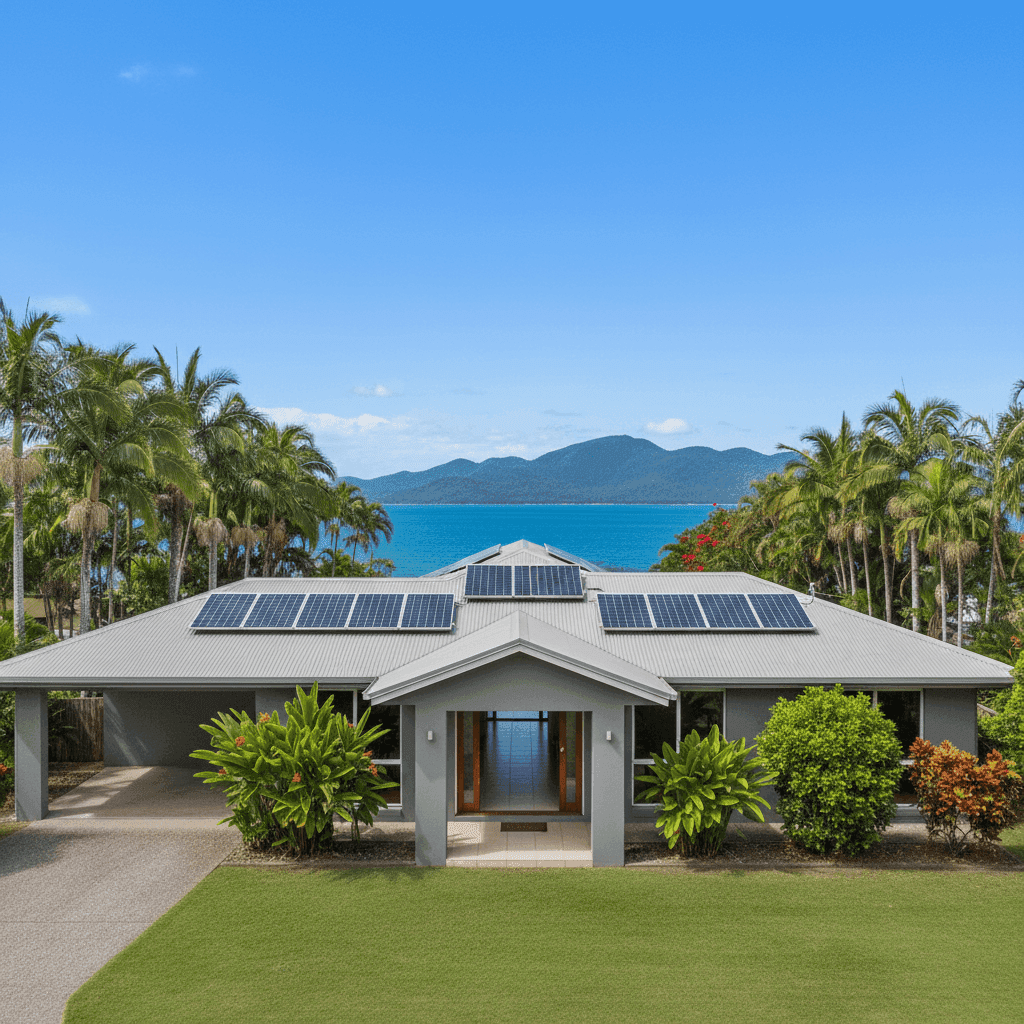
Cardwell is a small coastal town in Far North Queensland, nestled between the Great Barrier Reef and the Wet Tropics rainforest. It's a beautiful place to call home — but insuring a property here comes with its own set of considerations. This article breaks down a real home and contents insurance quote for a four-bedroom free standing home in Cardwell (QLD 4849), examines how the premium stacks up against local, state, and national benchmarks, and offers practical tips for homeowners looking to get the best value on their cover.
---
Is This Quote Fair?
The quote in question is $3,341 per year (or $327/month) for combined home and contents cover, with a building sum insured of $273,000 and contents valued at $59,000. Both the building and contents excess are set at $1,000.
Our price rating for this quote is FAIR — Around Average, and the data backs that up. Based on 46 quotes collected for Cardwell (4849), the suburb average sits at $4,735/yr and the median at $4,141/yr. This quote comes in meaningfully below both figures, landing closer to the 25th percentile of $2,987/yr than the 75th percentile of $5,762/yr.
In plain terms: most Cardwell homeowners with similar properties are paying more. While this quote isn't the cheapest available in the suburb, it's well within a reasonable range and offers solid value relative to what the local market typically demands.
---
How Cardwell Compares
To put this quote in broader context, it helps to look beyond the suburb boundary.
| Benchmark | Average Premium | Median Premium |
|---|---|---|
| Cardwell (4849) | $4,735/yr | $4,141/yr |
| Cassowary Coast LGA | $5,573/yr | — |
| Queensland | $9,129/yr (avg) | $3,903/yr |
| National | $5,347/yr (avg) | $2,764/yr |
A few things stand out here. The Queensland state average of $9,129/yr is heavily skewed by high-risk and high-value properties across the state — the median of $3,903/yr is a far more representative figure for typical Queensland homes. Cardwell's suburb median of $4,141/yr sits only slightly above the state median, which suggests the local market is broadly in line with Queensland norms once you strip out outliers.
Compared to the national picture, Cardwell premiums are elevated — the national median is $2,764/yr, noticeably lower than what locals tend to pay. This gap is largely explained by Cardwell's geographic exposure to cyclones and severe weather events, which insurers price into premiums for Far North Queensland properties as a matter of course.
At $3,341/yr, this particular quote sits above the national median but below the Cardwell suburb average, the LGA average, and well below the Queensland state average. For a cyclone-prone coastal location, that's a reasonable outcome.
---
Property Features That Affect Your Premium
Several characteristics of this property have a direct bearing on what insurers charge — for better and for worse.
Cyclone Risk Area
This is the single biggest premium driver for Cardwell properties. The town sits squarely within a designated cyclone risk zone, and insurers apply significant loadings to reflect the elevated risk of wind, storm surge, and flood damage. Cyclone Tracy, Yasi, and other major weather events have shaped how the industry prices Far North Queensland risk, and homeowners here simply pay more than their southern counterparts as a result.
Construction: Concrete Walls, Steel/Colorbond Roof, Slab Foundation
Concrete external walls and a steel Colorbond roof are actually advantageous from an insurance perspective. Both materials offer strong resistance to fire and wind damage — qualities that matter greatly in a cyclone-prone region. Slab foundations are similarly regarded as low-risk by most insurers. Together, these construction features likely help moderate the premium compared to what a timber-framed or older-style Queenslander might attract.
Age of Construction (1976)
At roughly 50 years old, this home sits in a bracket that can attract some scrutiny from insurers. Older properties may have ageing electrical wiring, plumbing, or structural elements that increase the likelihood of a claim. That said, a concrete construction from the mid-1970s is generally considered more durable than timber equivalents of the same era.
Solar Panels
Solar panels are listed as a feature of this property. Most insurers cover rooftop solar systems under building insurance, but it's worth confirming with your provider that the panels and inverter are explicitly included in your sum insured. Underinsurance is a real risk if solar equipment isn't factored into your building replacement cost estimate.
Ducted Climate Control
Ducted air conditioning systems are typically covered under building insurance as a fixed fixture. Again, homeowners should verify this is reflected in their sum insured — these systems can cost $10,000–$20,000 or more to replace and are easy to overlook when calculating coverage needs.
Standard Fittings, Tiles, Single Bathroom
The combination of standard-quality fittings, tiled flooring, and a single bathroom keeps the replacement cost estimate grounded. High-end finishes drive up rebuild costs significantly, so a standard-specification home like this one is generally easier to insure at an accurate sum insured.
---
Tips for Homeowners in Cardwell
1. Check your cyclone-specific excess Many insurers apply a separate, higher excess for cyclone or storm damage claims — sometimes $2,500 or more — on top of the standard excess. Review your policy documents carefully so you're not caught off guard at claim time.
2. Review your sum insured annually Building costs in regional Queensland have risen sharply in recent years due to labour shortages and materials inflation. A sum insured of $273,000 for a 130 sqm concrete home should be validated against current rebuild cost estimates — ideally using a quantity surveyor's report or an online building cost calculator. Don't forget to include the solar panels and ducted air conditioning in your calculations.
3. Compare quotes before renewal Insurance loyalty rarely pays. Insurers regularly offer better rates to new customers than they extend to existing policyholders at renewal. Using a comparison platform like CoverClub at least once a year ensures you're not paying more than you need to.
4. Consider your contents coverage carefully At $59,000, the contents sum insured needs to genuinely reflect the replacement value of everything inside your home — furniture, appliances, clothing, electronics, and more. Many Australians underinsure their contents by 30–40%, which can lead to partial payouts after a total loss. Take the time to do a room-by-room inventory.
---
Ready to Compare Home Insurance in Cardwell?
Whether you're a long-term Cardwell local or new to the area, it pays to shop around. Premiums in this region vary significantly between insurers, and the difference between the cheapest and most expensive quote can run into thousands of dollars per year. Get a home insurance quote through CoverClub and see how your current premium stacks up — it takes just a few minutes and could save you a meaningful amount at renewal time.
For more data on insurance costs in your area, explore the Cardwell suburb stats or browse the Queensland state overview.