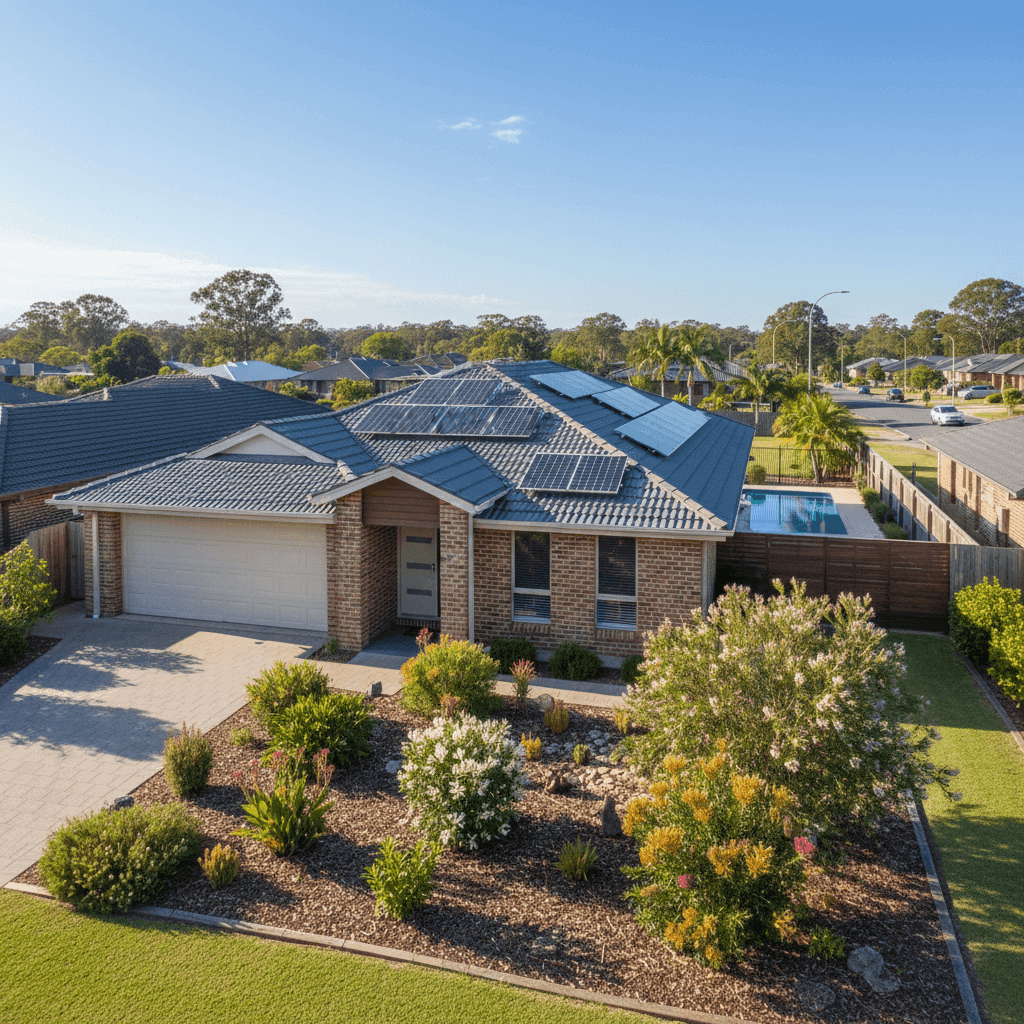
If you own a free standing home in Carina, QLD 4152, you've probably wondered whether you're paying too much — or too little — for home insurance. Premiums in South-East Queensland can vary enormously depending on your property's characteristics, the insurer you choose, and even the specific street you live on. To help cut through the noise, we've taken a real home and contents insurance quote for a four-bedroom brick veneer home in Carina and broken down exactly what it means for local homeowners.
---
Is This Quote Fair?
The short answer: yes — and then some. This quote came in at $1,655 per year (or around $162 per month) for combined home and contents cover, with a building sum insured of $810,000 and $100,000 in contents cover. CoverClub rates this as CHEAP, meaning it sits well below the average for the area.
To put that in perspective, the suburb average premium in Carina is $4,779 per year, and the median sits at $3,299 per year. Even the 25th percentile — meaning the cheapest quarter of quotes collected — comes in at $2,208 per year. At $1,655, this quote is beating the cheapest 25% of the market by a significant margin.
That's a potential saving of over $3,100 per year compared to the suburb average, and more than $550 per year compared to even the lowest quartile. For a household budget, that's meaningful money.
It's worth noting that the building excess on this policy is $2,000 and the contents excess is $1,000. A slightly higher excess is one common way insurers offer lower upfront premiums — so it's worth factoring in how comfortable you'd be covering those costs out of pocket if you needed to make a claim.
---
How Carina Compares
Carina sits within the Brisbane LGA, and insurance pricing here reflects the broader pressures facing South-East Queensland homeowners. Here's how the numbers stack up:
| Benchmark | Annual Premium |
|---|---|
| This Quote | $1,655 |
| Carina Suburb Average | $4,779 |
| Carina Suburb Median | $3,299 |
| Brisbane LGA Average | $4,584 |
| QLD State Average | $4,547 |
| QLD State Median | $3,931 |
| National Average | $2,965 |
| National Median | $2,716 |
Queensland homeowners consistently pay well above the national average for home insurance. The QLD state average of $4,547 is roughly 53% higher than the national average of $2,965, a gap driven largely by the state's exposure to severe weather events — particularly flooding, hailstorms, and storm surge along coastal areas.
Carina itself, located about 8 kilometres south-east of the Brisbane CBD, is an established residential suburb. While it's not in a designated cyclone risk zone, parts of the broader Brisbane region have faced significant flood and storm damage in recent years, which keeps insurer risk models — and therefore premiums — elevated across the board.
The fact that this particular quote lands so far below both local and state benchmarks suggests the property's specific characteristics are working in the owner's favour.
---
Property Features That Affect Your Premium
Insurance underwriters assess dozens of variables when pricing a policy. For this Carina property, several features are worth highlighting:
Brick Veneer Walls & Tiled Roof
Brick veneer construction is generally viewed favourably by insurers. It offers solid fire resistance and structural durability compared to weatherboard or lightweight cladding. Similarly, a tiled roof is considered a lower-risk roofing material than corrugated iron or Colorbond in many scenarios, particularly for hail resistance. Together, these materials can contribute to a more competitive premium.
Concrete Slab Foundation
A slab-on-ground foundation is standard for homes of this era in Queensland and presents minimal additional risk from an underwriting standpoint. It avoids the concerns sometimes associated with older timber stumped homes, which can be more vulnerable to moisture and termite damage.
1988 Construction
The home was built in 1988, making it around 36–37 years old. Homes of this vintage are generally well-understood by insurers — old enough to be established, but not so aged as to raise significant concerns about electrical wiring, plumbing, or structural integrity. That said, it's worth ensuring your building sum insured reflects current replacement costs, not just market value. Construction costs have risen sharply in recent years.
Swimming Pool
A pool adds both value and liability to a property. From an insurance perspective, it can slightly increase the contents or liability component of a policy. Ensuring your policy explicitly covers pool-related liability is important for any homeowner in Queensland, where pools are common.
Solar Panels
Solar panels are increasingly standard on Australian homes, but they do add complexity to insurance. Panels are typically covered under building insurance, but it's worth confirming your policy covers them for storm damage, hail, and accidental breakage — all realistic risks in South-East Queensland.
Ducted Climate Control
Ducted air conditioning is a significant fixed asset and is generally covered under building insurance as a permanently installed fixture. Given the cost of replacing a full ducted system (often $10,000–$20,000+), it's reassuring to have this included in your building sum insured.
---
Tips for Homeowners in Carina
Whether you're reviewing an existing policy or shopping for a new one, here are four practical steps worth taking:
- Verify your building sum insured regularly. With construction costs rising across Queensland, the cost to rebuild your home from scratch may be significantly higher than it was even two or three years ago. Underinsurance is one of the most common — and costly — mistakes homeowners make. Use a building cost calculator or speak to a builder to get a realistic current estimate.
- Check your pool and solar panel cover explicitly. Don't assume these are automatically included or fully covered. Ask your insurer directly what's covered for storm or hail damage to solar panels, and whether your policy includes public liability for your pool area.
- Compare quotes annually. The insurance market shifts every year, and loyalty doesn't always pay. The spread between the cheapest and most expensive quotes in Carina is enormous — from around $2,208 at the 25th percentile to $6,856 at the 75th. Shopping around at renewal time can make a real difference.
- Understand your excess before you commit. A lower premium with a higher excess isn't always the best deal. Think about how often you're likely to claim and whether you could comfortably cover a $2,000 building excess or $1,000 contents excess if something went wrong.
---
Find Your Own Quote
The numbers above show just how wide the range of premiums can be — even for similar properties in the same suburb. The best way to know if you're getting a fair deal is to compare.
At [CoverClub](https://coverclub.com.au/?focus=address), you can enter your property address and get a real comparison of home and contents insurance quotes tailored to your specific home. It takes just a few minutes and could save you thousands. Give it a try today.