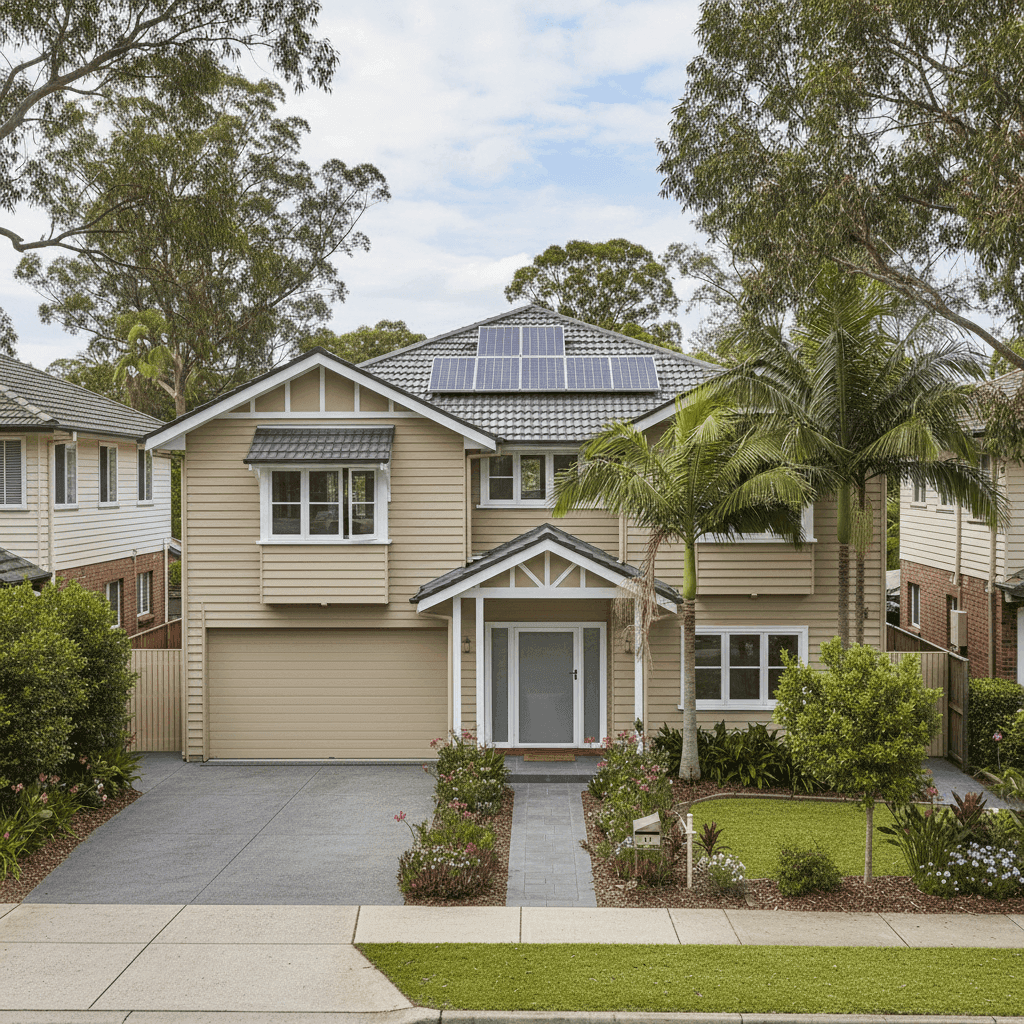
Carina is a well-established suburb in Brisbane's inner east, known for its leafy streets, family-friendly atmosphere, and solid mix of older and newer residential properties. If you own a free standing home here, understanding what drives your insurance premium — and whether you're paying a fair price — can make a real difference to your household budget. In this article, we analyse a real home and contents insurance quote for a four-bedroom, two-bathroom free standing home in Carina QLD 4152 and put it into context against suburb, state, and national benchmarks.
---
Is This Quote Fair?
The quote in question comes in at $13,185 per year (or $1,264/month) for combined home and contents cover, with a building sum insured of $1,000,000 and contents valued at $146,000. Both the building and contents excesses are set at $1,000.
Our price rating for this quote is EXPENSIVE — Above Average.
To understand why, it helps to look at what's typical for the area. The suburb median premium in Carina sits at $2,933 per year, meaning this quote is more than four times the midpoint for the suburb. Even at the 75th percentile — where premiums are already on the higher end — the figure is $8,025/yr, still well below the $13,185 quoted here.
That said, context matters. The building sum insured of $1,000,000 is a significant coverage amount, and the inclusion of contents at $146,000 adds to the overall premium. Higher insured values naturally attract higher premiums, so a direct comparison with median quotes (which may carry lower sums insured) isn't always apples-to-apples. Still, the gap is notable and worth exploring further.
---
How Carina Compares
Zooming out to the broader market provides useful perspective. Here's how the quoted premium stacks up:
| Benchmark | Premium |
|---|---|
| This Quote | $13,185/yr |
| Carina Suburb Median | $2,933/yr |
| Carina Suburb 75th Percentile | $8,025/yr |
| QLD State Average | $9,129/yr |
| QLD State Median | $3,903/yr |
| National Average | $5,347/yr |
| National Median | $2,764/yr |
| Brisbane LGA Average | $16,277/yr |
A few things stand out here. First, the Queensland state average of $9,129/yr is meaningfully higher than the national average of $5,347/yr — a reflection of the elevated natural hazard risk across much of the Sunshine State, including flood, storm, and hail exposure. Second, the Brisbane LGA average of $16,277/yr is actually higher than this quote, suggesting that within the broader Brisbane context, $13,185 is not entirely out of step — particularly for a property with a $1,000,000 building sum insured.
It's worth noting that Carina's suburb average premium of $110,245/yr is an outlier figure, likely skewed by a small sample size of 22 quotes and potentially one or two very high-value or high-risk properties in the dataset. The median of $2,933/yr is a more reliable central reference point for typical Carina homeowners.
---
Property Features That Affect Your Premium
Several characteristics of this property have a direct bearing on what insurers charge. Understanding them can help you make smarter coverage decisions.
Weatherboard Wood Exterior Timber weatherboard is one of the more common wall materials in Brisbane's older suburbs, but it does carry a higher fire risk than brick veneer or full brick construction. Insurers factor this in when calculating premiums, and it can push costs upward compared to masonry-walled homes.
Tiled Roof Concrete or terracotta tiles are generally viewed favourably by insurers — they're durable, fire-resistant, and perform well in hail events. This is a positive factor for this property.
Slab Foundation A concrete slab foundation is considered low-risk by most insurers. Unlike homes on stumps or piers, slab homes have less exposure to subfloor moisture issues and are structurally stable in most ground conditions.
Solar Panels The presence of solar panels adds replacement value to the roof structure. Some insurers include solar panels under building cover automatically, while others treat them as an optional add-on. It's essential to confirm with your insurer that your panels are explicitly covered — and for their full replacement value — to avoid an unwelcome surprise at claim time.
Ducted Climate Control Ducted air conditioning is a significant fixed asset and forms part of the building's insured value. It's one reason why a higher building sum insured may be justified for this property compared to a comparable home without it.
Construction Year: 2006 At roughly 18–20 years old, this home sits in a comfortable middle ground — newer enough to meet modern building codes, but old enough that some systems (roofing, electrical, plumbing) may be approaching the age where maintenance becomes more important. Insurers generally view post-2000 construction positively, as these homes were built to higher cyclone and storm-resistance standards.
No Pool The absence of a swimming pool removes a liability risk that can add to premiums, particularly for contents and liability components of a policy.
---
Tips for Homeowners in Carina
1. Review your building sum insured carefully A $1,000,000 building sum insured is at the higher end for a four-bedroom home in this suburb. Make sure your sum insured reflects the actual cost to rebuild — not the market value of the property. Overinsuring can mean unnecessarily high premiums, while underinsuring leaves you exposed. Consider getting a professional building valuation to land on the right figure.
2. Confirm solar panel coverage in writing Don't assume your solar panels are covered. Ask your insurer directly whether panels are included under building cover, what the per-panel replacement limit is, and whether storm or hail damage is covered. Given the cost of modern solar systems, this is a detail worth nailing down before you need to make a claim.
3. Shop around — especially given the price rating With this quote rated as expensive relative to the suburb, it's a strong signal to compare alternatives. Premiums for the same property can vary by thousands of dollars between insurers, even for identical coverage. Use CoverClub's free comparison tool to see what other providers are offering for your address.
4. Consider your excess strategically Both the building and contents excesses on this policy are set at $1,000. Increasing your excess — say, to $2,500 — can reduce your annual premium noticeably. If you have the financial buffer to cover a higher out-of-pocket cost in the event of a claim, this is often a smart trade-off for lower ongoing premiums.
---
Ready to Compare?
If you're a homeowner in Carina and want to know whether you're getting a competitive deal on your home and contents insurance, CoverClub makes it easy. Simply enter your address at coverclub.com.au to see how your current premium stacks up against real quotes for properties like yours — and find out if there's a better deal waiting for you. You can also explore detailed Carina suburb insurance stats and Queensland-wide benchmarks to stay informed.