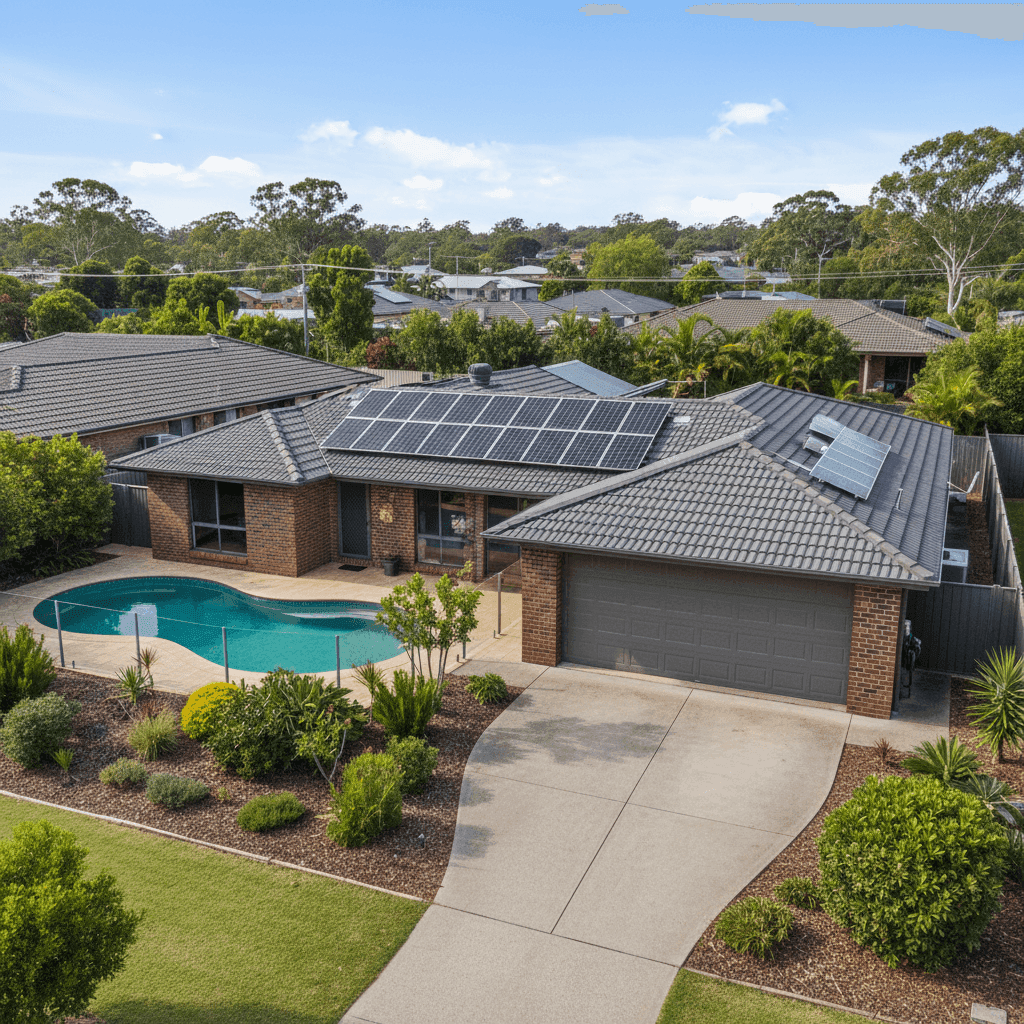
If you own a free standing home in Carindale, QLD 4152, you've likely wondered whether you're paying a fair price for home insurance — or whether there's a better deal out there. This article breaks down a real home and contents insurance quote for a four-bedroom property in the suburb, and puts it in context using suburb, state, and national pricing data from the CoverClub national stats.
---
Is This Quote Fair?
The quote in question comes in at $2,257 per year (or $221 per month) for combined home and contents cover, with a building sum insured of $677,000 and contents valued at $70,000. Both the building and contents excesses are set at $1,000.
Our pricing engine rates this quote as CHEAP — below average for the area. That's genuinely good news for the homeowner. Based on 56 quotes collected for Carindale (postcode 4152), the suburb average sits at $3,297 per year, while the median is $3,121 per year. This quote falls well below both benchmarks, and even dips under the 25th percentile of $2,595 per year — meaning it's cheaper than at least 75% of comparable quotes in the suburb.
In plain terms: this is a competitive result. Whether it's the result of a low-risk property profile, a well-chosen insurer, or simply good timing, the policyholder is in a strong position relative to their neighbours.
---
How Carindale Compares
Zooming out beyond the suburb reveals just how variable home insurance pricing can be across Queensland and the country.
| Benchmark | Annual Premium |
|---|---|
| This Quote | $2,257 |
| Carindale Suburb Average | $3,297 |
| Carindale Suburb Median | $3,121 |
| QLD State Average | $9,129 |
| QLD State Median | $3,903 |
| National Average | $5,347 |
| National Median | $2,764 |
| Brisbane LGA Average | $16,277 |
The QLD state average of $9,129 per year is dramatically higher than what's being paid here — though it's worth noting that Queensland's average is heavily skewed by high-risk coastal and cyclone-prone regions in the north of the state. The state median of $3,903 is a more representative figure for most Queensland homeowners, and this quote still comes in well below that.
At the national level, the average premium is $5,347 per year, again inflated by high-risk zones. The national median of $2,764 is closer to this quote, though still higher.
Perhaps the most striking figure is the Brisbane LGA average of $16,277 per year. This number is heavily influenced by properties in flood-prone or high-value areas within the greater Brisbane region, and serves as a reminder of how dramatically location and risk profile can affect premiums — even within the same city.
For more localised data, you can explore the Carindale suburb stats page.
---
Property Features That Affect Your Premium
Several characteristics of this property are likely contributing to its favourable premium. Here's how the key features stack up from an insurance risk perspective:
- Brick Veneer External Walls: Brick veneer is one of the more insurer-friendly wall materials. It offers solid fire resistance and durability compared to timber or fibre cement cladding, which can translate to lower premiums.
- Tiled Roof: Concrete or terracotta tiles are generally well-regarded by insurers for their longevity and resistance to fire. While they can be more costly to repair after hail damage, they tend to perform well in standard risk assessments.
- Slab Foundation: A concrete slab is a stable and common foundation type in Queensland. It carries lower subsidence risk compared to older stumped or pier-and-beam foundations, which can be reassuring for insurers.
- Construction Year (1999): A home built in 1999 benefits from relatively modern building codes without being old enough to carry the elevated risk of ageing infrastructure. Wiring, plumbing, and structural components are likely in reasonable condition.
- Swimming Pool: Pools add replacement value to a property and can slightly increase premiums, but they're a common feature in Carindale and most insurers price them in routinely.
- Solar Panels: Solar panel systems are now a standard inclusion on many Australian homes. They add to the insured value of the building and can be a consideration in storm or hail damage claims, but their impact on premiums is generally modest.
- No Cyclone Risk: Carindale sits outside designated cyclone risk zones, which is a meaningful premium advantage compared to properties in Far North Queensland. Cyclone-rated construction requirements and associated claim risks can push premiums significantly higher in affected areas.
- 214 sqm Building Size: At 214 square metres, this is a mid-to-large family home. The $677,000 building sum insured works out to roughly $3,163 per square metre — a reasonable rebuild cost estimate for a brick veneer home with standard fittings in Queensland.
---
Tips for Homeowners in Carindale
Even if your current premium is already competitive, there are always ways to make sure you're getting the best value from your home insurance.
- Review your sum insured annually. Building costs in Queensland have risen significantly in recent years. If your sum insured hasn't kept pace with construction cost inflation, you could be underinsured — meaning a total loss payout might not cover a full rebuild. Use a building cost calculator or speak to a quantity surveyor to sense-check your figure each year.
- Check what your contents cover actually includes. A $70,000 contents value sounds substantial, but it can disappear quickly when you add up whitegoods, electronics, furniture, clothing, and jewellery. Do a room-by-room audit periodically to make sure your contents sum is still accurate.
- Ask about discounts for security upgrades. Installing or upgrading deadbolts, alarm systems, or security cameras can make your home more attractive to insurers. Some providers offer meaningful discounts for homes with monitored alarm systems or smart security devices.
- Compare quotes before renewal, not after. Insurers often offer their best pricing to new customers. If you've been with the same provider for several years without shopping around, there's a real chance a comparable policy is available for less. Use a comparison tool like CoverClub to benchmark your renewal offer before you accept it.
---
Ready to Compare?
Whether your current premium looks like a bargain or you suspect you might be overpaying, it pays to check. Get a home insurance quote on CoverClub and instantly see how your price stacks up against real data from your suburb, your state, and across Australia. It takes just a few minutes and could save you hundreds.