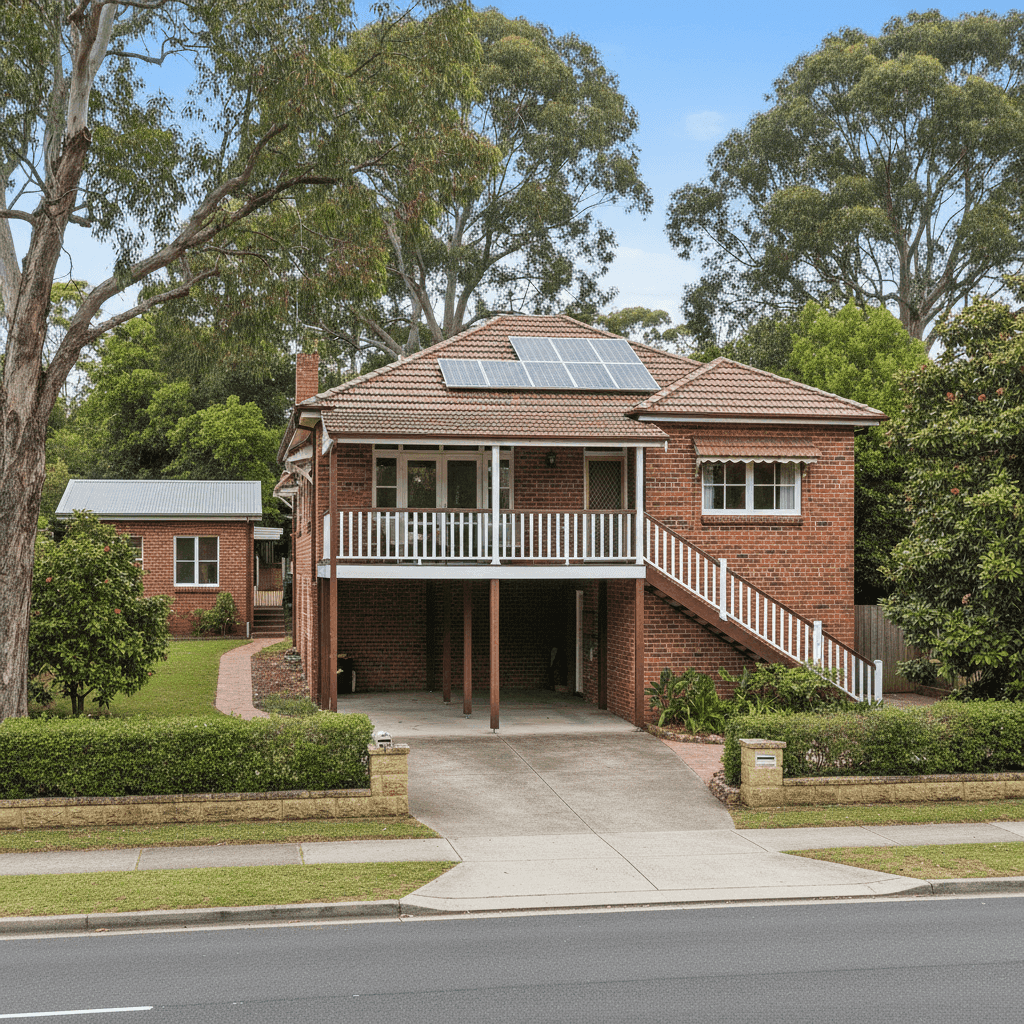
If you own a free standing home in Carlingford, NSW 2118, you already know the suburb offers a great mix of family-friendly streets, established greenery, and solid property values. But when your home insurance renewal lands in the letterbox, it can be hard to know whether you're getting a fair deal — or quietly paying too much. This article breaks down a real building insurance quote for a four-bedroom, two-bathroom home in Carlingford, compares it against local and national benchmarks, and offers practical tips to help you make a more informed decision.
---
Is This Quote Fair?
The quote in question sits at $2,099 per year (or $201/month) for building-only cover, with a $1,000 building excess and a sum insured of $689,000.
Our price rating for this quote is EXPENSIVE — above average for the Carlingford area.
To put that in perspective:
- The suburb average premium in Carlingford is $1,571/yr
- The suburb median is $1,464/yr
- The 75th percentile — meaning 75% of quotes in the area come in below this figure — sits at $1,673/yr
This quote exceeds even the 75th percentile, meaning it's more expensive than roughly three-quarters of comparable quotes in the same postcode. That's a meaningful gap. A homeowner paying $2,099 is spending around $626 more per year than the suburb average, and $426 more than the top quartile threshold.
That said, premium pricing isn't arbitrary. Insurers weigh up a detailed combination of property characteristics, and some features of this particular home do push the risk profile higher — more on that below.
---
How Carlingford Compares
Understanding where Carlingford sits in the broader insurance landscape is useful context. You can explore the full data on the Carlingford suburb stats page.
| Benchmark | Average Premium | Median Premium |
|---|---|---|
| Carlingford (2118) | $1,571/yr | $1,464/yr |
| The Hills LGA | $2,440/yr | — |
| NSW | $9,528/yr | $3,770/yr |
| National | $5,347/yr | $2,764/yr |
A few things stand out here. First, Carlingford's premiums are actually quite competitive relative to the broader NSW average — the state average of $9,528/yr is dramatically higher, largely driven by high-risk areas in regional and coastal NSW (think flood plains, cyclone corridors, and bushfire-prone zones). You can dig into NSW-wide insurance data here and national figures here.
Second, The Hills LGA average of $2,440/yr is notably higher than the Carlingford suburb average of $1,571/yr — suggesting that Carlingford is one of the more affordably insured pockets within the LGA. The quote of $2,099 sits between these two figures, which is worth keeping in mind when shopping around.
The national median of $2,764/yr also provides useful grounding: this quote, while expensive for Carlingford specifically, is actually below the national median — a reminder that insurance costs vary enormously across Australia.
---
Property Features That Affect Your Premium
Several characteristics of this property are likely influencing the premium upward. Here's what insurers are looking at:
Construction Year: 1965
Older homes — particularly those built before modern building codes — tend to attract higher premiums. A home built in 1965 is now over 60 years old, and insurers factor in the increased likelihood of aging infrastructure, older wiring, and materials that may be harder or more expensive to replace or repair.
Elevated Foundation (Poles)
This home is elevated by at least one metre on a pole/stump foundation — a style common in older Australian homes, particularly in areas with sloping blocks or moisture concerns. While elevation can offer some flood protection, it also introduces additional structural complexity. Repairs to elevated homes can be more costly, and this is reflected in the premium.
Timber and Laminate Flooring
Timber floors, especially in an elevated home, can be more susceptible to moisture, movement, and pest damage over time. From an insurer's perspective, timber flooring in an older elevated home represents a higher claims risk than, say, concrete slab with tiles.
Brick Veneer Walls and Tiled Roof
On the positive side, brick veneer construction and a tiled roof are both viewed favourably by insurers. They offer solid fire resistance and durability compared to weatherboard or Colorbond alternatives, which can help moderate the premium.
Solar Panels
The presence of solar panels adds replacement value to the building sum insured, and insurers account for this. Panels can be damaged by hail, storms, or falling debris, and their repair or replacement costs are factored into the risk assessment.
Granny Flat
A granny flat on the property increases the overall insured structure and adds complexity to a claim. Whether it's used for extended family or as a rental, its presence typically pushes premiums higher due to the additional rebuild exposure.
Sum Insured: $689,000
The building sum insured of $689,000 is substantial, and premium is directly correlated with this figure. Ensuring your sum insured accurately reflects the rebuild cost (not the market value) of your home is critical — both to avoid being underinsured and to avoid unnecessarily inflating your premium.
---
Tips for Homeowners in Carlingford
1. Shop Around — Seriously
The gap between the cheapest and most expensive quotes in Carlingford can be significant. With a suburb 25th percentile of just $1,192/yr, there are policies available at nearly half the price of this quote. Get a comparison quote at CoverClub to see what's available for your specific property.
2. Review Your Sum Insured
Make sure your $689,000 sum insured reflects the actual cost to rebuild your home from scratch — including the granny flat, elevated foundation work, and any premium finishes. Many homeowners are either over-insured (paying too much in premiums) or under-insured (exposed to a shortfall at claim time). A quantity surveyor or your insurer's building cost calculator can help you get this right.
3. Consider Your Excess
A $1,000 excess is fairly standard, but opting for a higher voluntary excess — say, $2,500 or $5,000 — can meaningfully reduce your annual premium. This strategy works well if you have the savings to cover a larger out-of-pocket cost in the event of a claim and want to lower your ongoing insurance spend.
4. Ask About Discounts for Safety Features
Solar panels and certain security features (alarms, deadbolts, monitored systems) can attract discounts with some insurers. Don't assume your insurer has applied all eligible discounts — it's worth calling and asking directly, especially at renewal time.
---
Ready to Compare?
Whether you're reviewing a renewal or shopping for the first time, comparing quotes is the single most effective way to make sure you're not overpaying. CoverClub makes it easy to benchmark your premium against real data from your suburb and across Australia — so you can insure with confidence, not guesswork.