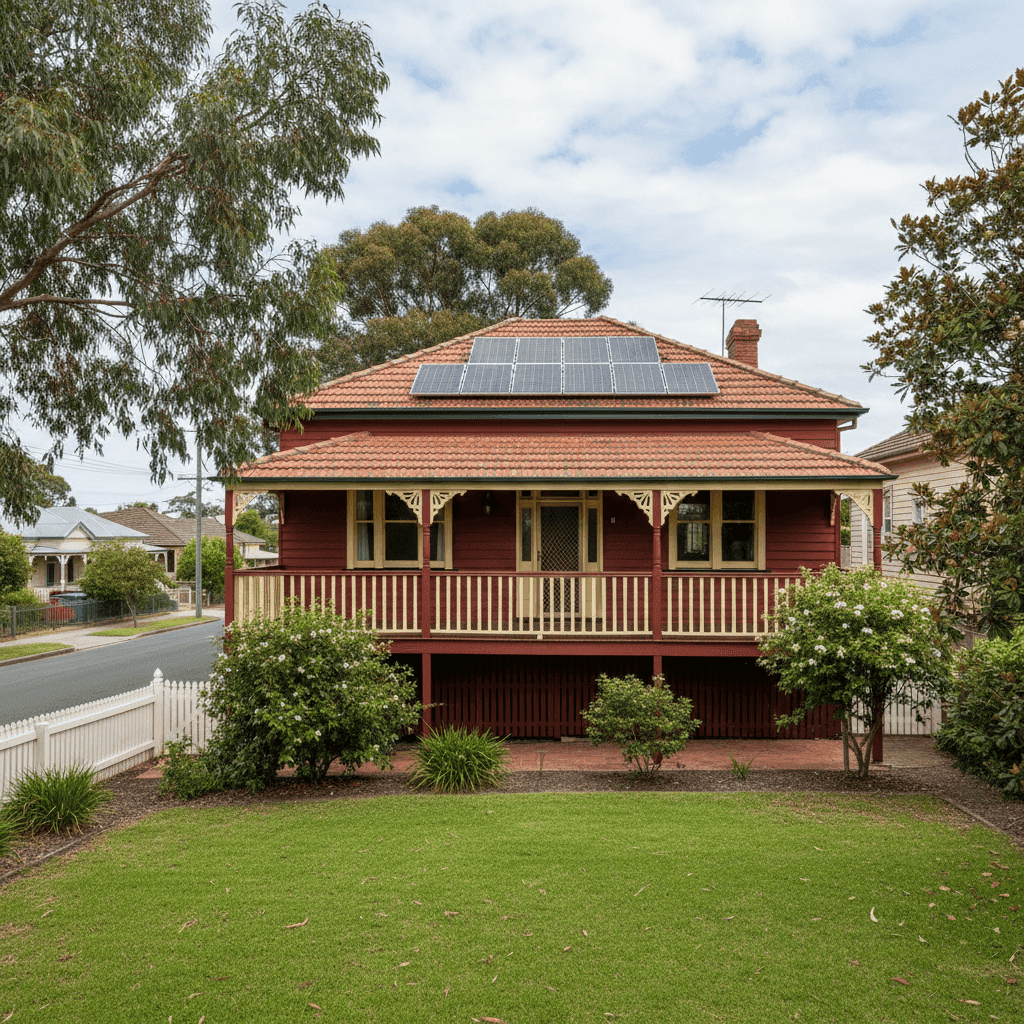
Carnegie is a well-established inner-south-east suburb of Melbourne, known for its leafy streets, strong community feel, and a housing stock that blends Federation-era character homes with modern renovations. If you own a free-standing home here — particularly one of the older weatherboard properties that define the suburb's streetscape — understanding what you should be paying for home and contents insurance is a smart financial move. This article breaks down a real quote for a 5-bedroom, 3-bathroom free-standing home in Carnegie, compares it against local, state, and national benchmarks, and offers practical tips to help you get better value on your cover.
---
Is This Quote Fair?
The quote in question comes in at $2,557 per year (or $245/month) for combined home and contents insurance, covering a building sum insured of $1,300,000 and contents valued at $100,000, each with a $2,000 excess.
Our price rating for this quote is Expensive — Above Average.
To put that in perspective, the suburb average for Carnegie sits at just $1,512/year, with a median of $1,330/year. This quote is roughly 69% above the suburb average and nearly double the suburb median. Even at the 75th percentile — meaning 75% of comparable quotes in the area are cheaper — the figure is only $1,748/year, still well below what's being charged here.
So what's driving the higher price? A combination of factors are at play, and we'll unpack them in detail below. The short answer: this is a large, older home with premium characteristics that insurers price more cautiously — but that doesn't necessarily mean this quote represents the best deal available.
---
How Carnegie Compares
It's worth zooming out to understand where Carnegie sits in the broader insurance landscape. Based on data from Carnegie suburb insurance stats, the local market looks like this:
| Benchmark | Premium |
|---|---|
| Carnegie suburb average | $1,512/yr |
| Carnegie suburb median | $1,330/yr |
| Carnegie 25th percentile | $1,235/yr |
| Carnegie 75th percentile | $1,748/yr |
| This quote | $2,557/yr |
Compared to the broader Victorian state average of $3,000/year (median: $2,718/year), this quote is actually below the state norm — which tells us that Victoria as a whole carries higher insurance costs than Carnegie's local market typically reflects. This is largely because the state average is pulled up by high-risk regional areas prone to bushfire, flood, and storm damage.
Looking at the national picture, the average Australian home and contents premium sits at $5,347/year, with a national median of $2,764/year. Carnegie homeowners are generally well-positioned compared to the national average, benefiting from a metropolitan location that isn't exposed to the more extreme weather events that push premiums sky-high in coastal Queensland or regional NSW.
Within the Glen Eira local government area, the average premium is $1,828/year — again, noticeably below this particular quote. That said, averages don't tell the whole story; the size and features of this specific property explain a significant portion of the price gap.
---
Property Features That Affect Your Premium
Several characteristics of this property are likely contributing to its above-average premium:
Age and Construction (Built 1930, Weatherboard Walls, Timber Flooring)
Homes built in the 1930s carry inherent risks that modern builds don't. Ageing electrical wiring, older plumbing systems, and the general wear on structural elements all factor into an insurer's risk assessment. Weatherboard timber walls, while charming and highly sought-after, are more susceptible to fire, rot, and pest damage than brick or concrete alternatives. Timber and laminate flooring compounds this, as older sub-floor structures can be costly to repair or replace.
Stump Foundation
This property sits on stumps — a common foundation type for older Melbourne homes — and is elevated by less than 1 metre. Stump foundations can be prone to movement, moisture ingress, and termite activity over time, all of which raise the cost of potential claims and therefore the premium.
Size: 315 sqm with Above-Average Fittings
At 315 square metres, this is a large home by any measure. A $1,300,000 building sum insured reflects both the size and the above-average quality of fittings throughout. Higher-end kitchens, bathrooms, and finishes cost significantly more to repair or rebuild, and insurers price accordingly.
Solar Panels
The presence of solar panels adds a modest cost to the premium — panels need to be covered against storm damage, hail, and electrical faults. However, this is generally a minor factor in the overall pricing equation.
Ducted Climate Control
A ducted heating and cooling system is a significant asset, but also a notable liability. These systems are expensive to repair or replace, and their inclusion in the insured value of the home is reflected in the premium.
No Pool, No Cyclone Risk
On the plus side, the absence of a pool removes a common source of liability claims, and Carnegie's location well outside any cyclone-risk zone keeps weather-related loading off the table.
---
Tips for Homeowners in Carnegie
1. Shop Around — Seriously
Given this quote sits well above the suburb average, the single most impactful thing you can do is compare it against other insurers. Premiums for the same property can vary by hundreds — sometimes thousands — of dollars between providers. Use a comparison tool like CoverClub to see multiple quotes side by side.
2. Review Your Sum Insured Carefully
A $1,300,000 building sum insured is substantial. Make sure it reflects the actual cost to rebuild your home (not its market value), using a quantity surveyor's estimate or an online rebuild calculator. Over-insuring inflates your premium without adding meaningful protection; under-insuring can leave you exposed at claim time.
3. Consider a Higher Excess
Both the building and contents excess on this policy are set at $2,000. If you have the financial buffer to absorb a higher out-of-pocket cost in the event of a claim, opting for a $3,000 or $5,000 excess can meaningfully reduce your annual premium. This strategy works best for homeowners who are unlikely to make small or frequent claims.
4. Maintain the Property Proactively
For older weatherboard homes on stumps, regular maintenance is both a safety imperative and a financial one. Insurers may reduce coverage or increase premiums if a home shows signs of neglect. Annual checks on your stumps, sub-floor ventilation, roof tiles, and gutters can prevent costly claims and keep your insurer satisfied that the property is well cared for.
---
Ready to Find a Better Deal?
If your current quote feels steep, you're not alone — and you don't have to accept the first number you're given. CoverClub makes it easy to compare home and contents insurance quotes from multiple Australian insurers in minutes. Whether you're insuring a century-old weatherboard charmer or a newly renovated family home, get a quote at CoverClub and see what the market really has to offer for your Carnegie property.
For more localised data, explore the Carnegie suburb insurance stats or browse Victoria-wide benchmarks to understand how your premium stacks up.