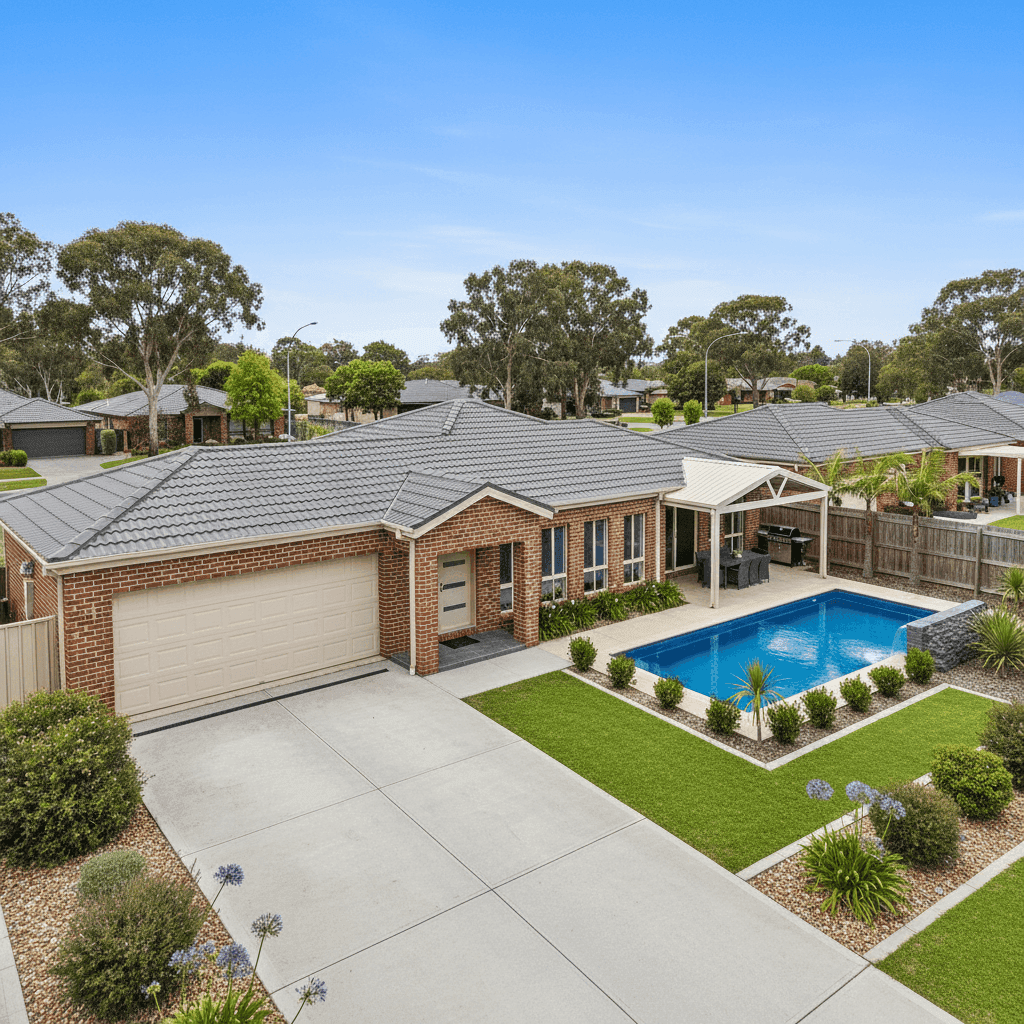
Caroline Springs is one of Melbourne's more established western suburbs, and like many master-planned communities in the region, it's home to a mix of quality brick veneer homes built during the 2000s housing boom. If you own a free standing home here and you're wondering whether your home and contents insurance quote stacks up, this analysis breaks down a real quote for a four-bedroom property in the 3023 postcode — and puts it in context against local, state, and national benchmarks.
---
Is This Quote Fair?
The quote in question comes in at $1,705 per year (or about $167/month) for combined home and contents cover, with a $689,000 building sum insured and $50,000 in contents. Both the building and contents excess are set at $2,000.
Our price rating for this quote is FAIR — Around Average, and the data backs that up. Based on 73 quotes collected for Caroline Springs (3023), the suburb average sits at $2,149/year and the median at $1,885/year. This quote lands below both figures, placing it comfortably in the lower half of the local pricing range.
To be more precise, the suburb's 25th percentile is $1,553/year and the 75th percentile is $2,379/year. At $1,705, this quote sits between the 25th and 50th percentiles — meaning it's cheaper than the majority of comparable quotes in the area, but not quite at the very bottom of the market. For a property of this size and specification, that's a reasonable outcome.
It's worth noting that "fair" doesn't necessarily mean you can't do better. There's still a meaningful gap between this premium and the cheapest quotes available in the suburb, so shopping around remains worthwhile.
---
How Caroline Springs Compares
One of the most telling aspects of this quote is how well Caroline Springs performs relative to broader benchmarks. Here's a quick snapshot:
| Benchmark | Average Premium | Median Premium |
|---|---|---|
| Caroline Springs (3023) | $2,149/yr | $1,885/yr |
| Brimbank LGA | $1,707/yr | — |
| Victoria | $3,000/yr | $2,718/yr |
| National | $5,347/yr | $2,764/yr |
The Victorian state average of $3,000/year is notably higher than what Caroline Springs homeowners are typically paying — a difference of around $850 per year on average. This reflects the relatively low-risk profile of the suburb: no cyclone exposure, minimal flood risk in most parts, and a well-established urban environment with good emergency services access.
When you zoom out to the national picture, the contrast becomes even starker. Australia's national average of $5,347/year is heavily skewed by high-risk regions in Queensland, Northern Australia, and coastal flood-prone areas. The national median of $2,764/year is a more representative figure for mainstream suburban properties, and Caroline Springs sits well below even that.
The Brimbank LGA average of $1,707/year is remarkably close to this specific quote — suggesting the premium is well-aligned with what similar properties across the local government area are paying.
---
Property Features That Affect Your Premium
Several characteristics of this property influence its insurance cost, both positively and negatively.
Brick veneer construction and tiled roof are generally viewed favourably by insurers. Brick veneer walls offer solid fire resistance and structural durability, while concrete roof tiles are resilient against storm damage and have a long lifespan. Together, these features typically attract lower premiums compared to properties with timber weatherboard cladding or metal roofing.
Slab foundation is standard for homes built in this era and region, and it presents no particular risk flags for insurers. Unlike older homes with raised timber subfloors, slabs have no underfloor cavity that could harbour moisture or pests.
Tile flooring throughout the home is another positive signal. Hard flooring is more resistant to water damage than carpet, which can reduce the likelihood and cost of contents claims related to leaks or flooding.
The swimming pool is worth paying attention to. Pools add to the insured value of the property and can also introduce liability considerations. Some insurers factor pool ownership into their risk assessment, particularly around public liability cover. It's important to ensure your policy explicitly covers pool-related structures and equipment.
Ducted climate control adds to the replacement value of the home and is correctly factored into the building sum insured. At 235 sqm, this is a generously sized home, and the $689,000 building sum insured reflects the cost of rebuilding a well-appointed four-bedroom property in metropolitan Melbourne.
No solar panels simplifies the risk profile slightly — solar installations can sometimes complicate roof claims or introduce electrical risk considerations, so their absence is a minor positive.
---
Tips for Homeowners in Caroline Springs
1. Review your building sum insured regularly Construction costs in Melbourne have risen significantly in recent years. A sum insured that was accurate two or three years ago may no longer reflect the true cost of rebuilding your home. Use a building cost calculator or ask your insurer to reassess — underinsurance is one of the most common and costly mistakes homeowners make.
2. Consider increasing your excess to reduce your premium Both excesses on this policy are set at $2,000. If you have sufficient savings to absorb a higher out-of-pocket cost in the event of a claim, opting for a higher excess (say, $2,500 or $3,000) can meaningfully reduce your annual premium. Just make sure the trade-off makes financial sense for your situation.
3. Check your pool is fully covered If you have a swimming pool, confirm with your insurer that the pool shell, equipment (pump, filter, heating), and surrounding paving are all included in your building sum insured. Some policies treat pool equipment as an optional extra or have sublimits that may leave you underinsured.
4. Compare quotes at renewal time Even if your current premium feels reasonable, the insurance market changes every year. Insurers reprice their books, new competitors enter the market, and your own risk profile may shift. Running a comparison at renewal takes only a few minutes and could save you hundreds of dollars annually.
---
Ready to Compare Home Insurance in Caroline Springs?
Whether you're assessing your current policy or shopping for cover on a new purchase, CoverClub makes it easy to see how your quote measures up. Get a home insurance quote today and compare it against real data from your suburb — so you can be confident you're not paying more than you should.