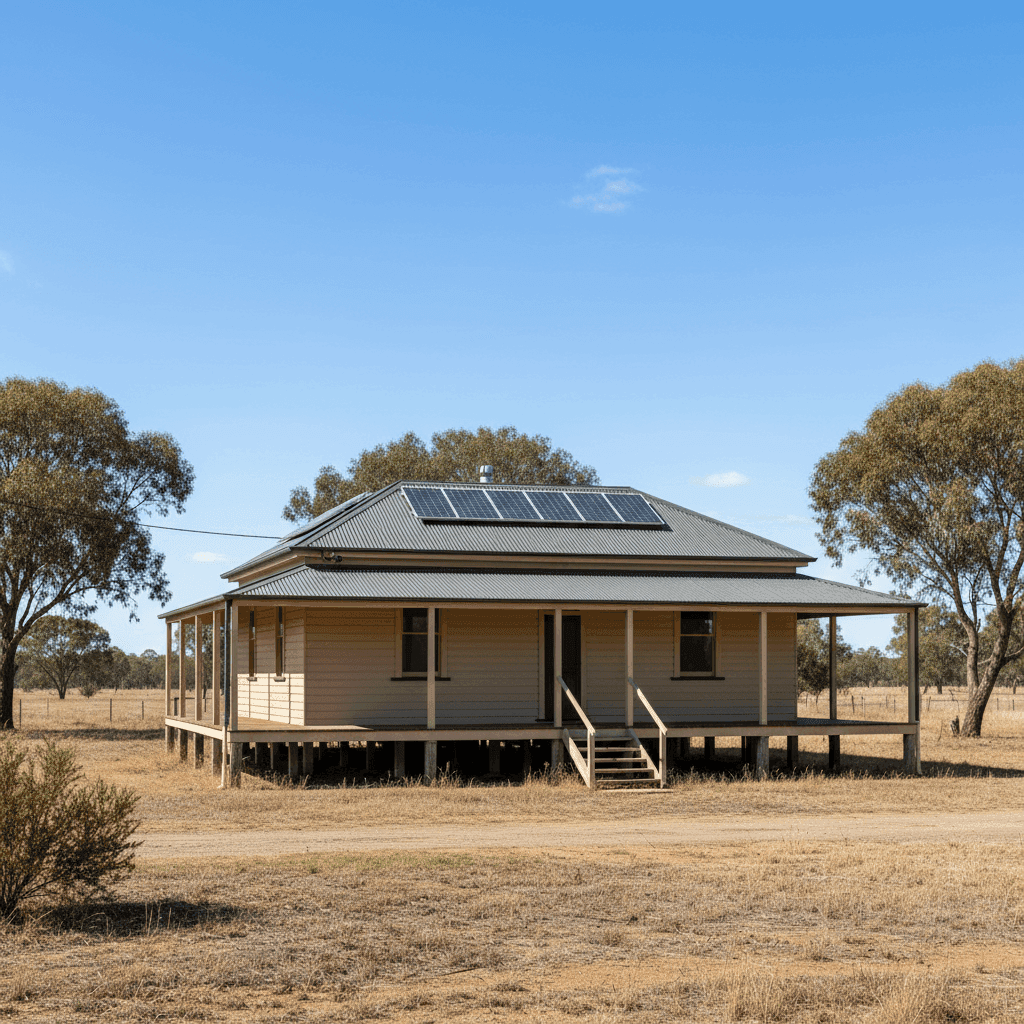
If you own a free standing home in Carrathool, NSW 2711, you're likely no stranger to the unique challenges of insuring a rural property in outback New South Wales. This article breaks down a real home and contents insurance quote for a three-bedroom weatherboard home in the area — examining whether the price stacks up, how it compares to broader benchmarks, and what you can do to make sure you're not overpaying.
---
Is This Quote Fair?
The quote in question comes in at $2,070 per year (or $191/month) for combined home and contents cover, with a building sum insured of $200,000 and contents valued at $30,000. Both the building and contents excess are set at $5,000.
Based on our pricing data, this quote is rated Expensive — above average for the Carrathool area.
To put that in context: the suburb median premium sits at $1,585/year, meaning this quote is roughly $485 above the midpoint of what others are paying for similar cover in the same postcode. It does fall just below the suburb's 75th percentile of $2,067/year — so it's not the most expensive quote on record locally, but it's firmly in the upper range.
That said, a higher-than-median premium isn't automatically cause for alarm. The specific features of this property — its age, construction type, and elevated foundation — can all push premiums upward, and we'll unpack those shortly.
---
How Carrathool Compares
One of the more striking findings in this data is just how favourably Carrathool compares to broader NSW and national benchmarks. Check out the full suburb statistics for Carrathool (NSW 2711) for the complete picture.
| Benchmark | Average Premium | Median Premium |
|---|---|---|
| Carrathool (suburb) | $2,355/yr | $1,585/yr |
| NSW (state) | $9,528/yr | $3,770/yr |
| National | $5,347/yr | $2,764/yr |
| Murray River LGA | $24,396/yr | — |
The numbers tell a clear story. The NSW state average of $9,528/year is more than four times the Carrathool suburb average — a reflection of how dramatically coastal and flood-prone parts of New South Wales inflate the state-wide figures. Sydney's northern beaches, the Northern Rivers region, and flood-affected inland towns all contribute to that elevated NSW average.
Compared to the national average of $5,347/year, Carrathool homeowners are also faring considerably better. Even this "expensive" quote of $2,070 is well below both the NSW and national averages.
The Murray River LGA average of $24,396/year is particularly eye-opening, though this figure is likely skewed by a small number of very high-risk or high-value properties within the broader LGA boundary. Carrathool itself sits in a relatively lower-risk pocket by comparison.
Bottom line: While this quote is above the local median, it remains well within a reasonable range when viewed against state and national data. The suburb of Carrathool is, on balance, an affordable place to insure a home.
---
Property Features That Affect Your Premium
Several characteristics of this property are worth examining closely, as they each play a role in how insurers assess risk and calculate premiums.
Weatherboard Timber Construction
Weatherboard timber walls are one of the most significant premium drivers for older homes. Timber is more susceptible to fire, termite damage, and general weathering than brick or rendered masonry. Insurers typically apply a loading to timber-clad homes, particularly those built before modern building codes came into effect.
Construction Year: 1977
A home built in 1977 predates a number of important Australian building standards, including updates to electrical wiring regulations and structural requirements. Older homes can carry higher risk of electrical faults, plumbing issues, and structural wear — all of which factor into underwriting decisions.
Elevated on Stumps
The property sits elevated on stumps (less than 1 metre), which is a common foundation style for older rural and regional homes in NSW. While this can offer some protection against minor surface flooding, it also introduces risks around subfloor ventilation, timber stump deterioration, and pest access — factors that some insurers weigh carefully.
Steel/Colorbond Roof
On the positive side, a Colorbond steel roof is generally viewed favourably by insurers. It's durable, fire-resistant, and low-maintenance compared to older tile or iron roofing. This likely helps offset some of the premium loading from the timber walls and age of the home.
Solar Panels
The presence of solar panels adds modest replacement value to the building sum insured and may contribute slightly to the premium. It's worth confirming with your insurer that solar panels are explicitly covered under your policy, as some providers treat them as a separate item.
Ducted Climate Control
Ducted air conditioning systems are considered a standard fitting in this quote, but they do add to the overall replacement cost of the home. Ensuring your building sum insured accurately reflects the cost to replace these systems is important to avoid being underinsured.
---
Tips for Homeowners in Carrathool
1. Review Your Building Sum Insured
At $200,000 for a 130 sqm weatherboard home, it's worth verifying this figure against current construction costs in regional NSW. Rebuilding costs have risen sharply in recent years due to labour and materials inflation, particularly in rural areas where tradespeople may need to travel significant distances. Use an independent building calculator or speak with a local builder to sense-check your sum insured.
2. Consider a Lower Excess to Reduce Out-of-Pocket Risk
Both the building and contents excess on this policy are set at $5,000 — which is quite high. While a higher excess typically reduces your annual premium, it also means you'll need to cover a substantial amount before your insurer steps in. For a property with older construction and timber walls, the likelihood of a claim (particularly for storm or fire damage) may be higher than average. Weigh up whether a lower excess makes financial sense for your situation.
3. Shop Around — Even in a Low-Risk Area
Carrathool's relatively low premiums compared to the rest of NSW can create a false sense of security. With a suburb average of $2,355/year and a median of $1,585/year, there's clearly a wide spread in what different insurers are charging for similar properties. Getting multiple quotes could save you hundreds of dollars annually.
4. Check Your Solar Panel and Climate Control Coverage
Make sure your policy explicitly covers your solar panel system and ducted air conditioning for both accidental damage and storm events. Some standard policies have exclusions or sub-limits for these items. It's a quick conversation with your insurer that could save significant expense down the track.
---
Compare Quotes for Your Carrathool Home
Whether you're renewing your current policy or shopping for the first time, comparing quotes is the single most effective way to ensure you're getting fair value. CoverClub makes it easy to see what multiple insurers are offering for your specific property — without the hassle of calling around individually.
Get a home insurance quote for your Carrathool property today and see how your current premium stacks up.