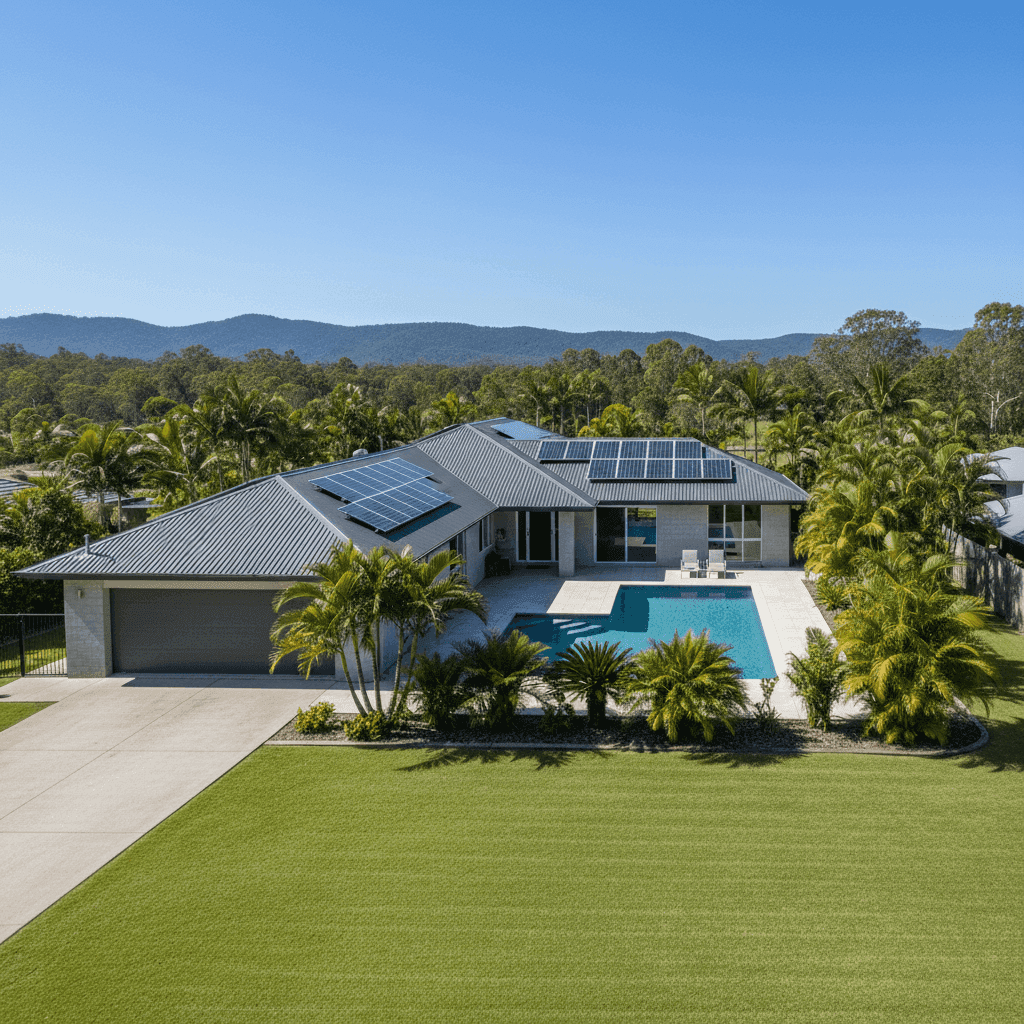
If you own a free standing home in Carruchan, QLD 4816, you already know that insuring a property in Far North Queensland comes with its own set of challenges — and costs. This article breaks down a real home and contents insurance quote for a four-bedroom property in the area, compares it against local, state, and national benchmarks, and offers practical guidance to help you make a more informed decision about your cover.
---
Is This Quote Fair?
The annual premium for this property came in at $65,547 per year (or $6,282/month), covering both building (sum insured: $1,211,000) and contents ($80,000), each with a $2,000 excess. Our price rating for this quote is EXPENSIVE — above average.
To put that into perspective: the average home insurance premium across Queensland sits at $9,129 per year, with a state median of just $3,903. Nationally, the average is $5,347 and the median $2,764. This quote is more than seven times the Queensland average and over twelve times the national median — a significant gap that demands explanation.
It's worth noting that "expensive" doesn't automatically mean "wrong." For a property in a declared cyclone risk zone, with a high building sum insured and a range of additional features, a substantially elevated premium is not unusual. But it does mean that shopping around and understanding exactly what's driving the cost is absolutely essential.
---
How Carruchan Compares
While suburb-level data for Carruchan isn't currently available in our database, we can draw meaningful comparisons using broader geographic data. Check out the Carruchan suburb insurance stats page for the latest figures as they become available.
| Benchmark | Annual Premium |
|---|---|
| This Quote | $65,547 |
| LGA (Croydon) Average | $4,574 |
| QLD State Average | $9,129 |
| QLD State Median | $3,903 |
| National Average | $5,347 |
| National Median | $2,764 |
Even within the Croydon LGA, where the average premium is $4,574, this quote stands out dramatically. You can explore Queensland-wide insurance data and national home insurance statistics to see how different regions stack up across the country.
The gap between this quote and regional averages is largely attributable to a combination of cyclone exposure, a high building sum insured, and the specific construction and features of this property — all of which we explore below.
---
Property Features That Affect Your Premium
Several characteristics of this particular home have a direct bearing on the cost of cover. Understanding each one helps explain why the premium sits where it does.
Cyclone Risk Zone
This is arguably the single biggest factor. Properties in cyclone-declared areas of Queensland attract significantly higher premiums due to the potential for catastrophic wind and storm damage. Insurers price this risk heavily, and it's reflected across the entire Far North Queensland region. This alone can multiply a base premium several times over compared to a property in Brisbane or the Gold Coast.
High Building Sum Insured ($1,211,000)
A 244 sqm concrete home built in 2003 with quality fittings commands a substantial rebuild cost. At $1,211,000, the sum insured is well above average, and premiums scale accordingly. It's worth periodically reviewing your sum insured to ensure it reflects current construction costs — neither over- nor under-insuring your home.
Concrete External Walls & Colorbond Roof
Concrete construction is generally viewed favourably by insurers due to its resilience against fire, pests, and storm damage. Similarly, a steel Colorbond roof is considered durable and cyclone-resistant compared to older roofing materials. These features may actually moderate the premium somewhat, as they reduce the likelihood of certain types of claims.
Slab Foundation & Tile Flooring
A concrete slab foundation is low-risk from an insurer's perspective — no subfloor space means reduced exposure to moisture, pests, and subsidence. Tile flooring is also durable and water-resistant, which is a plus in a tropical climate.
Swimming Pool
Pools add to the insured value of the property and introduce liability considerations. They contribute to the overall premium, though the impact is generally moderate compared to location-based risk factors.
Solar Panels & Ducted Climate Control
Both solar panels and ducted air conditioning are considered fixtures of the building and are typically included in the building sum insured. Their replacement cost contributes to the overall rebuild value, which in turn supports the higher sum insured figure.
---
Tips for Homeowners in Carruchan
Facing a premium of this size, it pays to be proactive. Here are four practical steps worth considering:
- Compare multiple quotes — every year. The home insurance market is competitive, even in high-risk regions. Don't auto-renew without checking alternatives. Use a comparison platform like CoverClub to see what other insurers are offering for your specific property profile.
- Review your building sum insured carefully. A $1,211,000 sum insured is substantial. Make sure it reflects the actual cost to rebuild your home (not its market value), factoring in current labour and material costs in regional Queensland. Over-insuring pushes your premium up unnecessarily, while under-insuring leaves you exposed at claim time.
- Ask about cyclone mitigation discounts. Some insurers offer reduced premiums for homes that meet cyclone-resilient building standards or have undergone approved upgrades (such as roof tie-downs or impact-resistant windows). If your 2003-built home has been upgraded or already meets these standards, make sure your insurer knows about it.
- Consider your excess strategically. Both the building and contents excess are set at $2,000. Opting for a higher voluntary excess can reduce your annual premium. If you have the financial buffer to cover a larger out-of-pocket amount in the event of a claim, this could be a worthwhile trade-off — particularly for a premium at this level.
---
Ready to Compare?
A premium of $65,547 per year is a significant household expense, and you deserve to know whether you're getting the best possible deal for your situation. At CoverClub, we make it easy to compare home and contents insurance quotes tailored to your property. Get a quote today and see how much you could save — without compromising on the cover that matters most for a home in cyclone country.