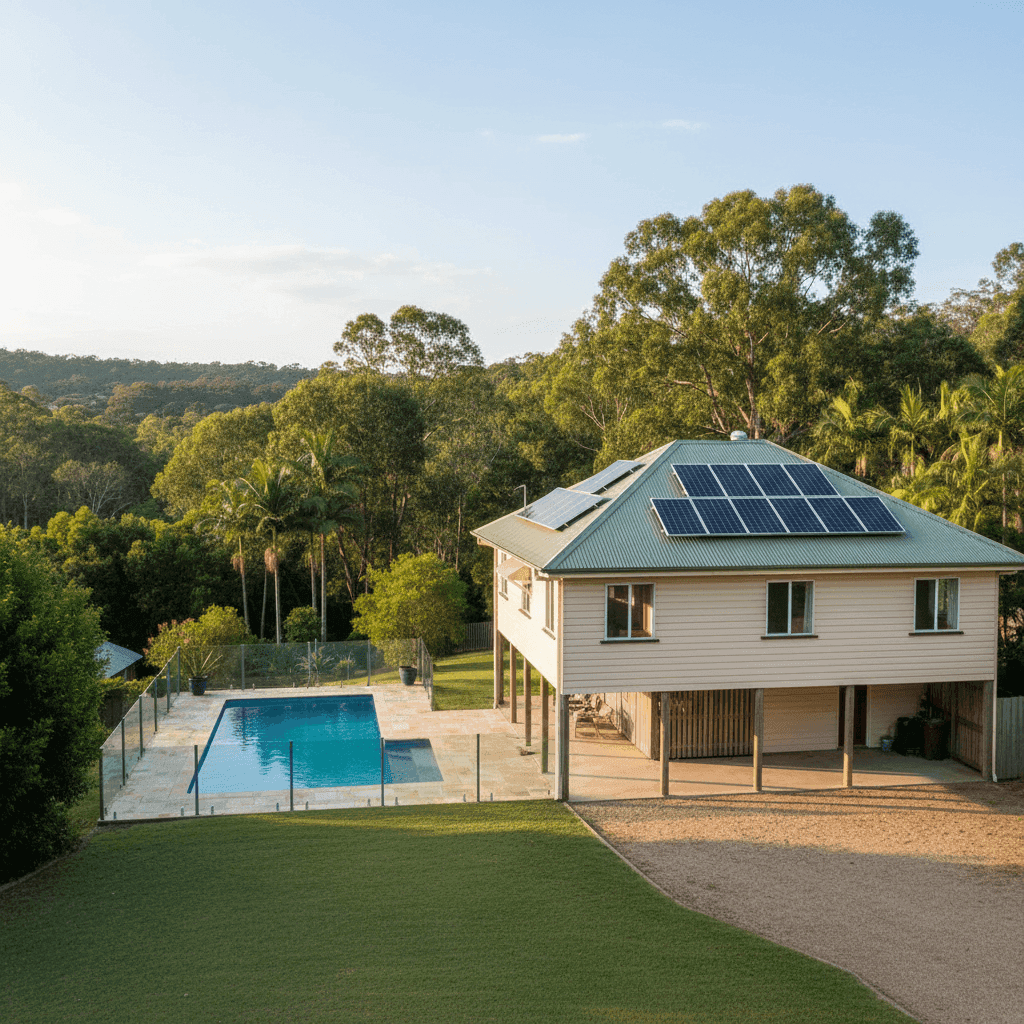
If you own a free standing home in Carters Ridge, QLD 4563, you'll know that finding the right building insurance at a fair price isn't always straightforward. Nestled in the Gympie region of the Sunshine Coast hinterland, Carters Ridge is a semi-rural suburb where property characteristics — from elevated foundations to older construction materials — can have a significant influence on what insurers charge. This article breaks down a recent building-only insurance quote for a 3-bedroom home in the area, benchmarks it against local, state and national data, and offers practical tips to help you make the most of your cover.
---
Is This Quote Fair?
The quote in question came in at $2,607 per year (or $233 per month) for building-only cover with a $1,000 excess and a sum insured of $291,000. Our analysis rates this as CHEAP — below average for the suburb.
To put that in perspective, the suburb average premium for Carters Ridge sits at $3,903 per year, meaning this quote is roughly $1,296 cheaper than what most homeowners in the area are paying. Even compared to the suburb's 25th percentile — the point at which only a quarter of quotes are cheaper — this result comes in below at $3,433 per year. In short, this is a genuinely competitive outcome.
That said, "cheap" doesn't always mean "better." It's worth understanding why a quote lands where it does, so you can be confident the cover is appropriate and not the result of underinsurance or gaps in policy terms.
---
How Carters Ridge Compares
To fully appreciate this quote, it helps to zoom out and look at the broader pricing landscape. Here's how the numbers stack up:
| Benchmark | Annual Premium |
|---|---|
| This Quote | $2,607 |
| Carters Ridge Suburb Average | $3,903 |
| Carters Ridge Suburb Median | $3,674 |
| Carters Ridge 25th Percentile | $3,433 |
| Carters Ridge 75th Percentile | $4,228 |
| Gympie LGA Average | $5,581 |
| QLD State Median | $3,903 |
| QLD State Average | $9,129 |
| National Average | $5,347 |
| National Median | $2,764 |
A few things stand out here. First, the QLD state average of $9,129 is dramatically higher than the state median of $3,903 — a gap that reflects the outsized influence of high-risk coastal and cyclone-prone areas dragging the average upward. Carters Ridge is not a designated cyclone risk area, which is a meaningful factor in keeping premiums lower.
Second, the Gympie LGA average of $5,581 is notably higher than the Carters Ridge suburb average of $3,903, suggesting that other parts of the Gympie region carry greater risk or have more expensive properties to insure.
You can explore more local pricing data on the Carters Ridge suburb stats page, compare it with the QLD state overview, or benchmark it against national home insurance trends.
---
Property Features That Affect Your Premium
Every home is different, and insurers assess a range of property characteristics when calculating risk. Here's how the features of this particular home likely influenced the quote:
Fibro Asbestos External Walls
This is one of the most significant factors. Homes built with fibro asbestos (common in Queensland homes from the mid-20th century) are viewed as higher risk by many insurers due to the cost and complexity of repair or replacement. Some insurers may apply loadings or exclusions, while others price it into the base premium. It's essential to ensure your policy explicitly covers this wall type.
Steel/Colorbond Roof
Colorbond roofing is generally well-regarded by insurers — it's durable, fire-resistant, and performs well in storms. This is likely a positive factor in keeping the premium competitive.
Pole/Stump Foundation (Elevated by at Least 1m)
The elevated, Queenslander-style construction on poles offers excellent flood resilience, as water can pass beneath the home during heavy rain events. This is a meaningful risk-reduction feature in a region that can experience significant rainfall, and it likely contributes to the below-average premium.
Construction Year: 1986
A home built in 1986 is approaching 40 years old. While not ancient, older homes can attract higher premiums due to ageing infrastructure, wiring, and plumbing. The 1986 build date may be a mild upward pressure on the quote, partially offset by other favourable features.
Swimming Pool
Pools add liability risk and can increase the cost of a claim (e.g., structural damage, fencing requirements). They typically add a modest loading to building premiums.
Solar Panels
Solar panels are a fixed asset on the roof and are generally included under building cover. Their presence adds replacement value, which is factored into the sum insured. At $291,000, the sum insured appears to account for this.
No Cyclone Risk, No Ducted Climate Control
The absence of cyclone risk is a significant premium-saver in Queensland. Many properties further north carry substantial cyclone levies. Similarly, no ducted climate control means one less expensive system to insure.
139 sqm Building Size, Standard Fittings
A modest footprint with standard-quality fittings translates to a more straightforward rebuild cost estimate — reducing the likelihood of over- or under-insurance and keeping the sum insured (and therefore the premium) proportionate.
---
Tips for Homeowners in Carters Ridge
1. Get Your Sum Insured Right
At $291,000 for a 139 sqm home with fibro asbestos walls, it's worth verifying this figure with a quantity surveyor or using an online rebuild cost calculator. Asbestos-containing materials can significantly increase demolition and rebuild costs due to safe removal requirements — make sure your sum insured accounts for this.
2. Disclose Your Wall Material Accurately
Fibro asbestos must be disclosed correctly when obtaining quotes. Misrepresentation — even unintentional — can result in a claim being denied. Ensure every insurer you approach is aware of the wall construction type before you accept a policy.
3. Shop Around Annually
This quote is already below the suburb average, but that doesn't mean it's the best available. Insurance markets shift year to year, and loyalty doesn't always pay. Use a comparison platform like CoverClub to benchmark your renewal quote against the current market each year.
4. Review Your Policy for Flood and Storm Cover
Even without cyclone risk, the Sunshine Coast hinterland can experience intense rainfall and flash flooding. Check whether your policy includes flood cover as standard or as an optional extra — and if it's excluded, consider whether the additional cost is worthwhile given your property's location and elevation.
---
Ready to Compare Your Own Quote?
Whether you're renewing your existing policy or shopping for cover for the first time, it pays to see what the market is offering. Get a home insurance quote on CoverClub and find out how your premium stacks up against your neighbours — you might be surprised by what you could save.