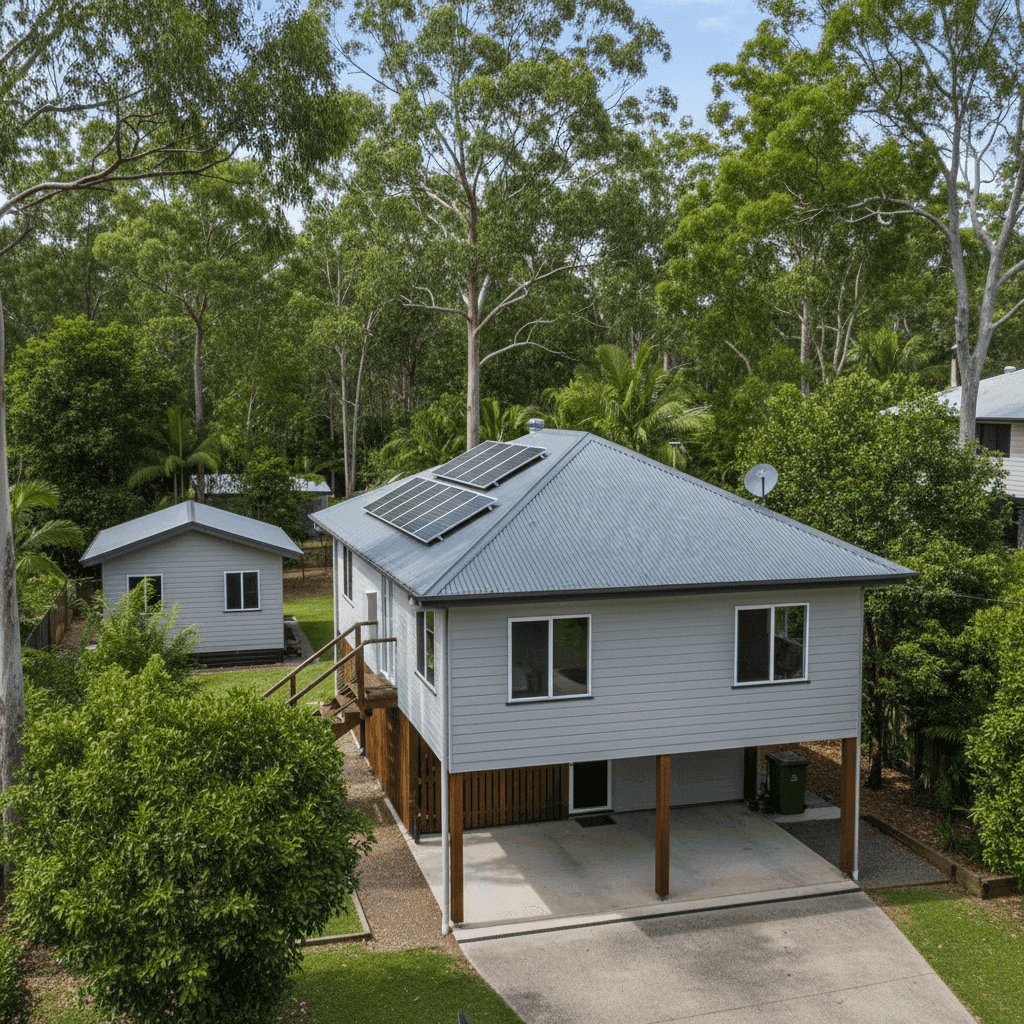
Nestled in the hinterland behind the Sunshine Coast, Carters Ridge QLD 4563 is a semi-rural community known for its leafy acreage blocks, relaxed lifestyle, and elevated terrain. For homeowners here, insuring a free standing home comes with its own set of considerations — from the style of construction to the local claims environment. This article breaks down a real home and contents insurance quote for a 3-bedroom property in the area, examines how it sits against local and national benchmarks, and offers practical advice for getting the best value on your cover.
---
Is This Quote Fair?
The quote in question comes in at $3,681 per year (or $353/month) for combined home and contents insurance, covering a building sum insured of $602,000 and $50,000 worth of contents. Both the building and contents excess are set at $1,000 — a fairly standard arrangement.
Our pricing engine rates this quote as Fair — Around Average, and the numbers back that up. The suburb median premium for Carters Ridge sits at $3,674 per year, meaning this quote lands almost exactly at the midpoint of what locals are paying. The suburb average is slightly higher at $3,903, suggesting a small cluster of higher-priced policies is pulling the mean upward.
In practical terms, "fair" doesn't mean you can't do better — but it does mean you're not being significantly overcharged. You're comfortably within the normal range for this postcode, and well below the suburb's 75th percentile of $4,228 per year. If your current quote is above that upper threshold, it's definitely worth shopping around.
---
How Carters Ridge Compares
Understanding where your premium sits relative to other benchmarks helps put the number in perspective. Here's how Carters Ridge stacks up:
| Benchmark | Annual Premium |
|---|---|
| This Quote | $3,681 |
| Suburb Median (4563) | $3,674 |
| Suburb Average (4563) | $3,903 |
| LGA Average (Gympie) | $5,581 |
| QLD State Median | $3,903 |
| QLD State Average | $9,129 |
| National Median | $2,764 |
| National Average | $5,347 |
A few things stand out here. First, the Queensland state average of $9,129 is extraordinarily high — a figure heavily skewed by cyclone-prone coastal and far-north Queensland properties, where premiums can be eye-watering. The state median of $3,903 is a far more representative figure for most Queenslanders, and this quote sits below it.
Second, the LGA average for Gympie ($5,581) is notably higher than what's being quoted here. The Gympie region covers a wide geographic spread, and some areas within it carry elevated flood or storm risk that drives premiums up. Carters Ridge, by contrast, appears to benefit from more favourable risk characteristics.
Against the national median of $2,764, this quote is higher — but that's not unusual for Queensland, where weather-related risk, construction costs, and the elevated replacement values of larger rural-residential homes all push premiums above the national midpoint.
You can explore more local data on the Carters Ridge suburb stats page, compare it against the QLD state overview, or see where it sits on the national insurance landscape.
---
Property Features That Affect Your Premium
This property has a number of characteristics that insurers weigh carefully when calculating risk and replacement cost. Here's how each one plays into the premium picture:
Hardiplank / Hardiflex External Walls Fibre cement cladding like Hardiplank is generally viewed favourably by insurers. It's durable, low-maintenance, and offers solid resistance to moisture and fire compared to older timber weatherboard. This is likely a neutral-to-positive factor in the pricing.
Steel / Colorbond Roof Colorbond roofing is one of the most insurer-friendly materials in Australia. It's resilient in storms, resistant to ember attack, and has a long lifespan. For a property in a region that can experience severe summer storms, this is a meaningful risk mitigant.
Pole / Stump Foundation (Elevated by at Least 1m) This is a classic Queenslander-style construction approach, and it's a double-edged sword. On the positive side, elevation provides excellent protection against surface flooding and allows air circulation beneath the home. On the other hand, the subfloor space and exposed underside can add complexity to repairs and may slightly increase rebuild costs — which is reflected in the $602,000 building sum insured for a 130 sqm home.
Timber / Laminate Flooring Timber floors are beautiful but can be costly to repair or replace after water ingress or impact damage. Insurers factor this into contents and building valuations, and it's worth ensuring your sum insured adequately covers the cost of restoration.
Solar Panels Solar panels are a fixed installation and typically covered under the building policy rather than contents. It's worth confirming with your insurer that the system is explicitly included in your building sum insured, particularly if it's a larger or newer system.
Ducted Climate Control Ducted systems are expensive to repair and replace. Like solar panels, these should be captured in your building sum insured. A standard ducted system can cost $8,000–$20,000 to replace, so it's not a line item to overlook.
Granny Flat The presence of a secondary dwelling on the property is significant. Many standard home insurance policies have specific conditions around granny flats — particularly if the flat is rented out. Always disclose this to your insurer and confirm whether the granny flat's structure and any contents within it are covered under your policy.
---
Tips for Homeowners in Carters Ridge
1. Review your building sum insured regularly With a 130 sqm elevated home featuring quality materials and a secondary dwelling, $602,000 may or may not reflect current rebuild costs. Construction costs in regional Queensland have risen sharply in recent years. Use a building cost calculator or ask your insurer to review your sum insured annually to avoid being underinsured.
2. Clarify granny flat coverage before you need to claim If your granny flat is tenanted — even informally — your insurer needs to know. Undisclosed rental arrangements can void a claim. Ask specifically whether the granny flat structure, its contents, and any landlord liability are covered under your current policy, or whether you need a separate landlord insurance product.
3. Check your solar panel and ducted system inclusions These are high-value fixed assets that are easy to overlook at policy time. Request written confirmation from your insurer that both your solar system and ducted climate control are included in the building sum insured, and that accidental damage to panels (e.g., from hail) is covered.
4. Compare at renewal, not just when something goes wrong With a suburb sample showing premiums ranging from $3,433 at the 25th percentile up to $4,228 at the 75th, there's meaningful variation in what Carters Ridge homeowners are paying for similar properties. Shopping around at renewal — even if you're happy with your current insurer — keeps you informed and can surface better value options.
---
Ready to Compare?
Whether you're reviewing an existing policy or shopping for the first time, comparing quotes is the smartest move you can make. At CoverClub, we make it easy to see how your premium stacks up and find competitive cover for your home. Get a quote today and see what Carters Ridge homeowners like you are paying — and what you could be saving.