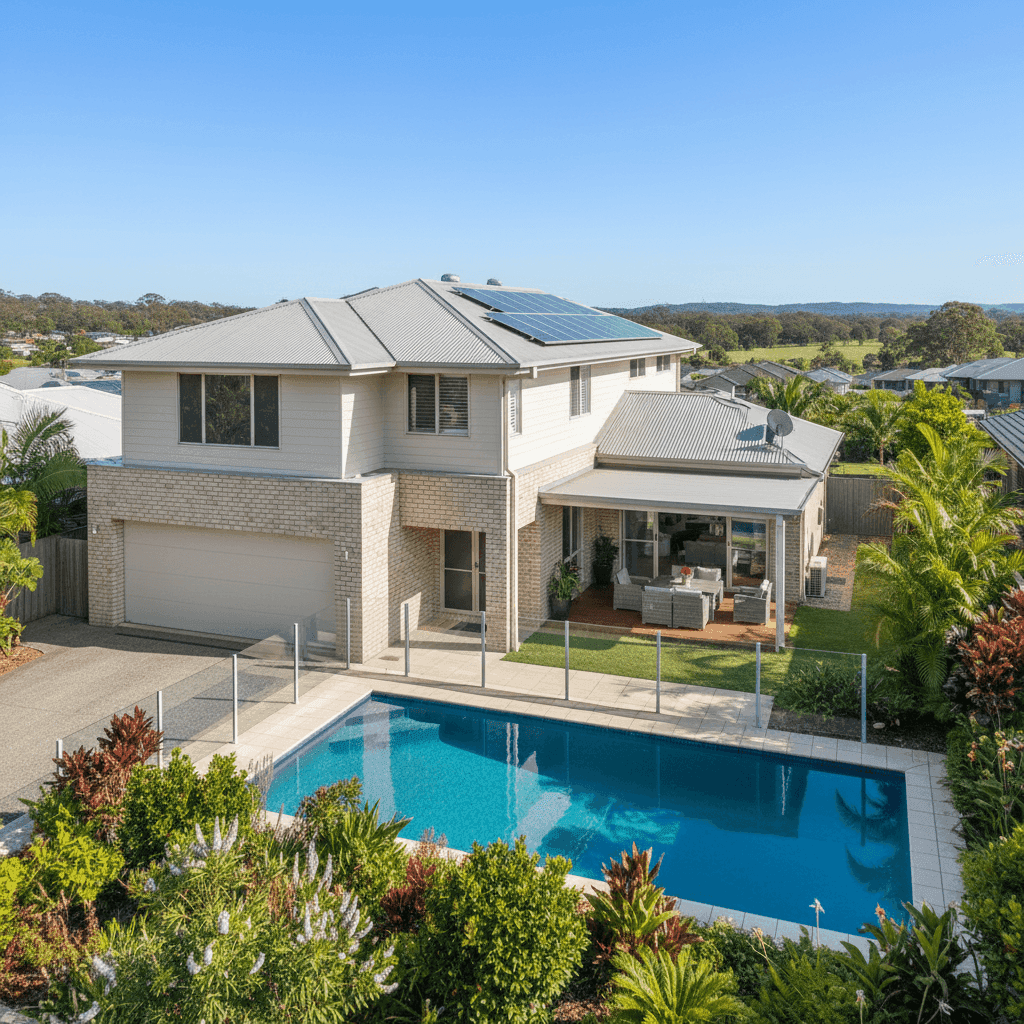
Nestled in the foothills of the D'Aguilar Range on Brisbane's northern fringe, Cashmere (QLD 4500) is a leafy, semi-rural suburb that blends suburban comfort with a relaxed bushland lifestyle. For owners of a four-bedroom, double brick freestanding home in this area, understanding what you should be paying for home and contents insurance — and whether your current quote is competitive — is an important part of protecting one of your biggest assets.
This article breaks down a real insurance quote for a property in Cashmere, compares it against local, state, and national benchmarks, and offers practical guidance to help you make the most informed decision possible.
---
Is This Quote Fair?
The annual premium on this quote comes in at $3,809 per year (or $365/month) for combined home and contents cover, with a building sum insured of $550,000 and contents valued at $75,000. Both the building and contents excess are set at $1,000.
Based on CoverClub's pricing data, this quote is rated CHEAP — meaning it sits below the average for comparable properties. That's a strong result for the homeowner and suggests the insurer has assessed the property's risk profile favourably.
To put this in context: the Queensland state average premium sits at a notably high $9,129 per year, with a state median of $3,903. This quote comes in comfortably below the median, which is encouraging. Across the country, the national average is $5,347/yr with a median of $2,764 — so while this quote is above the national median, it's well below the national average, and the higher sum insured of $550,000 for the building goes some way to explaining the difference.
In short: for a well-appointed four-bedroom home in south-east Queensland, this is a competitive premium that homeowners would do well to hold onto — or use as a benchmark when shopping around.
---
How Cashmere Compares
When sizing up any insurance premium, context is everything. Here's how this quote stacks up across different comparison points:
| Benchmark | Annual Premium |
|---|---|
| This Quote | $3,809 |
| Moreton Bay LGA Average | $3,435 |
| QLD State Median | $3,903 |
| QLD State Average | $9,129 |
| National Average | $5,347 |
| National Median | $2,764 |
It's worth noting that no suburb-level data is currently available for Cashmere specifically, so the closest meaningful local comparison is the Moreton Bay LGA average of $3,435/yr. This quote is only around $374 above that LGA average — a modest premium difference that's easily explained by the higher building sum insured and the presence of features like a pool and solar panels.
The Moreton Bay region covers a wide variety of property types and risk profiles, from coastal suburbs with storm exposure to inland areas like Cashmere that sit in bushfire-adjacent zones. The fact that this quote is competitive within the LGA is a positive sign.
The Queensland state average of $9,129 is dramatically higher than this quote — a reminder of how significantly flood-prone and cyclone-risk areas in regional and north Queensland can skew state-wide averages. Cashmere is not in a designated cyclone risk area, which is a meaningful factor in keeping premiums lower.
---
Property Features That Affect Your Premium
Several characteristics of this property directly influence the premium calculation, and it's worth understanding how each one plays a role.
Double Brick Construction Double brick external walls are generally viewed favourably by insurers. They offer strong resistance to fire, wind, and impact damage compared to timber or lightweight cladding, which can translate to lower rebuild risk and, in many cases, lower premiums.
Steel/Colorbond Roof A Colorbond steel roof is another tick in the "low risk" column. These roofs are durable, fire-resistant, and less susceptible to storm damage than older tile or fibrous cement alternatives. Insurers typically reward modern roofing materials with more competitive pricing.
Slab Foundation A concrete slab foundation is considered a stable and low-maintenance base, reducing the likelihood of subsidence or structural movement claims — a factor that works in the homeowner's favour at assessment time.
Swimming Pool The presence of a pool adds a layer of liability and maintenance risk that insurers factor into their calculations. Pool-related claims — from equipment damage to liability incidents — are a real consideration, and this is one feature that can nudge premiums upward.
Solar Panels Solar panels are increasingly common on Australian homes, but they do add complexity to a claim. Panels can be damaged by hail, fire, or storm, and their replacement cost needs to be factored into the sum insured. Ensuring your building sum insured adequately covers the panels is important.
Ducted Climate Control Ducted air conditioning systems are a significant fixed asset and can be costly to repair or replace. Their inclusion in the building sum insured is standard, but it's worth confirming your policy covers mechanical breakdown or storm damage to the external compressor unit.
Construction Year: 1988 A home built in 1988 is well-established but not overly aged. It predates some modern building standards but is generally considered structurally sound. Insurers may apply modest loadings for older homes, though the double brick construction and Colorbond roof help offset any age-related concerns.
---
Tips for Homeowners in Cashmere
1. Review Your Building Sum Insured Regularly With a building sum insured of $550,000 for a 244 sqm double brick home, it's important to ensure this figure reflects current rebuild costs — not just market value. Construction costs in south-east Queensland have risen significantly in recent years. Use a building calculator or speak with a quantity surveyor to validate your sum insured annually.
2. Account for Your Solar and Pool Assets Make sure your policy explicitly covers your solar panel system and pool equipment. Some policies treat these as standard inclusions; others require you to specify them or take out additional cover. Check your Product Disclosure Statement (PDS) carefully.
3. Understand Your Bushfire Risk Cashmere's semi-rural, bushland-adjacent setting means bushfire is a relevant hazard. Check whether your policy includes bushfire cover as standard (most Australian home insurance policies do), and consider whether your property is listed on the Bushfire Attack Level (BAL) register — this can affect both your premium and your obligations around property maintenance.
4. Compare Before You Renew Even if your current premium is rated as cheap, the insurance market is competitive and premiums can shift at renewal. Use a comparison platform like CoverClub to benchmark your renewal quote against the broader market each year — it only takes a few minutes and could save you hundreds.
---
Get a Quote for Your Cashmere Home
Whether you're a first-time buyer or a long-time Cashmere resident, making sure your home and contents insurance is both comprehensive and competitively priced is essential. CoverClub makes it easy to compare quotes from leading Australian insurers in one place — so you can see exactly where your premium sits and whether there's a better deal available.
Compare home insurance quotes for your Cashmere property today →