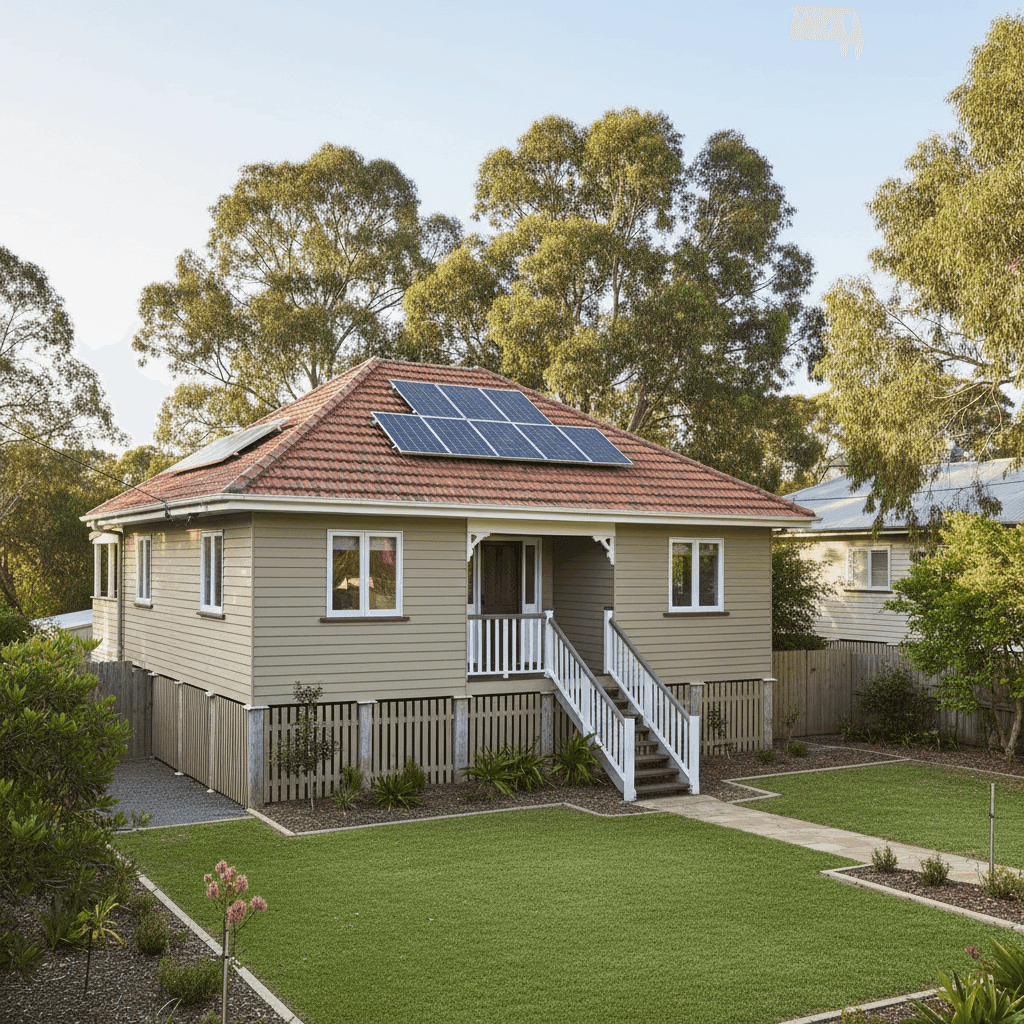
Home insurance in regional New South Wales can vary dramatically depending on where you live — and Casino, NSW 2470 is a suburb that sits in a particularly interesting position when it comes to pricing. This article breaks down a real building insurance quote for a four-bedroom free standing home in Casino, comparing it against local, state, and national benchmarks so you can understand exactly what's driving the cost — and whether there's room to save.
---
Is This Quote Fair?
The quote in question comes in at $2,147 per year (or $210/month) for building-only cover on a four-bedroom, weatherboard home insured for $391,000. The building excess is set at $1,000.
Our pricing engine rates this quote as FAIR — Around Average, and the data backs that up. Here's how it sits relative to the local market:
- Suburb 25th percentile: $1,916/yr
- Suburb median: $2,695/yr
- Suburb 75th percentile: $4,411/yr
At $2,147, this quote sits comfortably between the 25th percentile and the median for Casino — meaning roughly half of comparable properties in the area are paying more, and about a quarter are paying less. That's a reasonable outcome, though it's worth noting there's still a gap between this premium and the lower end of the market. Depending on the insurer, the specific policy inclusions, and the property's risk profile, there may be scope to nudge the price down toward the 25th percentile with a bit of shopping around.
---
How Casino Compares
To put this quote in proper context, it helps to zoom out and look at the broader picture. You can explore the full data set on the Casino suburb stats page, but here's a snapshot:
| Benchmark | Premium |
|---|---|
| Casino suburb average | $15,364/yr |
| Casino suburb median | $2,695/yr |
| NSW state average | $9,528/yr |
| NSW state median | $3,770/yr |
| National average | $5,347/yr |
| National median | $2,764/yr |
| Lismore LGA average | $18,453/yr |
A few things stand out immediately. The suburb average of $15,364 is extraordinarily high — well above the NSW state average of $9,528 and nearly three times the national average of $5,347. This is almost certainly being skewed upward by a subset of high-risk properties in the area attracting very steep premiums, particularly those exposed to flood risk along the Richmond River corridor. The median of $2,695, however, tells a more grounded story and is a much more useful comparison point for a typical residential property.
The Lismore LGA average of $18,453 is even more striking, reflecting the profound insurance market disruption that followed the catastrophic 2022 floods across the Northern Rivers region. Insurers have repriced risk significantly in this part of NSW, and that has pushed averages skyward — even for properties that weren't directly affected.
For NSW home insurance data and national home insurance benchmarks, CoverClub tracks thousands of quotes to help homeowners understand where they stand.
At $2,147, this quote is below both the suburb and national medians, which is a positive sign. It suggests the property's individual risk profile is being assessed more favourably than many others in the area.
---
Property Features That Affect Your Premium
Several characteristics of this property have a meaningful influence on what insurers charge. Understanding them helps you anticipate how your quote is calculated — and where you might have leverage.
Weatherboard timber construction is one of the more significant factors. Timber-framed homes with weatherboard cladding are considered higher risk than brick veneer or double-brick homes due to their susceptibility to fire and, in some cases, pest damage. Insurers typically price this in, which can push premiums up compared to masonry equivalents.
Tiled roof is generally viewed favourably. Terracotta or concrete tiles are durable, fire-resistant, and perform well in hail events — all of which can help moderate your premium compared to, say, a corrugated iron or Colorbond roof in some risk scenarios.
Stumped foundations are common in older Queensland-style and northern NSW homes, and this property — built in 1968 — fits that profile. Elevation on stumps can actually be a protective factor in minor flood events, though it also introduces specific risks around subfloor maintenance, pest ingress, and structural movement over time. The property is listed as elevated by less than 1 metre, which provides some benefit without the complications of a fully raised home.
Solar panels add replacement value and can slightly increase the sum insured required to fully cover the home. It's worth confirming with your insurer that your solar system is explicitly included in your building cover, as some policies treat it as an optional add-on.
Ducted climate control is another feature that adds to the replacement cost of the building. Ducted systems are expensive to install and should be reflected in your sum insured — the $391,000 figure here should account for this.
The 130 sqm footprint, standard fittings, and single bathroom suggest a modest but solid home. The sum insured of $391,000 equates to roughly $3,008 per square metre, which is within a reasonable range for a weatherboard home of this age and specification in regional NSW.
---
Tips for Homeowners in Casino
1. Review your sum insured annually. Construction costs in regional NSW have risen sharply over the past few years. A sum insured that was accurate in 2022 may now leave you underinsured. Use a building cost calculator or speak with a quantity surveyor to make sure your $391,000 still reflects true replacement cost — including demolition, debris removal, and any council compliance upgrades required on a 1968-era home.
2. Shop around — the spread is wide. With Casino premiums ranging from under $1,916 at the 25th percentile to over $4,411 at the 75th, there's clearly significant variation between insurers. The same property can attract very different quotes depending on how each insurer models flood, fire, and storm risk in this postcode. Compare quotes at CoverClub to see what the broader market is offering.
3. Confirm your flood cover status. Casino sits near the Richmond River and has experienced flooding historically. Check whether your policy includes flood cover as standard or as an optional extra — and if it's excluded, understand what that means for your risk exposure. Some insurers distinguish between riverine flood and storm surge, so read the Product Disclosure Statement carefully.
4. Maintain your stumped foundations and subfloor. Homes on stumps require regular inspection for timber rot, termite activity, and stump settlement. Insurers may decline or limit claims where damage is attributed to poor maintenance. An annual pest inspection and periodic stump assessment is good practice — and may be required under the terms of your policy.
---
Ready to Compare?
Whether you're renewing your policy or just curious about what the market looks like, it pays to compare. CoverClub analyses quotes from across the Australian insurance market so you can see exactly how your premium stacks up. Get a home insurance quote today and find out if you're paying a fair price — or if there's a better deal waiting for you.