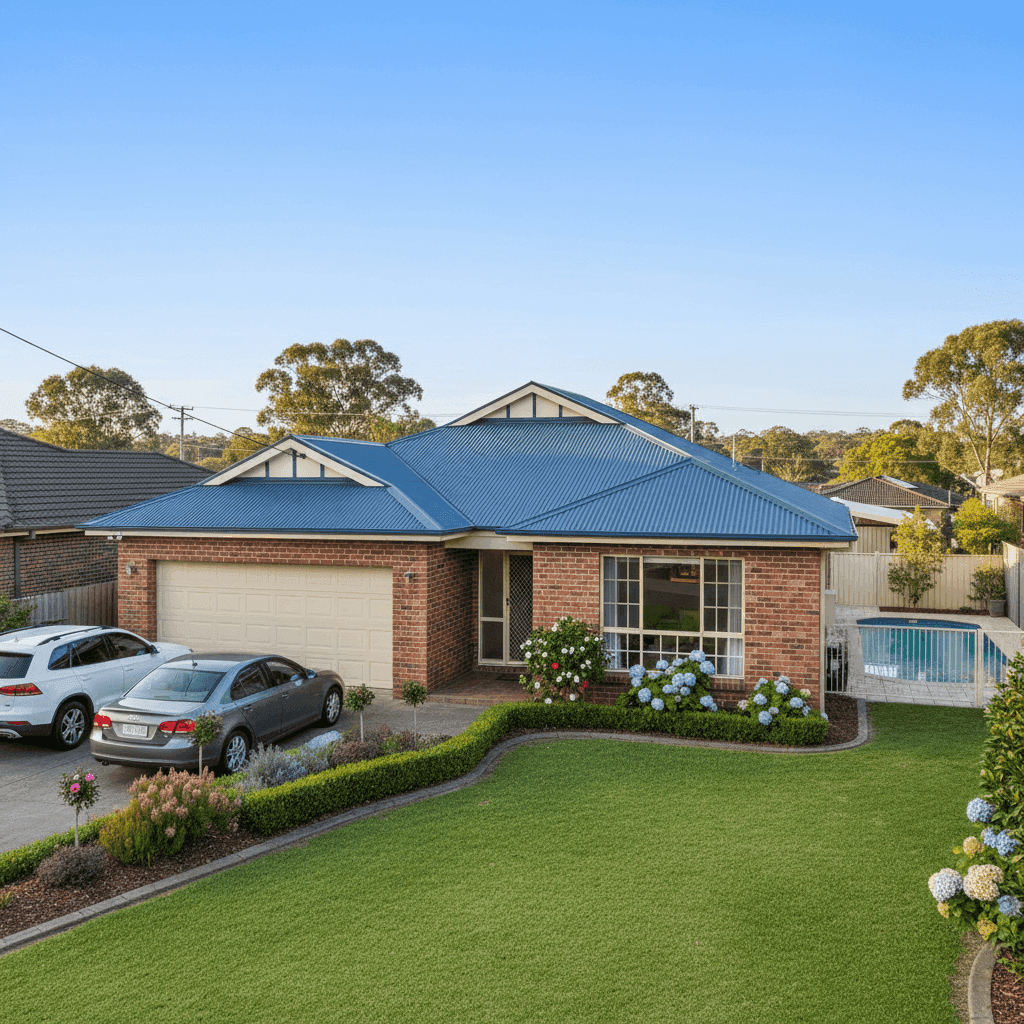
Castle Hill is one of Sydney's most established and sought-after north-western suburbs, known for its leafy streets, quality housing stock, and strong community feel. If you own a free standing home in the 2154 postcode, understanding what you should be paying for building insurance — and why — can make a real difference to your household budget. In this article, we break down a recent building-only insurance quote for a four-bedroom, two-bathroom brick veneer home in Castle Hill and put the numbers into context.
---
Is This Quote Fair?
The quote in question comes in at $2,855 per year (or $280 per month) for building-only cover on a home insured for $676,000, with a building excess of $5,000.
Our price rating for this quote is Expensive — above average for the Castle Hill area.
To put that in perspective, the suburb average premium for Castle Hill (NSW 2154) sits at $2,550 per year, with a median of $2,356. This quote lands around $305 above the suburb average and a notable $499 above the suburb median — meaning it's more expensive than the majority of comparable quotes we've seen in this postcode.
It's also worth noting that this quote exceeds the suburb's 75th percentile of $2,689 per year, placing it in the top quarter of premiums recorded locally. That's a meaningful signal that there may be room to shop around.
That said, "expensive" doesn't automatically mean "wrong." A higher sum insured, specific insurer pricing models, and individual property characteristics all play a role in where your premium lands.
---
How Castle Hill Compares
To truly understand this quote, it helps to zoom out and look at the broader pricing landscape.
| Benchmark | Premium |
|---|---|
| This quote | $2,855/yr |
| Castle Hill suburb average | $2,550/yr |
| Castle Hill suburb median | $2,356/yr |
| LGA (Hornsby) average | $3,958/yr |
| NSW average | $9,528/yr |
| NSW median | $3,770/yr |
| National average | $5,347/yr |
| National median | $2,764/yr |
(Based on a sample of 14 quotes in the 2154 postcode. View full [NSW insurance statistics](https://coverclub.com.au/stats/NSW) or [national home insurance data](https://coverclub.com.au/stats/national).)
A few things stand out here. First, the NSW state average of $9,528 per year is dramatically higher than this quote — but that figure is heavily skewed by high-risk and high-value properties across the state, particularly in flood and bushfire zones. The NSW median of $3,770 is a more useful comparison point, and this quote sits comfortably below it.
Compared to the national median of $2,764, this Castle Hill quote is modestly above average — by about $91 per year. Against the national average of $5,347, it looks quite reasonable.
The Hornsby LGA average of $3,958 per year also provides useful context: this quote is around $1,100 below the broader LGA average, which suggests Castle Hill itself is a relatively affordable pocket within the Hornsby council area.
The bottom line? While this quote is on the expensive side for Castle Hill specifically, it's not out of step with broader NSW or national figures. Homeowners in this postcode are generally fortunate to be in a lower-risk, lower-premium area compared to much of the state.
---
Property Features That Affect Your Premium
Several characteristics of this property influence the premium, and it's worth understanding how each one plays a role.
Brick Veneer Construction Brick veneer is one of the most common wall materials in Australian suburban homes built from the 1970s through the 1990s, and insurers generally view it favourably. It offers solid fire resistance and durability, which can help keep premiums in check compared to timber-framed or clad homes.
Steel / Colorbond Roof A Colorbond steel roof is considered low-maintenance and highly durable, and most insurers price it competitively. It performs well in hail events and is resistant to fire ember attacks — a consideration even in suburban Sydney during bushfire season.
Construction Year: 1985 At around 40 years old, this home sits in a bracket that insurers watch carefully. Properties of this era may have older plumbing, wiring, or structural elements that increase the likelihood of a claim. Some insurers apply age-related loadings to homes built before 1990, which could be contributing to the above-average premium here.
Slab Foundation & Timber/Laminate Flooring A concrete slab foundation is generally considered stable and low-risk. Timber and laminate flooring, however, can be more susceptible to water damage than tiles — something insurers factor into their risk models.
Swimming Pool The presence of a pool adds a layer of liability and maintenance risk, which can nudge premiums upward. Pool-related incidents, including water damage to surrounding structures, are a legitimate claims consideration.
Sum Insured: $676,000 This is a substantial sum insured for a 214 sqm home, reflecting the cost of rebuilding in Sydney's north-west where labour and materials remain elevated. A higher sum insured directly increases the premium, so it's important to make sure this figure accurately reflects your rebuild cost — not your market value.
No Solar Panels, No Ducted Climate Control The absence of solar panels and ducted air conditioning simplifies the risk profile slightly, as both systems can be costly to repair or replace and may attract additional premium loading with some insurers.
---
Tips for Homeowners in Castle Hill
1. Shop around — especially if you're above the suburb median With this quote sitting above both the suburb average and the 75th percentile, it's well worth comparing alternatives. Insurers price risk differently, and a quote that's expensive with one provider may be competitive with another. Get a comparison quote at CoverClub to see what else is available for your property.
2. Review your sum insured carefully Make sure your $676,000 building sum insured reflects a current rebuild cost estimate — not your purchase price or market value. Overinsuring pushes your premium up unnecessarily, while underinsuring leaves you exposed. Tools like the Cordell Sum Sure calculator can help you arrive at a more accurate figure.
3. Consider your excess strategically This quote carries a $5,000 building excess. Opting for a higher excess is one of the most effective ways to reduce your annual premium — but only if you're confident you could cover that amount out of pocket in the event of a claim. If $5,000 already feels like a stretch, a lower excess with a slightly higher premium may be the better trade-off.
4. Factor in your pool in your policy review If you have a swimming pool, make sure your policy explicitly covers pool-related structures, including fencing, pumps, and filtration systems. Some standard building policies have exclusions or sub-limits for pool infrastructure, so it pays to read the Product Disclosure Statement carefully.
---
Compare Your Home Insurance Today
Whether this quote reflects good value for your situation depends on your individual risk profile, coverage needs, and how other insurers price your property. The best way to know if you're getting a fair deal is to compare. At CoverClub, we make it easy to benchmark your premium against real quotes from across the market — so you can make a confident, informed decision.
Get a home insurance quote for your Castle Hill property →
You can also explore detailed pricing data for your area on our Castle Hill suburb stats page, or browse NSW-wide home insurance trends and national benchmarks.