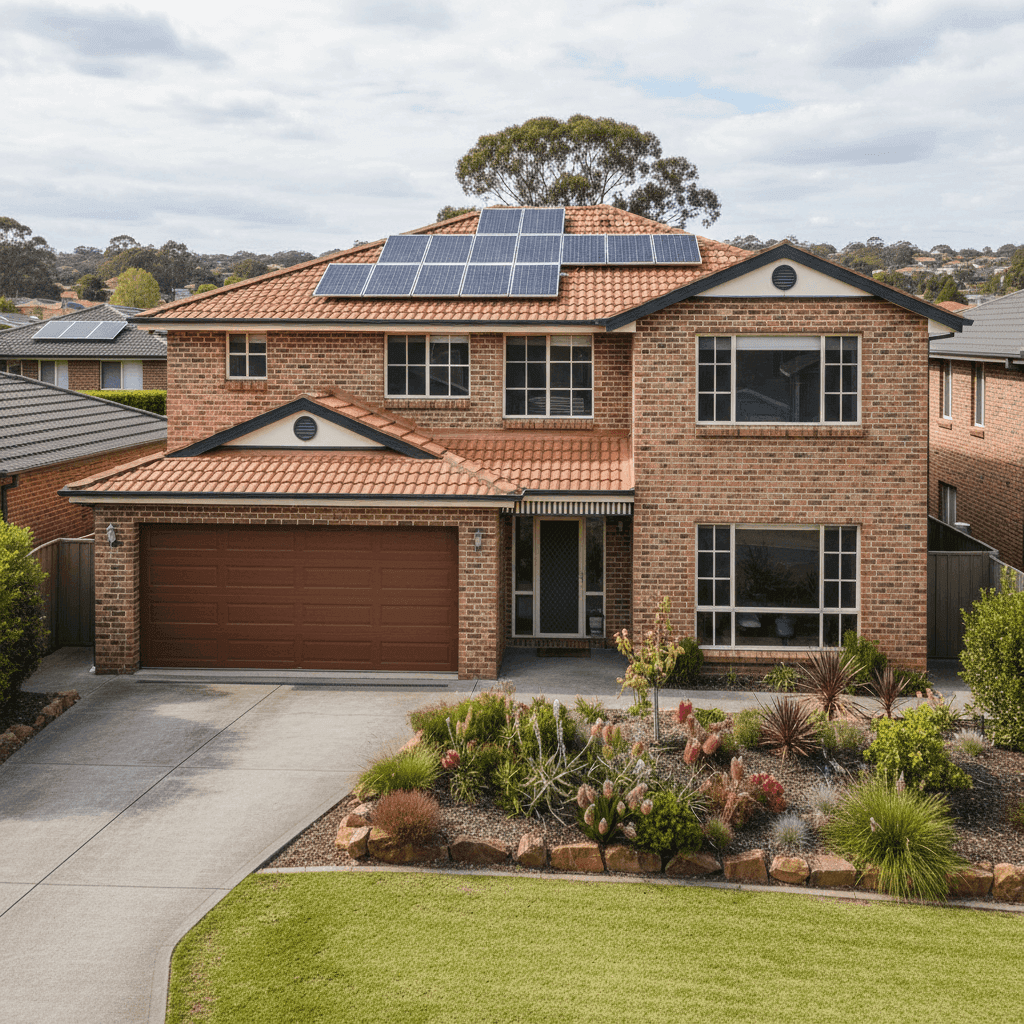
Castle Hill is one of Sydney's most established and sought-after suburbs in the Hills District, known for its leafy streets, generous block sizes, and well-built family homes. For owners of a free standing home in this part of New South Wales, understanding what you're paying for home and contents insurance — and whether that figure is reasonable — can make a real difference to your household budget.
This article takes a close look at a recent home and contents insurance quote for a five-bedroom, four-bathroom brick veneer home in Castle Hill (NSW 2154), built in 1985, with a building sum insured of $835,000 and contents cover of $200,000. The annual premium came in at $3,036 (or $312 per month). Here's what that figure actually means in context.
---
Is This Quote Fair?
The short answer: this quote is rated Expensive — above average for the area.
At $3,036 per year, this premium sits noticeably above the suburb average of $2,550 and well above the suburb median of $2,356. To put it in percentile terms, the suburb's 75th percentile sits at $2,689 — meaning this quote is priced higher than at least three-quarters of comparable properties in Castle Hill. That's a meaningful gap worth exploring.
A few factors likely push this particular quote above the local norm. The property is a large home at 286 sqm with five bedrooms and four bathrooms, which drives up the building sum insured to $835,000 — a figure that reflects genuine replacement cost but is on the higher end for the suburb. The contents cover of $200,000 is also substantial. Both excesses are relatively high ($3,000 for building, $1,000 for contents), which typically lowers premiums — so the fact the quote is still expensive despite those excesses suggests the insurer is pricing the risk of the property itself quite conservatively.
It's also worth noting that a sample size of 14 quotes was used to generate the suburb benchmarks, which is a reasonable but not enormous dataset. Individual quotes can vary significantly based on the insurer, the specific coverage inclusions, and how each provider assesses risk for a given property profile.
---
How Castle Hill Compares
Zooming out beyond the suburb paints an interesting picture. You can explore the full breakdown on the Castle Hill suburb stats page, but here are the headline figures:
| Benchmark | Premium |
|---|---|
| This quote | $3,036/yr |
| Castle Hill suburb average | $2,550/yr |
| Castle Hill suburb median | $2,356/yr |
| LGA (Hornsby) average | $3,958/yr |
| NSW average | $9,528/yr |
| NSW median | $3,770/yr |
| National average | $5,347/yr |
| National median | $2,764/yr |
Compared to the NSW state average of $9,528, this quote looks very reasonable — but that figure is heavily skewed by high-risk and high-value properties across the state, particularly in flood-prone and coastal areas. The NSW median of $3,770 is a more useful benchmark, and against that figure, this quote of $3,036 is actually below the state midpoint.
When measured against national figures, the story is similar. The national average of $5,347 is distorted by extreme premiums in cyclone-prone regions of Queensland and northern Australia, while the national median of $2,764 sits just below this quote.
The Hornsby LGA average of $3,958 is also telling — it suggests that across the broader local government area, premiums tend to run higher than what this homeowner is paying, likely due to a mix of property types, sizes, and risk profiles within the LGA.
In summary: expensive relative to the immediate suburb, but broadly reasonable when viewed against state and national benchmarks.
---
Property Features That Affect Your Premium
Several characteristics of this property have a direct bearing on how insurers price the risk:
Brick veneer construction and tiled roof are generally viewed favourably by insurers. Brick veneer offers solid fire resistance and durability, while tiled roofs are considered more resilient than corrugated iron or Colorbond in many scenarios. These features can work in a homeowner's favour when it comes to premium pricing.
Slab foundation is standard for homes of this era in Western Sydney and is generally considered low-risk from an insurer's perspective, though it can be more costly to repair if subsidence or cracking occurs.
Timber and laminate flooring is a contents and building consideration — timber floors can be expensive to repair or replace, which may contribute marginally to the overall premium.
Solar panels are an increasingly common feature and one that insurers are paying closer attention to. Panels represent a significant asset (often $8,000–$20,000 worth of equipment) and can complicate roof repairs. Some insurers include solar panels under building cover automatically; others treat them as a separate item. It's worth confirming exactly how your policy handles solar panel damage or theft.
Ducted climate control adds to the overall replacement value of the home and is another feature that contributes to a higher sum insured. Systems like these can cost $10,000–$25,000 to replace, and ensuring they're adequately covered under your building policy is important.
Construction year (1985) means this home is now 40 years old. Older homes can attract higher premiums due to the potential for ageing wiring, plumbing, and structural components — all of which increase the likelihood and cost of claims.
---
Tips for Homeowners in Castle Hill
1. Shop around — even if you're happy with your current insurer Given this quote sits above the suburb average, it's worth getting two or three competing quotes before renewing. Insurers use different pricing models, and a property that one insurer rates conservatively might be priced more competitively by another. Compare quotes for your Castle Hill home here.
2. Review your sum insured carefully A building sum insured of $835,000 for a 286 sqm home works out to roughly $2,920 per sqm — which is within a reasonable range for a quality home in Sydney, but worth validating with a quantity surveyor or a building cost calculator. Being over-insured means you're paying more premium than necessary; being under-insured can leave you significantly out of pocket after a major claim.
3. Clarify solar panel coverage with your insurer As noted above, solar panels aren't always automatically covered, or the coverage terms may vary. Ask your insurer directly: are the panels covered for accidental damage, storm damage, and theft? What's the process if a panel issue causes roof damage? Getting clarity now avoids surprises at claim time.
4. Consider whether your excess settings are working for you This policy carries a $3,000 building excess — which is on the higher side. While a higher excess does reduce your premium, it also means you're self-insuring for smaller claims. Think about what kind of damage is realistic for your property and whether you'd genuinely be comfortable absorbing a $3,000 outlay before insurance kicks in.
---
Compare Your Options with CoverClub
Whether you're renewing your policy or shopping for the first time, it pays to know where your quote stands. CoverClub makes it easy to benchmark your premium against real data from properties like yours across Castle Hill, NSW, and Australia. Get a quote and compare today — it only takes a few minutes and could save you hundreds of dollars a year.