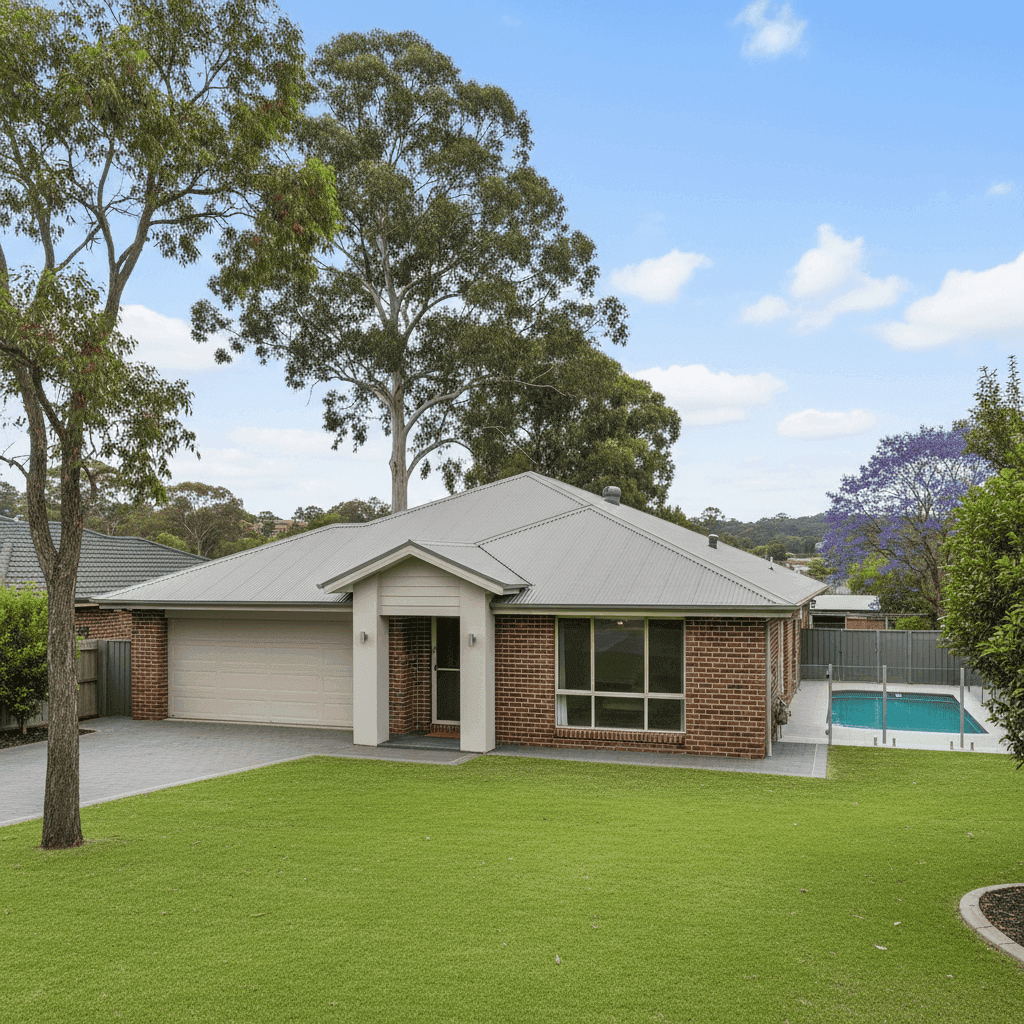
Castle Hill is one of Sydney's most established family suburbs — a leafy pocket of the Hills District where four-bedroom brick homes on generous blocks are the norm rather than the exception. If you own a free standing home here and you're shopping around for building insurance, you're probably wondering whether the quotes you're seeing are reasonable. This article breaks down a real building-only insurance quote for a property in Castle Hill (NSW 2154) and puts the numbers in context using suburb, state, and national benchmarks.
---
Is This Quote Fair?
The quote in question comes in at $3,091 per year (or $321/month) for building-only cover on a four-bedroom, two-bathroom free standing home with a sum insured of $695,000 and a building excess of $4,000.
Our price rating for this quote is Expensive — above average for the suburb.
To put that in perspective, the average building insurance premium across Castle Hill (NSW 2154) sits at around $2,550 per year, with a median of $2,356. That means this quote is approximately $541 above the suburb average and $735 above the median — a meaningful gap that's worth investigating before signing on the dotted line.
The 75th percentile for the suburb is $2,689/yr, which means this quote sits above even the most expensive quarter of premiums recorded in the area. For a homeowner with a standard brick veneer property on a slab foundation, that's a signal worth paying attention to.
That said, a higher sum insured — $695,000 is on the upper end for building cover — will naturally push premiums up, and the presence of a swimming pool adds both liability and replacement cost considerations that insurers price into their models.
---
How Castle Hill Compares
Understanding where Castle Hill sits relative to the broader market helps frame whether a premium is genuinely elevated or simply reflects local conditions.
| Benchmark | Average Premium | Median Premium |
|---|---|---|
| Castle Hill (NSW 2154) | $2,550/yr | $2,356/yr |
| LGA (Hornsby) | $3,958/yr | — |
| NSW | $9,528/yr | $3,770/yr |
| National | $5,347/yr | $2,764/yr |
A few things stand out here. First, Castle Hill's suburb-level averages are well below both the NSW and national averages — which is genuinely good news for local homeowners. The Hills District doesn't carry the bushfire, flood, or cyclone risk premiums that inflate costs in many other parts of Australia, and that's reflected in the numbers.
Second, the LGA average (Hornsby Council area) of $3,958/yr is notably higher than the Castle Hill suburb average, suggesting that other parts of the Hornsby LGA carry more risk-weighted properties. Castle Hill itself tends to benefit from good infrastructure, low flood risk, and solid building stock.
You can explore the full data for this suburb at the Castle Hill NSW 2154 insurance stats page, or compare it against the NSW state overview and national benchmarks.
Note: The suburb sample size for this analysis is 14 quotes, so while directionally useful, these figures will become more precise as more data is collected.
---
Property Features That Affect Your Premium
Every insurer prices risk differently, but the characteristics of this particular property give us a clear picture of what's likely driving the premium.
Brick Veneer Walls & Colorbond Roof Brick veneer is one of the most common wall constructions in Sydney's suburban belt, and insurers generally view it favourably — it's durable, fire-resistant, and relatively straightforward to repair or rebuild. A Colorbond steel roof is similarly well-regarded: it's lightweight, long-lasting, and performs well in hail events, which are not uncommon in western Sydney. These features should, in theory, work in the homeowner's favour.
Slab Foundation A concrete slab is a low-maintenance, structurally sound foundation type that doesn't carry the subsidence or movement risks associated with older pier-and-beam or strip footings. Insurers typically treat slabs as a neutral-to-positive risk factor.
Timber and Laminate Flooring Flooring type affects the cost of internal reinstatement. Timber and laminate floors can be expensive to replace after water damage or fire, which may contribute marginally to the overall premium calculation — particularly relevant for building-only policies where internal fixtures are included.
Swimming Pool A pool is one of the more notable premium drivers on this property. Pools increase the rebuild cost (they're expensive to demolish and reinstate), and they introduce liability considerations that some insurers factor into their pricing. If the pool is older or not recently inspected, some insurers may apply an additional loading.
1985 Construction Homes built in the mid-1980s are generally well-constructed but may have older electrical systems, plumbing, or roofing components that haven't been updated. Insurers sometimes apply age-related loadings to properties of this era, particularly if there's no evidence of recent renovations.
Standard Fittings Standard-quality fittings keep the reinstatement cost estimate more predictable and typically don't attract the premium loadings associated with high-end or custom finishes.
---
Tips for Homeowners in Castle Hill
If you're looking at a quote in this price range, here are four practical steps worth taking before you commit.
1. Shop around — seriously The gap between the cheapest and most expensive quotes in Castle Hill is substantial. With suburb premiums ranging from $2,063/yr (25th percentile) to $2,689/yr (75th percentile), there's real money to be saved by comparing multiple insurers. A quote above $3,000 for a standard brick veneer home without extreme risk factors is a strong prompt to get at least two or three alternatives.
2. Review your sum insured carefully At $695,000, this building sum insured is significant. Make sure it reflects the actual cost to rebuild your home (not the market value), including demolition, debris removal, and professional fees. Overinsuring pushes your premium up unnecessarily, while underinsuring leaves you exposed. Use a quantity surveyor estimate or an insurer's online calculator to sense-check the figure.
3. Consider your excess strategically This quote carries a $4,000 building excess. A higher excess generally reduces your annual premium — but make sure it's an amount you could genuinely afford to pay in the event of a claim. If $4,000 feels manageable, this could be a lever to pull when negotiating or comparing policies.
4. Ask about pool-specific inclusions If your pool is a significant asset, confirm exactly what your policy covers — including the pool shell, pump, filtration system, and any associated fencing or decking. Some building policies include pools as standard; others treat them as optional extras or exclude certain components entirely.
---
Compare Your Options at CoverClub
Whether this quote is the right one for your property depends on more than just the price — but price is a great place to start. CoverClub makes it easy to see how your premium stacks up against real data from your suburb and across Australia. Get a building insurance quote today and find out whether you're paying a fair price for your Castle Hill home.