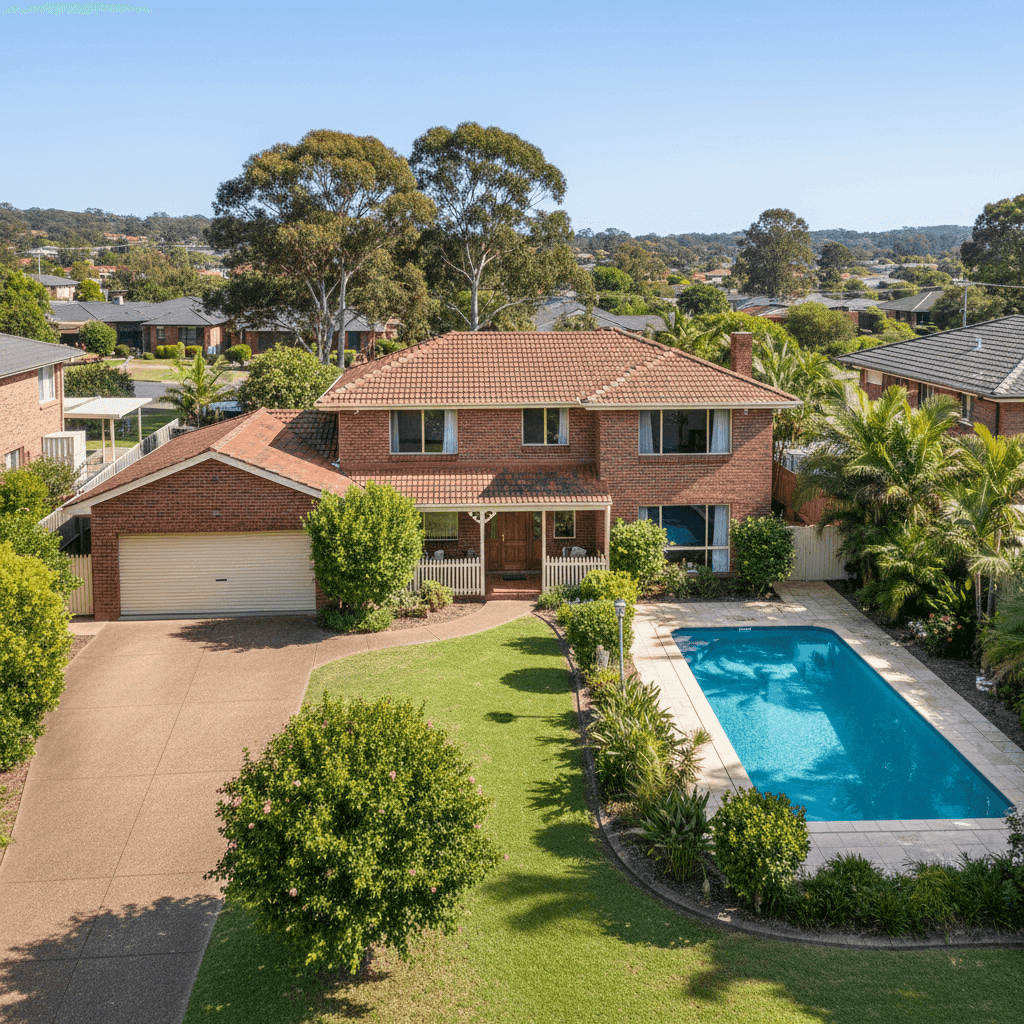
Castle Hill is one of Sydney's most established and sought-after suburbs in the Hills District, known for its leafy streets, quality housing stock, and strong community feel. For owners of free standing homes in this part of New South Wales, understanding what you should be paying for building insurance — and whether your current quote is fair — can mean saving hundreds of dollars every year. This article breaks down a recent building-only insurance quote for a four-bedroom, two-bathroom free standing home in Castle Hill (postcode 2154), and puts the numbers in context so you can make a more informed decision.
---
Is This Quote Fair?
The quote in question comes in at $1,427 per year (or $138/month) for building-only cover on a 315 sqm brick veneer home with a sum insured of $600,000 and a $5,000 building excess. Our price rating for this quote is CHEAP — below the suburb average — and the data backs that up clearly.
Compared to the Castle Hill suburb average of $2,550/year, this quote is roughly 44% below what most homeowners in the area are paying. Even measured against the suburb's 25th percentile — meaning the cheapest quarter of quotes in the area — the suburb's lower bound sits at $2,063/year, which is still more than $600 higher than this quote. That's a meaningful saving.
Put simply, if you received this quote, you're doing very well relative to your neighbours.
It's worth noting that the $5,000 building excess is on the higher side. A higher excess typically reduces your annual premium, so part of the reason this quote looks so competitive is that the policyholder has accepted more out-of-pocket risk in the event of a claim. That's a reasonable trade-off for many homeowners — particularly those with the financial buffer to absorb a larger excess — but it's something to weigh carefully before signing up.
---
How Castle Hill Compares
To fully appreciate how this quote sits within the broader market, it helps to zoom out and look at the NSW state-wide picture and national benchmarks.
| Benchmark | Average Premium | Median Premium |
|---|---|---|
| Castle Hill (2154) | $2,550/yr | $2,356/yr |
| LGA (Hornsby) | $3,958/yr | — |
| NSW State | $9,528/yr | $3,770/yr |
| National | $5,347/yr | $2,764/yr |
A few things stand out here. The NSW state average of $9,528/year is extraordinarily high compared to the median of $3,770 — a sign that there are some very expensive properties and high-risk areas (think flood zones, bushfire-prone regions, and coastal locations) pulling the average upward significantly. Castle Hill's premiums are considerably more moderate by comparison, which reflects the suburb's relatively benign risk profile: no cyclone exposure, lower bushfire risk than many outer Sydney suburbs, and well-established infrastructure.
Interestingly, Castle Hill's suburb average ($2,550) sits below the national median ($2,764), which is a positive indicator for homeowners in the area. The Hornsby LGA average of $3,958 is notably higher than the Castle Hill suburb average, suggesting that other parts of the Hornsby council area carry higher risk profiles — possibly due to bushfire-adjacent locations or older housing stock.
---
Property Features That Affect Your Premium
Several characteristics of this property are relevant to how insurers price the risk:
Brick Veneer Construction & Tiled Roof Brick veneer walls with a tiled roof is one of the most common and well-regarded construction combinations in Australian suburban homes. Insurers generally view this favourably — brick is fire-resistant and durable, and tiles are considered a lower-risk roofing material compared to timber shingles or older corrugated iron. This combination likely contributes to a more competitive premium.
Slab Foundation A concrete slab foundation is standard for homes of this era and is generally considered low-risk by insurers. Unlike pier-and-beam foundations, slabs offer fewer entry points for moisture and pests, which can reduce the likelihood of certain structural claims.
Construction Year: 1983 At over 40 years old, this home is well past its original build date. Homes from the early 1980s can attract slightly higher premiums due to the potential for aging plumbing, electrical systems, and roofing materials. However, a well-maintained brick veneer home of this vintage is typically still insurable at competitive rates, especially if renovations have been carried out.
Swimming Pool The presence of a pool adds a layer of liability and replacement cost to the property. Pools require their own maintenance and can be costly to repair or replace following storm damage or structural movement. Some insurers factor this into their pricing, so it's worth confirming your policy explicitly covers pool structures.
Ducted Climate Control Ducted air conditioning systems are expensive to replace and can be damaged by power surges, storms, or general wear. Ensuring your sum insured accounts for the full replacement cost of this system is important — it's easy to underinsure when large fixed assets like ducted HVAC are overlooked.
Timber & Laminate Flooring While this is a building-only policy (not contents), timber and laminate flooring is considered part of the building and would be covered under this type of policy. These materials can be costly to replace following water damage or fire, so they're relevant to getting the sum insured right.
No Solar Panels The absence of solar panels simplifies the risk profile slightly. Solar installations can add complexity to claims, particularly around roof damage, so this property avoids that variable.
---
Tips for Homeowners in Castle Hill
1. Review your sum insured annually With a building sum insured of $600,000 on a 315 sqm home, the implied rebuild cost is around $1,905 per square metre. Construction costs in Sydney have risen sharply in recent years, so it's worth checking whether this figure still reflects current rebuild costs. Underinsurance is one of the most common — and costly — mistakes homeowners make.
2. Consider whether your excess is right for you A $5,000 building excess is higher than the industry norm. While it's helping keep the premium down, you'd need to cover the first $5,000 of any building claim yourself. If your savings buffer is comfortable with that, it's a smart strategy. If not, consider negotiating a lower excess — even if it costs a little more annually.
3. Check your pool is explicitly covered Not all standard building policies automatically include in-ground pools or pool equipment. Review your Product Disclosure Statement (PDS) carefully to confirm what's included, and consider whether you need additional liability cover related to pool access and safety.
4. Compare quotes before renewal Even if this quote is below the suburb average, insurance markets shift every year. Insurers adjust their pricing models based on claims data, reinsurance costs, and risk modelling. What's cheap today may not be competitive at renewal. Use tools like CoverClub to benchmark your renewal quote against the current market before you commit.
---
Find a Better Deal with CoverClub
Whether you're a first-time buyer in Castle Hill or a long-time homeowner reviewing your annual renewal, comparing quotes is the single most effective way to avoid overpaying. CoverClub makes it easy to see how your premium stacks up against real data from your suburb, your LGA, and across Australia. Start comparing home insurance quotes today and make sure you're getting the cover you need at a price that makes sense.