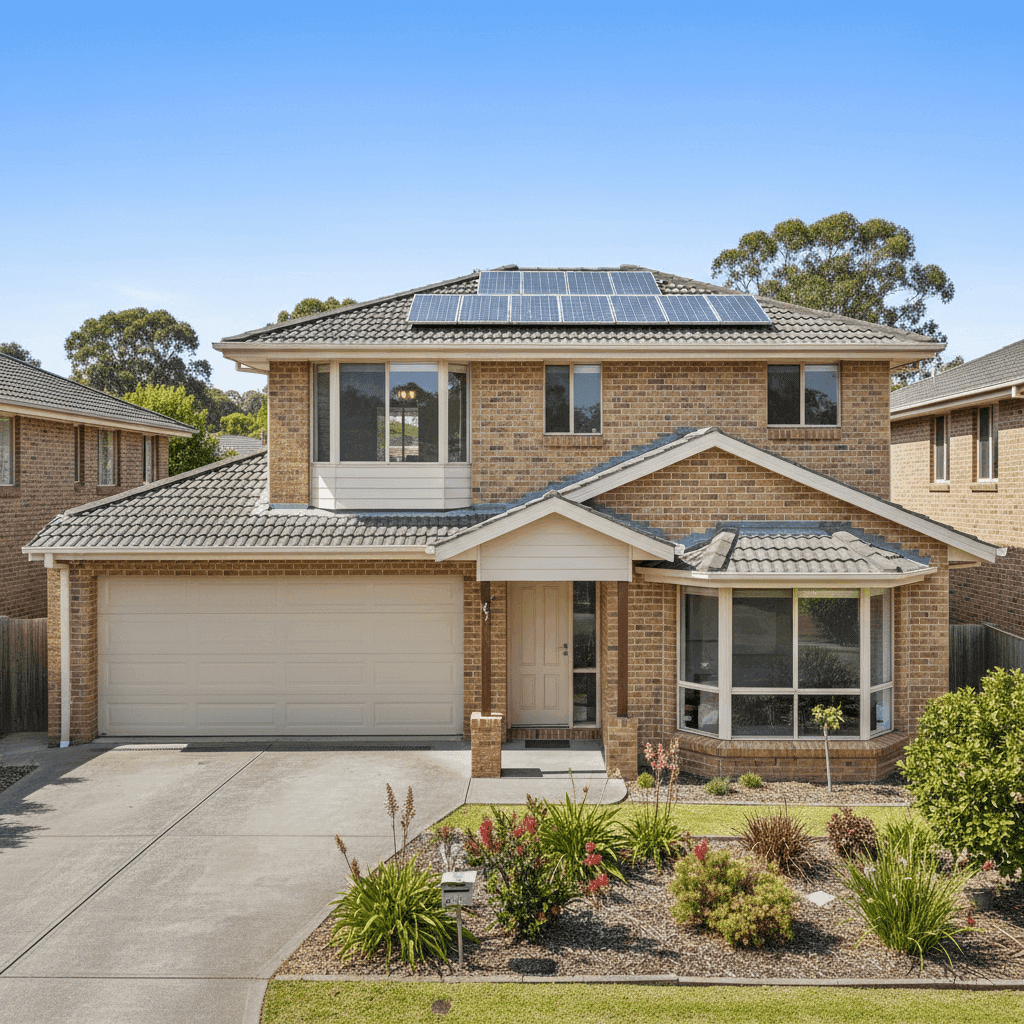
Castle Hill is one of Sydney's most established and sought-after suburbs in the Hills District, known for its family-friendly streets, quality housing stock, and strong community feel. If you own a semi detached home in this postcode, understanding what you should be paying for home and contents insurance — and whether your current quote is competitive — can save you hundreds of dollars each year. This article breaks down a real insurance quote for a four-bedroom, two-bathroom semi detached property in Castle Hill (NSW 2154) and puts it into context with local, state, and national benchmarks.
---
Is This Quote Fair?
The quote in question comes in at $2,762 per year (or $271 per month) for combined home and contents cover, with a building sum insured of $1,000,000 and contents valued at $130,000. Both the building and contents excess are set at $1,000.
Our pricing analysis rates this quote as Expensive — above average for the area. Here's what that means in practice:
- The suburb average for Castle Hill (postcode 2154) sits at $2,550/yr, and the median is $2,356/yr — meaning this quote is roughly $212 above the suburb average and $406 above the median.
- The suburb's 75th percentile is $2,689/yr, so this quote actually sits above the top quarter of local pricing — a meaningful signal that there may be room to negotiate or shop around.
- At the lower end, the 25th percentile for Castle Hill is $2,063/yr, showing that competitive quotes are available in this suburb for well over $700 less per year.
That said, context matters. A $1,000,000 building sum insured is on the higher end, and above-average fittings quality will naturally push premiums up. Still, the data suggests this homeowner could benefit from comparing alternatives.
---
How Castle Hill Compares
To understand whether this quote is genuinely expensive, it helps to zoom out and look at the broader picture. You can explore the full data on our Castle Hill suburb stats page, the NSW state overview, and national insurance statistics.
| Benchmark | Annual Premium |
|---|---|
| This Quote | $2,762 |
| Castle Hill Suburb Average | $2,550 |
| Castle Hill Suburb Median | $2,356 |
| LGA (Hornsby) Average | $3,958 |
| NSW State Average | $9,528 |
| NSW State Median | $3,770 |
| National Average | $5,347 |
| National Median | $2,764 |
A few things stand out here. First, the NSW state average of $9,528/yr is dramatically higher than what Castle Hill homeowners typically pay — this is largely skewed by high-risk and high-value properties across the state, particularly in flood-prone or coastal regions. The NSW median of $3,770/yr is a more useful comparison, and against that figure, this Castle Hill quote looks quite reasonable.
Interestingly, the national median of $2,764/yr is almost identical to this quote — suggesting that on a national scale, $2,762 is right in the middle of the pack. It's only when you zoom into the Castle Hill suburb specifically that the quote appears above average, which is a useful reminder that local benchmarks are often the most relevant guide.
The Hornsby LGA average of $3,958/yr also provides helpful context — Castle Hill sits within this LGA, and the suburb's pricing is notably lower than the broader LGA average, suggesting it's a relatively lower-risk area within the district.
---
Property Features That Affect Your Premium
Several characteristics of this property have a direct bearing on the insurance premium quoted.
Brick veneer construction and tiled roof are generally viewed favourably by insurers. These materials are durable, fire-resistant, and widely used across Sydney's suburban housing stock. Compared to weatherboard or older fibrous cement homes, brick veneer typically attracts lower premiums.
Slab foundation is another positive factor. Slab-on-ground construction is considered stable and is less susceptible to subsidence or pest-related damage than older pier-and-beam foundations, which can reduce risk in the insurer's eyes.
Timber and laminate flooring can be a double-edged sword. While these finishes add to the aesthetic and market value of the home, they are more susceptible to water damage than tiles, which may marginally increase the contents and building replacement cost assessment.
Above-average fittings quality is one of the more significant premium drivers here. Higher-quality kitchens, bathrooms, and fixtures increase the cost to rebuild or repair, and insurers price accordingly. This is a legitimate reason for a higher-than-median premium.
Solar panels add both value and a degree of risk. Panels represent a significant asset that needs to be covered under the building policy, and their installation can complicate roof repairs. Homeowners should confirm their policy explicitly covers solar panel damage, including storm and hail events.
Ducted climate control is another feature that increases replacement value. These systems are expensive to install and repair, and their inclusion in the building sum insured is essential to avoid being underinsured.
The property's 2004 construction year is a neutral-to-positive factor. It's modern enough to meet contemporary building codes but old enough that some components may be approaching the end of their service life — something to keep in mind when reviewing your sum insured.
---
Tips for Homeowners in Castle Hill
1. Review your building sum insured regularly A $1,000,000 building sum insured is substantial, but it's important this figure reflects the actual cost to rebuild — not the market value of the property. Construction costs have risen significantly in recent years. Use a building cost calculator or speak with a quantity surveyor to ensure you're neither over- nor underinsured.
2. Confirm your solar panels and ducted systems are covered Not all standard home insurance policies automatically cover solar panel arrays or ducted air conditioning systems to their full replacement value. Check your Product Disclosure Statement (PDS) carefully and ask your insurer to confirm coverage limits for these items specifically.
3. Compare quotes at renewal time Given this quote sits above the suburb's 75th percentile, it's worth comparing at least two or three alternatives before renewing. Loyalty doesn't always pay in insurance — new customer pricing can be meaningfully lower. Get a comparison quote at CoverClub to see what else is available for your property.
4. Consider your excess strategically Both the building and contents excess on this policy are set at $1,000. Increasing your excess — say, to $2,000 — can reduce your annual premium noticeably. If you have a solid emergency fund and rarely make small claims, a higher excess can be a smart way to bring down your ongoing costs.
---
Find a Better Deal with CoverClub
Whether you're renewing your existing policy or shopping for cover on a new property, comparing quotes is the single most effective way to ensure you're not overpaying. CoverClub makes it easy to benchmark your premium against real data from your suburb, LGA, and state — so you can make an informed decision with confidence.