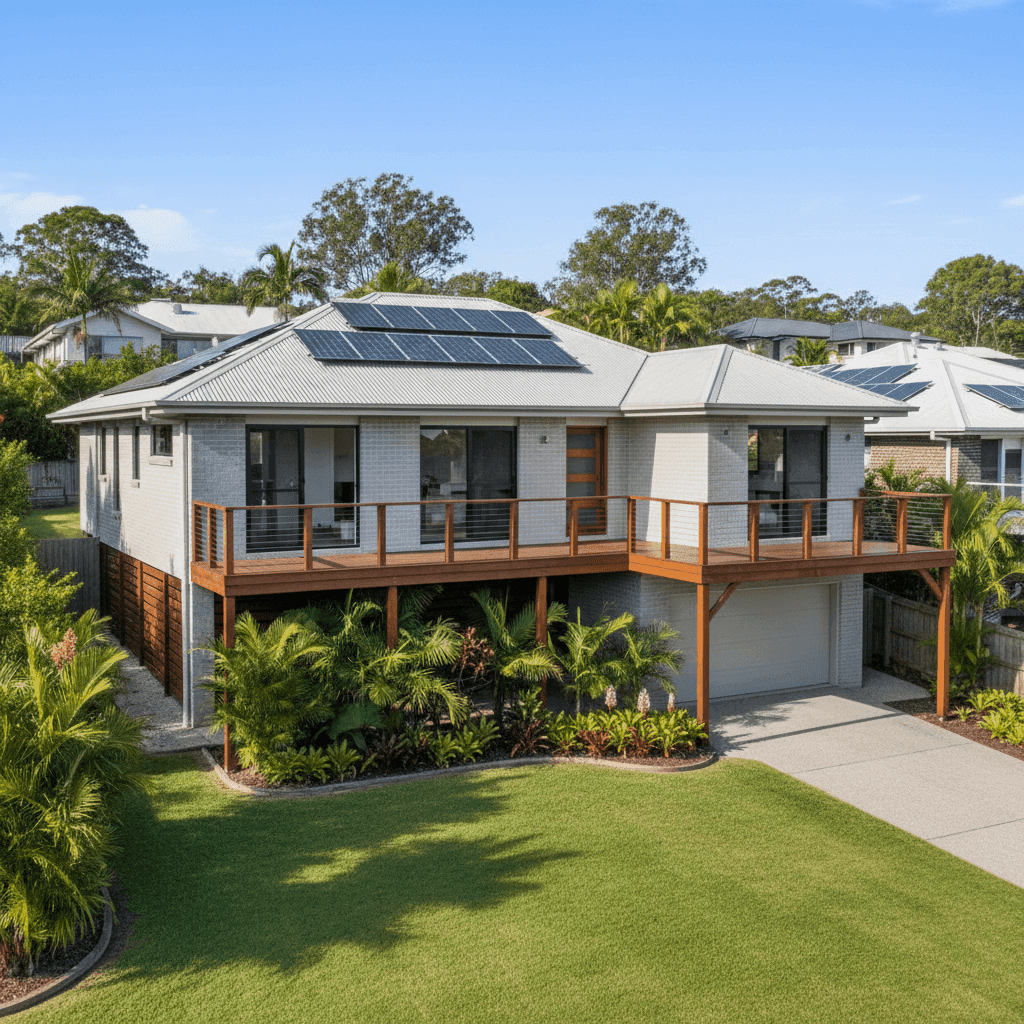
Insuring a home in Castle Hill, QLD 4810 comes with its own set of considerations — from tropical weather risks to the size and quality of the dwelling itself. This article breaks down a recent home and contents insurance quote for a four-bedroom, free-standing home in the area, puts the premium in context, and offers practical guidance for homeowners looking to get the best value from their cover.
---
Is This Quote Fair?
The quote in question sits at $5,770 per year (or $546/month) for combined home and contents cover, with a building sum insured of $1,260,000 and contents valued at $80,000. Our price rating for this quote is Expensive — above average for the suburb.
To understand why, it helps to look at the numbers side by side. The suburb average for Castle Hill currently sits at around $5,069/year, with a median of $4,976/year. This quote comes in roughly $700 above the suburb average and lands above the 75th percentile ($5,583/year) — meaning it's more expensive than at least three-quarters of comparable quotes in the area.
That said, "expensive" doesn't automatically mean "wrong." A high sum insured of $1.26 million for a 235 sqm home with top-of-the-range fittings, solar panels, ducted climate control, and elevation in a declared cyclone risk zone will naturally push premiums upward. The question is whether you're getting appropriate cover for what you're paying — and whether there's room to optimise.
---
How Castle Hill Compares
Understanding where this quote sits relative to broader benchmarks is key to making an informed decision. Here's how the numbers stack up:
| Benchmark | Premium |
|---|---|
| This Quote | $5,770/yr |
| Castle Hill Suburb Average | $5,069/yr |
| Castle Hill Suburb Median | $4,976/yr |
| Townsville LGA Average | $7,340/yr |
| QLD State Average | $9,129/yr |
| QLD State Median | $3,903/yr |
| National Average | $5,347/yr |
| National Median | $2,764/yr |
A few things stand out here. While this quote is above the Castle Hill suburb average, it is notably below the Townsville LGA average of $7,340/year and well below the Queensland state average of $9,129/year. This tells an important story: insurance in North Queensland is generally expensive due to cyclone exposure, and this quote — while above the local suburb median — is actually quite competitive within its broader regional context.
The wide gap between the QLD average ($9,129) and the QLD median ($3,903) also signals significant variation across the state. Properties in high-risk areas like Townsville can attract premiums many times higher than those in Brisbane's south-east. Compared to the national average of $5,347/year, this quote is only marginally higher — a reasonable outcome given the cyclone risk overlay.
---
Property Features That Affect Your Premium
Several characteristics of this property have a direct bearing on the premium quoted. Understanding these factors helps explain why the cost lands where it does.
Cyclone Risk Zone
Castle Hill falls within a cyclone risk area, which is arguably the single biggest premium driver for properties in this part of Queensland. Insurers price in the statistical likelihood of wind, storm surge, and water damage from tropical weather events. This alone can add hundreds — sometimes thousands — of dollars to an annual premium compared to equivalent properties in southern states.
Elevated Foundation
The property is elevated by at least one metre, which is a positive risk factor in flood-prone or storm surge areas. Elevation can reduce the likelihood of inundation damage, and some insurers may reflect this favourably in their pricing. It's worth confirming with your insurer whether your elevation has been factored into the assessment.
High-Value Building Sum Insured
A sum insured of $1,260,000 for a 235 sqm home with top-of-the-range fittings is substantial. Premium is partly calculated as a function of rebuild cost, so a higher sum insured directly increases the base premium. If you haven't had a professional building valuation recently, it's worth checking whether this figure accurately reflects current construction costs — over-insuring is a cost you shouldn't have to carry.
Brick Veneer Walls & Colorbond Roof
Brick veneer construction is generally viewed favourably by insurers for its fire resistance and structural durability. A steel/Colorbond roof is well-suited to Queensland's climate — it's lightweight, resistant to corrosion, and performs well in high-wind events compared to heavier roofing materials. These features may contribute to slightly more competitive pricing than, say, a timber-framed home with terracotta tiles.
Solar Panels & Ducted Climate Control
Both solar panels and ducted climate control add to the insured value of the property and represent items that are costly to repair or replace. Solar panels in particular can be vulnerable to hail and cyclone damage, and their inclusion in the sum insured is important. Make sure your policy explicitly covers these fixtures.
---
Tips for Homeowners in Castle Hill
1. Review your sum insured annually Construction costs have risen significantly in recent years. If your $1,260,000 sum insured was set a few years ago, it may no longer reflect the true cost to rebuild. Conversely, if it was set conservatively high, you may be paying more premium than necessary. A quantity surveyor or online rebuild calculator can help you find the right figure.
2. Ask about cyclone excess separately Many policies in North Queensland apply a separate cyclone excess on top of the standard building excess. With a $2,000 building excess on this policy, it's essential to understand exactly what applies in a cyclone event — some policies have a percentage-based cyclone excess that can be significantly higher than the standard amount.
3. Compare quotes before renewal This quote sits above the suburb average and above the 75th percentile locally. That's a signal worth acting on. Running a comparison at CoverClub takes only a few minutes and could reveal more competitive options with equivalent or better cover.
4. Check your contents sum insured too An $80,000 contents value for a home with top-of-the-range fittings and ducted climate control may be on the lower side. Walk through each room and consider the replacement cost of furniture, appliances, clothing, and valuables. Being underinsured on contents can leave you significantly out of pocket after a major loss event.
---
Compare Your Home Insurance Today
Whether you're renewing an existing policy or shopping for the first time, it pays to see what's available in the market. CoverClub makes it easy to compare home and contents insurance quotes tailored to your property and location. [Get a quote now at CoverClub](https://coverclub.com.au/?focus=address) and see how your current premium stacks up — you might be surprised at what you find.
For more data on insurance pricing in your area, visit the Castle Hill suburb stats page or explore broader Queensland insurance trends.