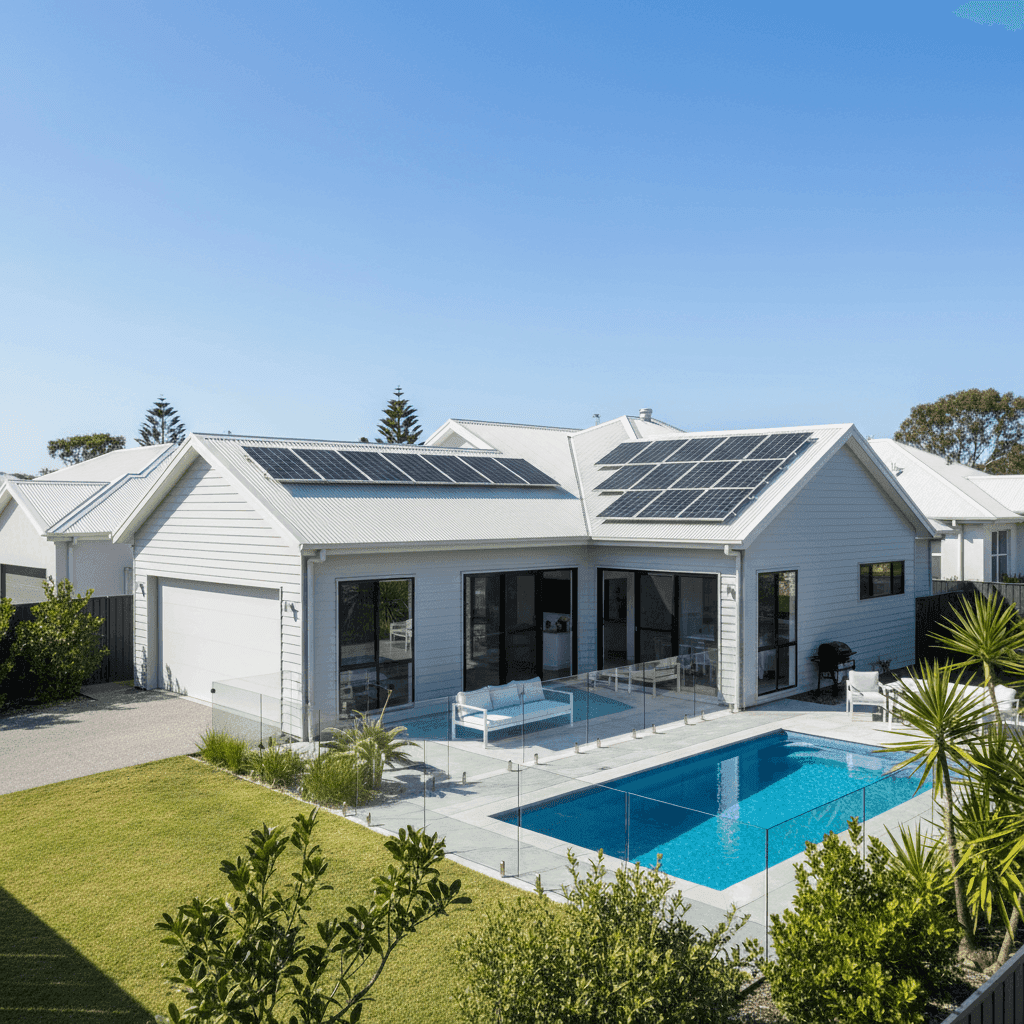
Casuarina is one of the Northern Rivers' most desirable coastal suburbs — a relaxed, modern community just south of the Queensland border in the Tweed Shire. If you own a free standing home here, you're likely paying a premium that reflects both the lifestyle appeal and the coastal risk profile of the area. This article breaks down a real home and contents insurance quote for a 3-bedroom, 2-bathroom free standing home in Casuarina (NSW 2487), and puts the numbers into context so you can judge whether your own policy is working hard enough for you.
---
Is This Quote Fair?
The quote in question comes in at $3,553 per year (or $340/month) for combined home and contents cover, with a building sum insured of $599,000 and contents valued at $50,000. Both the building and contents excess are set at $2,000.
Our price rating for this quote is Fair — Around Average, and the data backs that up. At $3,553 annually, this quote sits just $10 above the suburb's median premium of $3,535 and roughly $110 above the suburb average of $3,443. In practical terms, that's a difference of less than $10 per month — well within the normal range of variation you'd expect from a single insurer.
What this rating tells you is that the homeowner isn't being gouged, but there's also meaningful room to save. The suburb's 25th percentile sits at $2,380/year — meaning roughly a quarter of comparable Casuarina homes are insured for over $1,100 less annually. That gap is worth investigating, particularly if you haven't compared quotes recently.
---
How Casuarina Compares
Understanding where your premium sits relative to broader benchmarks is one of the most useful tools a homeowner has. Here's how this quote lines up across different geographies:
| Benchmark | Average | Median |
|---|---|---|
| Casuarina (NSW 2487) | $3,443/yr | $3,535/yr |
| NSW | $3,801/yr | $3,410/yr |
| National | $2,965/yr | $2,716/yr |
| Tweed LGA | $4,680/yr | — |
A few things stand out here. First, this quote is below the NSW state average of $3,801/year — a positive sign. Second, it's notably below the Tweed LGA average of $4,680/year, which suggests that Casuarina, despite being within the Tweed Shire, may attract more competitive pricing than some neighbouring areas in the LGA.
However, when zoomed out to a national lens, Casuarina premiums run meaningfully higher than the Australian average of $2,965/year and the national median of $2,716/year. This isn't surprising — coastal NSW properties, particularly in high-growth areas near the Queensland border, tend to attract elevated premiums due to storm, flood, and coastal erosion exposure.
You can explore more local data on the Casuarina suburb stats page, compare it against the NSW state overview, or benchmark against national home insurance figures.
(Based on a sample of 36 quotes in the Casuarina area.)
---
Property Features That Affect Your Premium
Every home is different, and insurers price risk based on the specific characteristics of your property. Here's how the features of this particular home are likely influencing its premium:
Hardiplank / Hardiflex Cladding Fibre cement cladding like Hardiplank is generally viewed favourably by insurers. It's non-combustible, resistant to rot and termites, and holds up well in coastal environments. Compared to weatherboard or other timber-based cladding, this material can contribute to a more competitive premium.
Steel / Colorbond Roof A Colorbond roof is a strong asset from an insurance perspective. It's durable, low-maintenance, and performs well in high-wind conditions. Insurers tend to price steel roofing more favourably than older tile or fibrous cement roofing, particularly in storm-prone coastal zones.
Concrete Slab Foundation Slab foundations are considered stable and low-risk by most underwriters. They're less susceptible to subsidence and moisture-related issues than pier-and-beam or older masonry foundations, which can help keep premiums in check.
Constructed in 2015 A relatively modern build is a positive rating factor. Homes built after significant updates to the Australian Building Code benefit from improved structural standards, better weatherproofing, and more modern electrical and plumbing systems — all of which reduce the likelihood of a claim.
Swimming Pool A pool adds to the replacement cost of the property and introduces additional liability considerations. It's a feature that can nudge premiums upward, so it's worth ensuring your sum insured accurately reflects the pool's rebuild value.
Solar Panels Solar panels are increasingly common in Australian homes, but they do add complexity to a home insurance policy. They increase the replacement value of the building and can be a source of claims if damaged by hail, storms, or fire. Confirm with your insurer that your solar system is explicitly covered under your building sum insured.
Timber / Laminate Flooring Timber and laminate floors can be costly to replace, particularly if water damage affects a large area. Standard fittings quality is noted for this property, which typically keeps replacement cost estimates moderate — but it's worth reviewing whether your sum insured accounts for current material and labour costs in the Northern Rivers region.
No Cyclone Risk Casuarina falls outside designated cyclone risk zones, which provides some premium relief compared to properties further north in Queensland. That said, the area is still exposed to severe storms and east coast lows, so storm and rainwater damage cover remains an important consideration.
---
Tips for Homeowners in Casuarina
1. Review your building sum insured annually Construction costs in coastal NSW have risen sharply in recent years. A sum insured of $599,000 for a 214 sqm home works out to roughly $2,800/sqm — which is within a reasonable range for a modern coastal build, but worth validating against current local builder rates. Underinsurance is one of the most common and costly mistakes homeowners make.
2. Don't overlook your solar panels and pool Make sure both your pool and solar panel system are explicitly itemised or accounted for in your building sum insured. Some policies require specific endorsements for solar systems, particularly for panels on the roof that could be damaged in a storm event.
3. Compare quotes at renewal, not just when you first buy The insurance market shifts constantly. A quote that was competitive two years ago may not be today — and vice versa. With a suburb 25th percentile of $2,380/year, there's a real possibility that shopping around at renewal could save you $1,000 or more annually.
4. Consider your excess strategically This policy carries a $2,000 excess on both building and contents. A higher excess typically reduces your premium, but make sure it's an amount you could genuinely afford to pay out of pocket in the event of a claim. For many homeowners, somewhere between $1,000 and $2,500 represents the sweet spot between affordability and premium savings.
---
Compare Your Home Insurance Today
Whether you're reviewing your current policy or shopping for cover on a new purchase, comparing quotes is the single most effective way to ensure you're not overpaying. At CoverClub, we make it easy to see how your premium stacks up against real data from your suburb and beyond.
Get a home insurance quote now and find out if you could be paying less for the same level of cover.