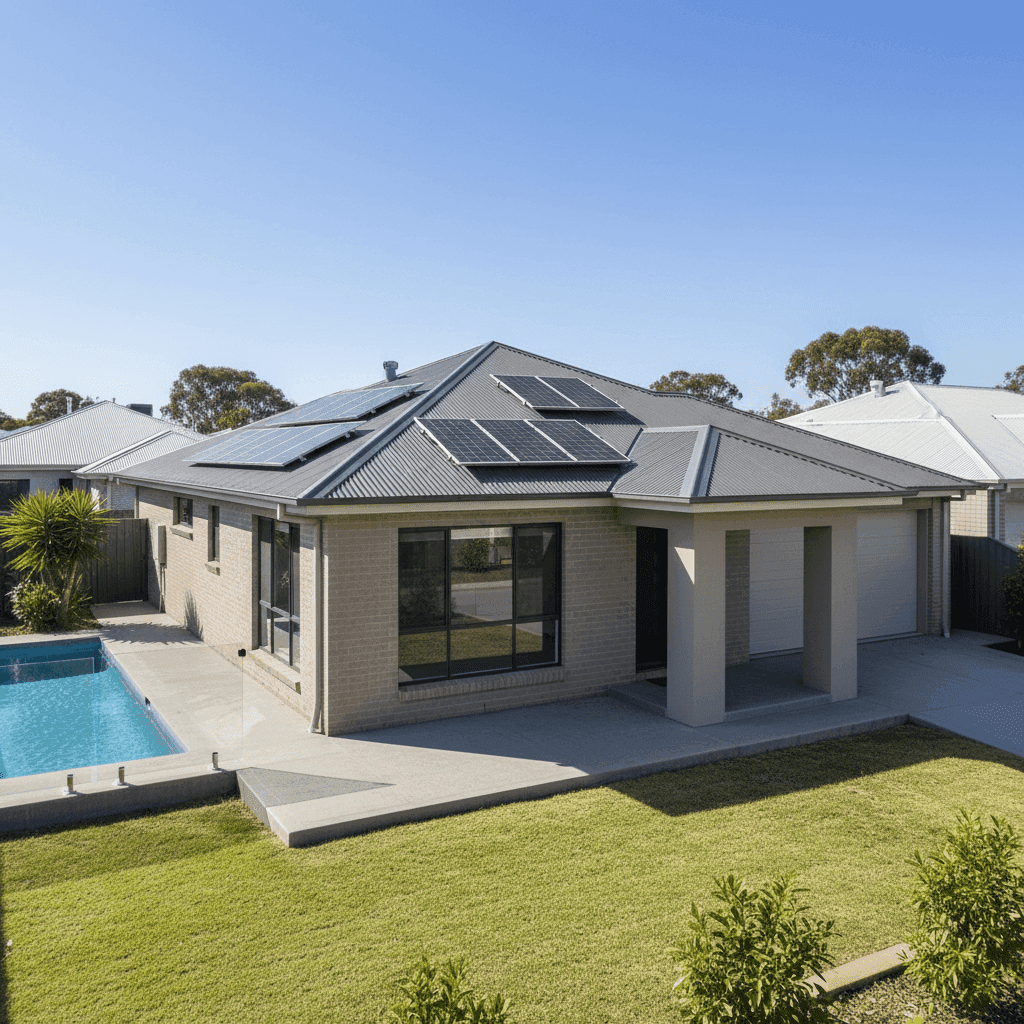
Casuarina is a modern coastal suburb in the City of Rockingham, about 45 kilometres south of Perth's CBD. Known for its planned streetscapes, relatively new housing stock, and proximity to the beach, it attracts families looking for space and lifestyle. This article breaks down a real home and contents insurance quote for a five-bedroom free-standing home in the area — and helps you understand whether the price stacks up.
---
Is This Quote Fair?
The quote in question comes in at $4,923 per year (or $472 per month) for combined home and contents cover, with a $1,000 excess on both building and contents. The building is insured for $1,500,000 and contents for $50,000.
Our price rating for this quote is Expensive — Above Average.
To put that in perspective: the average home and contents premium in Casuarina sits at around $2,106 per year, and the suburb median is just $1,581 per year. This quote is more than 2.3 times the suburb average and sits well above the 75th percentile of $2,484 — meaning it's pricier than at least three-quarters of comparable quotes we've seen in the area.
That said, context matters. This is a large, well-appointed property — 334 square metres, five bedrooms, three bathrooms — with a pool, solar panels, and ducted climate control. The building sum insured of $1.5 million is also notably high, which will be one of the most significant drivers of the premium. Rebuilding a double brick home of this size to a quality finish in today's construction market is genuinely expensive, and insurers price accordingly.
So while the quote is above average for the suburb, it's not necessarily unfair given the size and value of what's being covered. The key question is whether you could find equivalent cover for less elsewhere.
---
How Casuarina Compares
Here's how this quote sits relative to broader benchmarks:
| Benchmark | Premium |
|---|---|
| This quote | $4,923/yr |
| Casuarina suburb average | $2,106/yr |
| Casuarina suburb median | $1,581/yr |
| WA state average | $2,811/yr |
| WA state median | $2,127/yr |
| National average | $5,347/yr |
| National median | $2,764/yr |
| Serpentine-Jarrahdale LGA average | $1,448/yr |
Interestingly, this quote is actually below the national average of $5,347 per year — which reflects just how much pressure insurers are under in high-risk parts of Australia (think cyclone-prone Queensland or flood-affected NSW). Casuarina, by comparison, is a relatively low-risk location with no cyclone rating and generally stable ground conditions.
The LGA average for Serpentine-Jarrahdale of $1,448 per year is notably lower than this quote, though that figure likely reflects a broader mix of properties — including smaller, lower-value homes across the wider local government area.
You can explore Casuarina suburb insurance statistics, WA state-wide data, and national benchmarks on CoverClub to dig deeper into how your area compares.
---
Property Features That Affect Your Premium
Several characteristics of this home will be influencing the premium — some pushing it up, others potentially keeping it in check.
What's Likely Increasing the Premium
- High building sum insured ($1,500,000): This is the single biggest premium driver. Larger sums insured mean greater potential payouts, and insurers price that risk directly into your premium.
- Large home size (334 sqm): At 334 square metres, this is a substantial home. Rebuilding costs scale with size, so insurers factor floor area into their calculations.
- Swimming pool: Pools add replacement value to the property and can introduce liability considerations, both of which can nudge premiums higher.
- Solar panels: Panels on the roof add to the insured asset value and can complicate claims involving roof damage, which some insurers account for in their pricing.
- Ducted climate control: Whole-home ducted systems are expensive to repair or replace and are typically factored into building replacement costs.
What's Likely Keeping the Premium Manageable
- Double brick construction: Double brick is one of the most robust and fire-resistant wall types available. Insurers generally view it favourably compared to timber or lightweight cladding.
- Steel/Colorbond roof: Colorbond roofing is durable, low-maintenance, and performs well in storms. It's generally considered a lower-risk roofing material.
- Slab foundation: Concrete slab foundations are stable and less susceptible to subsidence or pest damage compared to raised timber stumps.
- Relatively modern build (2011): Homes built in the 2010s benefit from more recent building codes covering electrical standards, structural requirements, and energy efficiency — all of which reduce risk in the eyes of insurers.
- No cyclone risk: Casuarina is not classified as a cyclone risk area, which keeps premiums significantly lower than comparable homes in northern WA.
- Slightly elevated (less than 1m): A minor elevation can assist with drainage and reduce flood exposure, though the effect on premium at this level is typically modest.
---
Tips for Homeowners in Casuarina
1. Review your building sum insured carefully A $1.5 million sum insured is substantial. While it's important not to under-insure — which can leave you seriously out of pocket after a major claim — it's equally worth ensuring your figure accurately reflects current rebuild costs rather than land value or market price. Consider getting a professional building valuation to calibrate this figure correctly.
2. Compare quotes across multiple insurers This quote is above the suburb average, and the insurance market is competitive. Using a comparison platform like CoverClub lets you see how different insurers price the same property — sometimes with significant variation for equivalent cover.
3. Ask about bundling discounts Many insurers offer discounts when you combine home and contents cover under a single policy (which this quote already does) or when you hold multiple policies — such as adding car insurance. It's worth asking your insurer directly what discounts are available.
4. Consider your excess level Both excesses on this policy are set at $1,000. Opting for a higher voluntary excess (say, $2,500 or $5,000) can meaningfully reduce your annual premium. If you're unlikely to make small claims, this trade-off can make good financial sense over time.
---
Ready to Compare?
Whether you're renewing your existing policy or shopping for the first time, it pays to know what the market looks like. CoverClub makes it easy to benchmark your premium against real quotes from your suburb and state. Get a home insurance quote today and see whether you're getting value for your cover — or paying more than you need to.